What to Check Before Buying a Sofa You Cannot Sit On
A sofa can look ideal in a showroom and still be a poor purchase for a Singapore home. The photograph may show generous cushions and elegant timber, but the delivery lift in Tampines may be narrower than the carton, the corridor may have a tight corner, and the balcony may receive direct afternoon sun. Buying a large seating piece is therefore an exercise in access, weather protection and honest dimensions—not simply choosing a style.
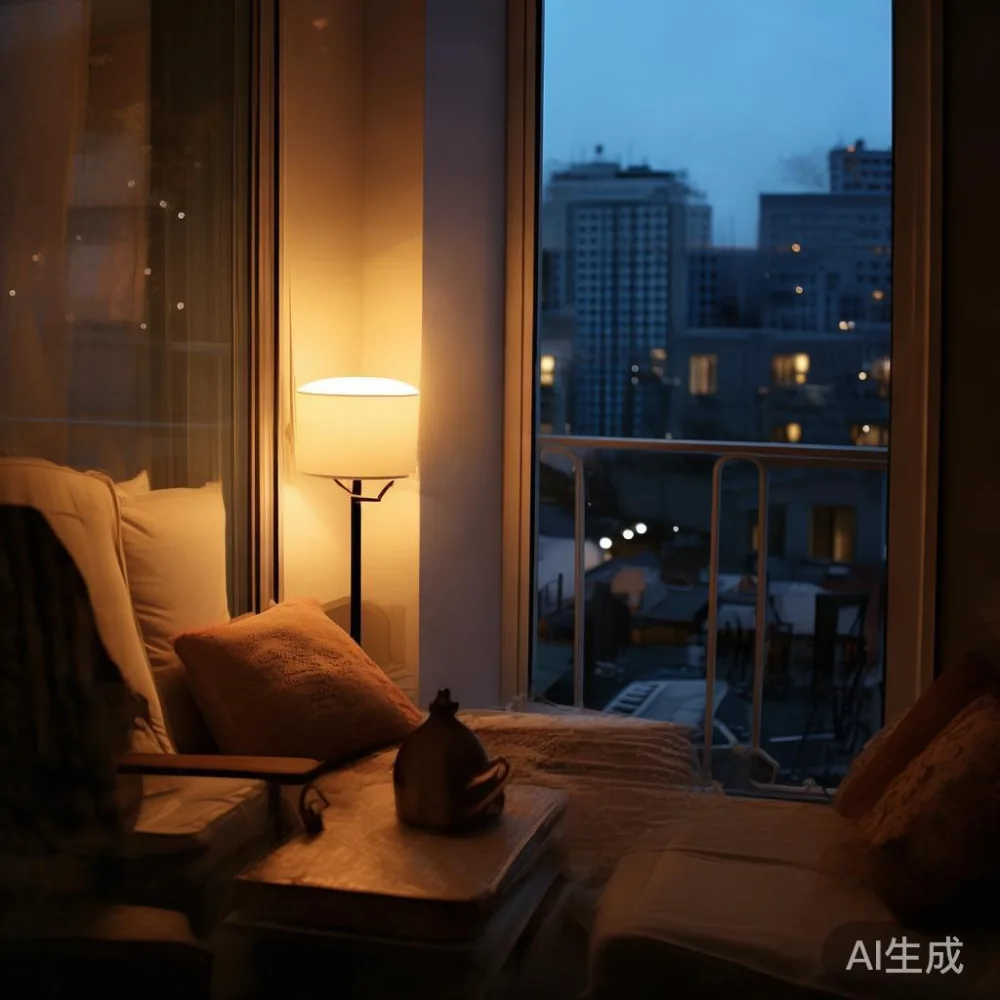
This guide explains how to check a sofa before committing, especially when the intended setting is a balcony or an apartment with restricted circulation. MIDHILL makes solid wood furniture for practical residential use, so the discussion focuses on measurements, load paths, finishes and service terms rather than showroom theatre.
What should I measure before a sofa is delivered?
Measure the complete route, not only the intended floor position. For a Singapore HDB flat, begin at the ground-floor entrance, note the lobby turning radius, then inspect the lift car and the door opening on the destination floor. A common passenger lift may offer an internal usable width of about 110 cm and a depth of 140 cm, although older blocks and service lifts differ. Confirm the usable dimensions with the building manager because advertised car dimensions may include doors, rails or inaccessible areas.
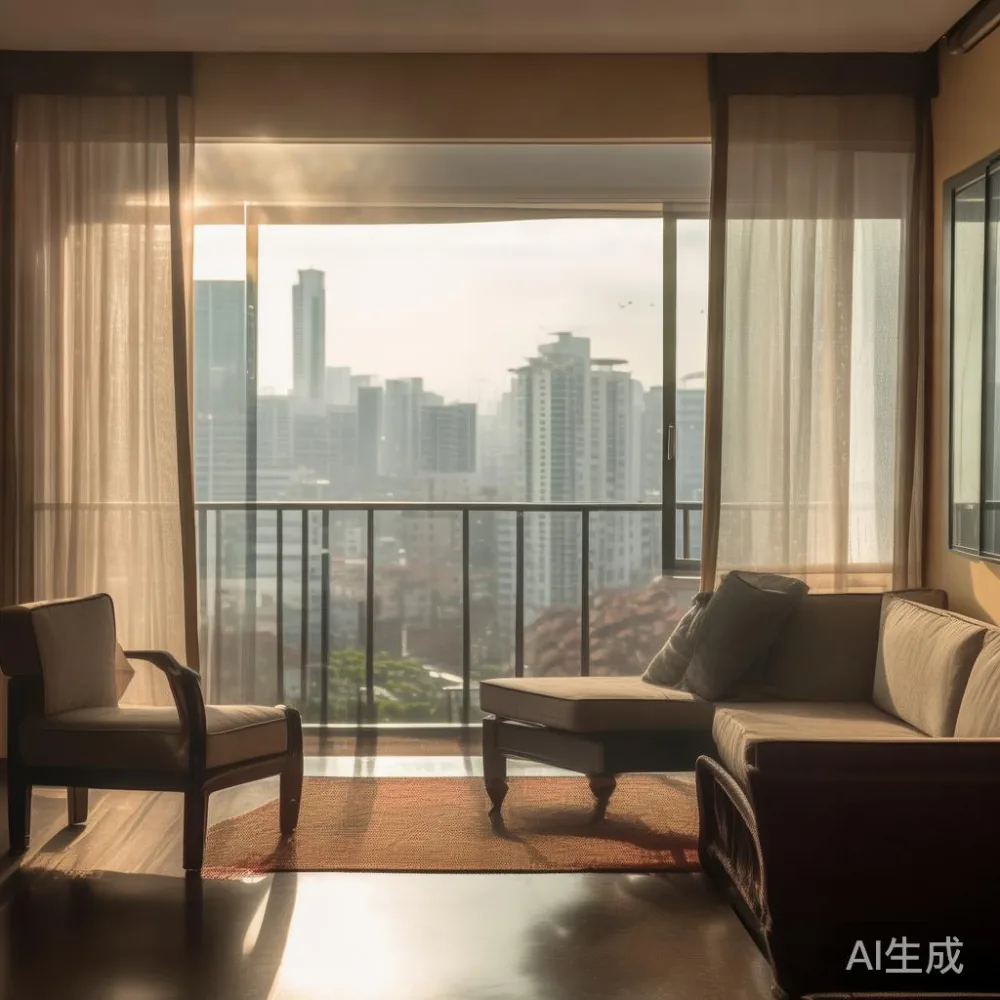
At the flat entrance, measure the narrowest point in the corridor and every 90-degree turn. A sofa body of 186 cm wide and 92 cm deep may be easy to display yet impossible to manoeuvre around a corridor bend. Ask the supplier for the packed dimensions, including the carton, rather than accepting only the finished dimensions. For a long sectional, divide the packing into removable modules if possible: two sections of 82 cm can be far easier to handle than one section of 164 cm.
Record the lift’s maximum load as well. A three-seat sofa may weigh 68 kg; a large solid wood sofa with a reinforced hardwood frame can weigh 95 kg. Check the lift plaque, reserve the service lift where required and tell the delivery crew about stairs. The route also includes the balcony threshold: many are only 70–80 cm high, so a low trolley, shoulder-height lifting or extra hands may be needed.
How can I test whether a sofa is actually comfortable?
Sit on it for at least 10 minutes, using the position you expect at home. Check that your feet reach the floor, that the seat depth is around 50–58 cm for normal use, and that the backrest supports your shoulders without forcing a slouch. Sofas marketed as lounge seating often have a 68–74 cm seat height, which suits tall users but can feel high for someone measuring 160 cm. Conversely, a very low French-style sofa may look refined but make standing up difficult.
Last month I visited a supplier in Foshan and tested a solid wood sofa with the same loose cushion configuration shown online. I sat through two coffee breaks, moved my feet under the front rail and deliberately leaned on the armrest. The first version looked excellent, but its 58 cm internal seat depth felt cramped; the revised version with 53 cm usable depth was noticeably more comfortable. This is why showroom sitting should involve a phone, a book and real time rather than a 30-second impression.
Check cushion compression too. Press the seat firmly and release it. A good foam cushion should recover most of its shape within about 20–30 seconds. Feather-wrapped foam may feel softer initially but need more maintenance. For a balcony, where humidity can be higher, ask whether the cushion fill is fibre-wrapped foam or down-feather and obtain a removable cover specification. Loose covers that can be washed at 30°C are practical in a humid environment.
Compare the European light luxury sofa vs Modern sofa question with your own body and room. European light luxury usually favours softer lines, balanced proportions and understated fabric; Modern sofa designs often use sharper geometry and a lower profile. Post-modern light luxury can combine both, with cleaner forms and restrained detailing. The most attractive configuration is still the one you can sit in comfortably for 60 minutes.
Will a solid wood sofa survive Singapore balcony conditions?
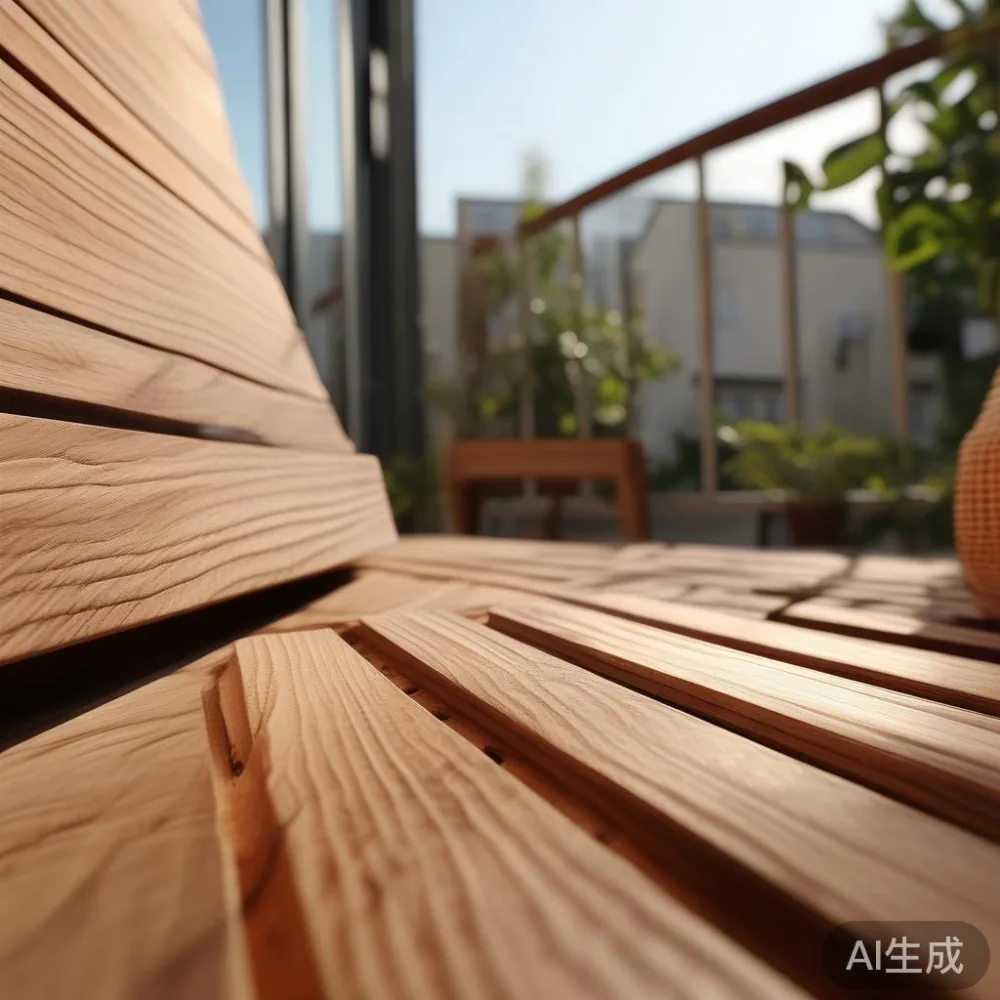
“Solid wood” describes the visible frame or construction, but it does not automatically make a sofa suitable for an exposed balcony. Ask which components are solid timber, which are plywood or engineered board, and whether the joints are dowelled, mortise-and-tenon or mechanically fixed. Kiln-dried hardwood used for load-bearing rails should have moisture content around 8–12% for normal interior conditions. A product named as a solid wood sofa may combine a timber frame with webbing, foam and fabric, so request the material breakdown.
Balcony furniture faces UV radiation, windblown rain, heat and humidity. A balcony used for seating should ideally be covered or under a roof. In an uncovered HDB balcony, keep the sofa at least 30 cm away from the parapet edge, especially where wind-driven rain can enter. UV-resistant fabric should have a colourfastness rating and a stated fade tolerance; no seller should promise that a pale beige textile will remain unchanged after 3 years of afternoon exposure.
Ask whether the finish is water-based lacquer, oil or wax. A water-based finish with at least 5 coats offers a useful balance of protection and repairability, although it still needs annual inspection. Oiled timber looks tactile but may spot if a drink is left on it. For dining settings, the same moisture discipline applies to a European light luxury dining table: check the top thickness, extension method and whether outdoor use is permitted.
A marble table may suit a sheltered balcony with a stable base, but its 40–50 kg weight complicates delivery. A solid wood dining table weighing 72 kg can be moved by three people, while a 95 kg marble version generally requires at least four or professional lifting. Calculate the route and lift capacity before selecting either.
Does the size look right once the sofa is in the room?
Use 90 cm as a minimum circulation route around a sofa, and allow 120 cm between a sofa and a dining table where people must pass behind seated guests. In a compact living room, an oversized sofa can shrink the usable balcony area even if it fits through the door. Sketch the footprint to scale: a 210 cm sofa against a 320 cm wall leaves only 110 cm at each side, which may be too little for a table or chair.
View the sofa from a seated position, not only standing. Can you see the television or enjoy the view? Does the armrest block a window? Is there enough room to lift a cup without catching a sleeve? For a two-person balcony arrangement, a 156–170 cm sofa may be more workable than a 220 cm model. For three people, look for a 190–205 cm body with separate seat cushions rather than a single wide cushion that one person can monopolise.
Storage can be integrated without turning the balcony into a cabinet showroom. A 45 cm deep drawer, 25 cm high and capable of holding 8 kg per runner may hold folded throws and small cushions. A matching nightstand with a 30 cm top can hold a drink, but it should not be placed where it obstructs a door or reduces the required escape clearance. Wardrobes and larger storage furniture should stay inside the flat unless the balcony has adequate cover and ventilation.
Are the assembly, warranty and delivery terms clear?
Obtain the terms in writing. A structural warranty should state the covered period, the components covered and the process for making a claim. MIDHILL provides a 10-year structural warranty on qualifying furniture and lifetime refinishing support for its solid wood products; the seller should explain exactly what refinishing includes and whether return freight is covered for a defective item.
For Singapore orders, confirm whether GST is included. On a displayed price of SGD 2,880 before GST, the total with 9% GST is SGD 3,139.20. The final quotation should list the product, GST, delivery charge, lift or service-lift fee, assembly and any access surcharge. Free shipping over US$350 is a separate international threshold and should not be assumed to remove every local delivery cost. A promised delivery window of 7–14 delivery days is more useful than “fast delivery,” provided the clock starts only after the item is ready and stock is confirmed.
Check the return window and restocking arrangements. A 14-day return policy is useful, but ask whether assembled furniture, custom fabric and items marked for return freight are excluded. For a large sofa, a “return” may also require the building manager to reserve the lift again. Photograph the sofa on arrival, record packaging and inspect legs, joints and cushions before the crew leaves.
What should I ask before paying for balcony furniture?
Ask for the packed size, packaged weight, carton count, lift dimensions, assembly time and weather limitations in one message. Then request the full material schedule. A practical specification might list a kiln-dried hardwood frame, plywood webbing, high-density foam, polyester fibre wrap and removable covers. You should also receive care instructions for timber, upholstery and cushions.
Search terms can help you compare categories, but they should not replace technical information. A listing for sale Minimalist furniture may show an attractive balcony arrangement without revealing whether the timber is teak, ash or rubberwood, or whether the surface is suitable for direct sun. Similarly, a page about the best Industrial wardrobe for 2026 can help with storage planning, yet its shelves must still fit the chosen corner. A survey of the top 10 Industrial furniture pieces can identify design directions, although each measured product needs its own access check.
The phrase “is European sofa worth it” appears in many buying guides, but the more useful local question is whether the imported design suits your route, body and balcony exposure. An imported European-style frame may require more careful entry planning than a compact modular one. Confirm that replacement parts, including glides, webbing and cushion cores, can still be sourced after the warranty period.
One final check should involve the actual people who will use the balcony. Remove the decorative cushions, sit down and stand up. Put a cup on the nearest side table. Open the balcony door. Watch the route from the lift to the final placement. If the team hesitates at a corridor corner, the purchase has already revealed a problem.
Which balcony sofa is worth paying for?
The right balcony sofa is not necessarily the largest or the most decorative. It is the one whose packed size passes through every measured point, whose weight can be handled safely, whose cushions remain comfortable and whose timber and textile can tolerate the location. Allow 10–15% spare capacity in the lift, confirm GST-inclusive pricing and retain written warranties and care instructions.
For a solid wood sofa, balanced joinery and repairable finishes deserve as much attention as appearance. For a bed frame, check the mattress clearance and moving route. For a dining table, leave 90–110 cm around the seated zone. For a wardrobe and nightstand, use the same lift-and-corridor discipline. A marble table needs both a stable base and a safe lifting plan. These checks make balcony furniture a long-term part of the home rather than a delivery-day gamble.
Used responsibly, those product categories can reflect French light luxury, American light luxury or post-modern light luxury without compromising daily comfort. The design should support the space, not overpower it. That balance is what turns a showroom image into furniture you can genuinely use.