Balcony Furniture in Humid Singapore: A Solid Wood Owner's Guide
Singapore is small, but the air here is anything but gentle on solid wood. Average relative humidity sits between 75% and 85% for most of the year, and on a wet December afternoon in Tampines I watched a digital hygrometer in a client's HDB unit tick past 88% in under twenty minutes. If you are investing in a solid wood dining table, a teak balcony chair, or a full set of balcony furniture for your service yard, the moisture in the air will be the single biggest test of that investment. This guide explains how humidity moves through wood, what it does to balcony furniture specifically, and what you can do about it — all from the perspective of a Foshan workshop that has shipped solid wood pieces into Singapore for over fifteen years.
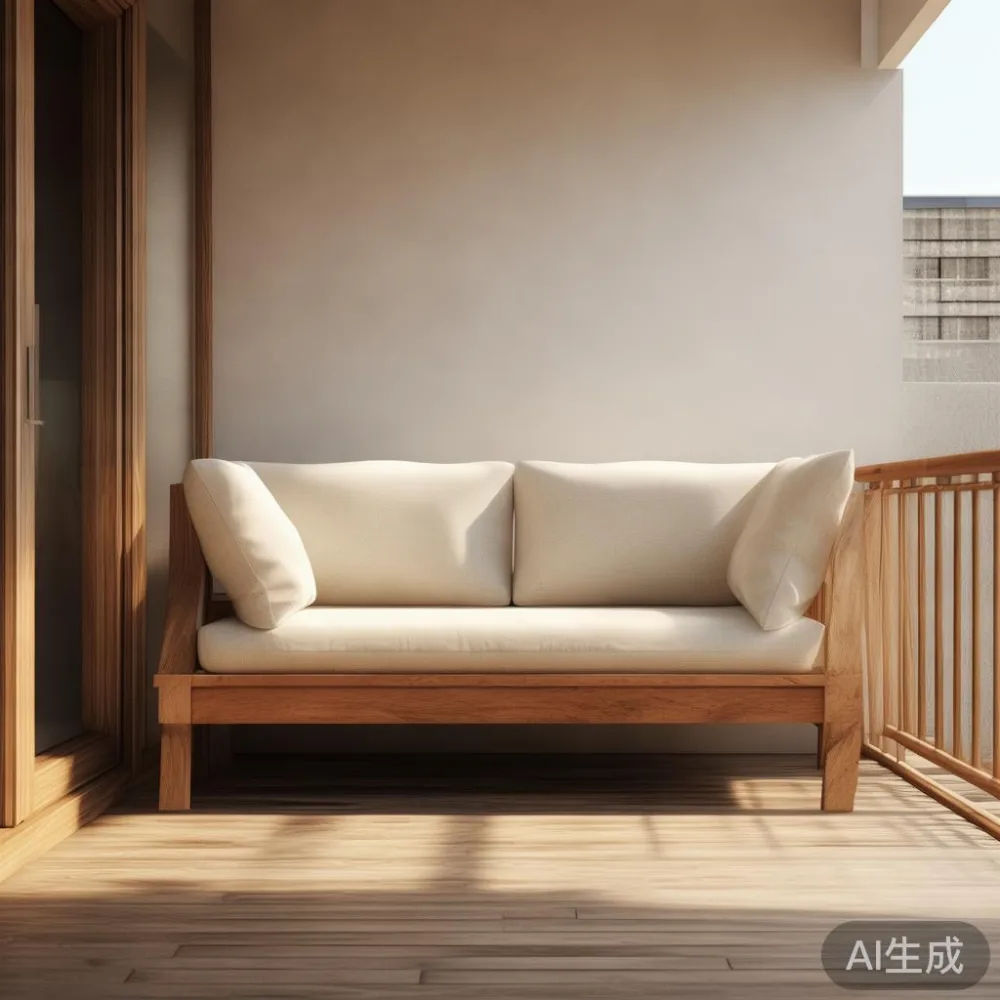
Why Singapore humidity is different from Bangkok, KL or Manila
Many buyers assume all Southeast Asian climates behave the same way. They do not. Singapore sits one degree north of the equator, with no dry season and no cool monsoon break. Daily humidity swings are small, typically 10% to 15%, but the absolute level stays high. Bangkok and Kuala Lumpur get a few drier weeks each year; Manila sits closer to Singapore. What this means for balcony furniture is constant, gentle pressure rather than dramatic expansion and contraction.
Solid wood is hygroscopic — it absorbs and releases moisture until it reaches equilibrium with the surrounding air. At 80% relative humidity, common furniture timbers like oak, ash, walnut and teak settle to a moisture content of around 14% to 16%. In a climate-controlled HDB living room running at 25°C and 55% humidity, the same wood wants to sit closer to 9% to 10%. The wood in your balcony furniture will try to equalise towards whichever side it lives on most often. If that side is the balcony, expect the wood to stay plump; if you bring pieces inside during a wet spell, expect slight shrinkage on the dry days that follow.
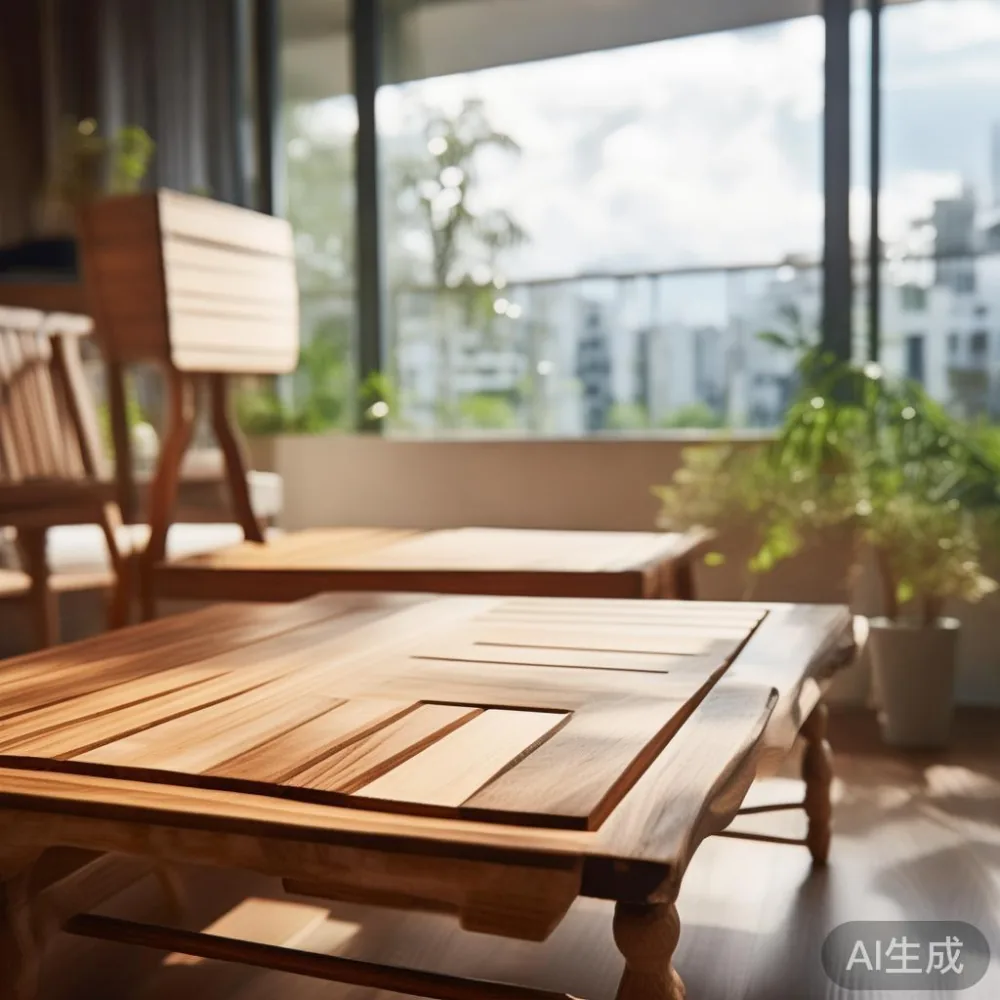
Does my balcony furniture actually need to be solid wood?
This question came up three times last month during visits to Punggol and Bedok condos, so it is worth answering carefully. Engineered panels and MDF look tidy in the showroom, but their failure mode in a humid balcony is ugly: swollen edges, peeling laminates, and black mould at the seams within twelve to eighteen months. Solid wood, by contrast, breathes with the climate. Yes, it moves, but it moves as one piece. A solid wood bench that cups slightly in August will flatten again in February; an MDF panel that has absorbed enough moisture to swell will never return to its original profile.
For balcony furniture in particular — think narrow 150 cm to 180 cm benches, folding bistro sets, and planters with built-in seating — the exposed end grain and the cross-cut joints are the weak points. Solid teak and solid white meranti handle this far better than engineered alternatives. The weight difference matters too: a 180 cm solid teak bench lands around 28 kg to 35 kg, which is heavy enough to stay put in a HDB corridor lift when the doors close but light enough for one person to drag back inside if a thunderstorm rolls in.
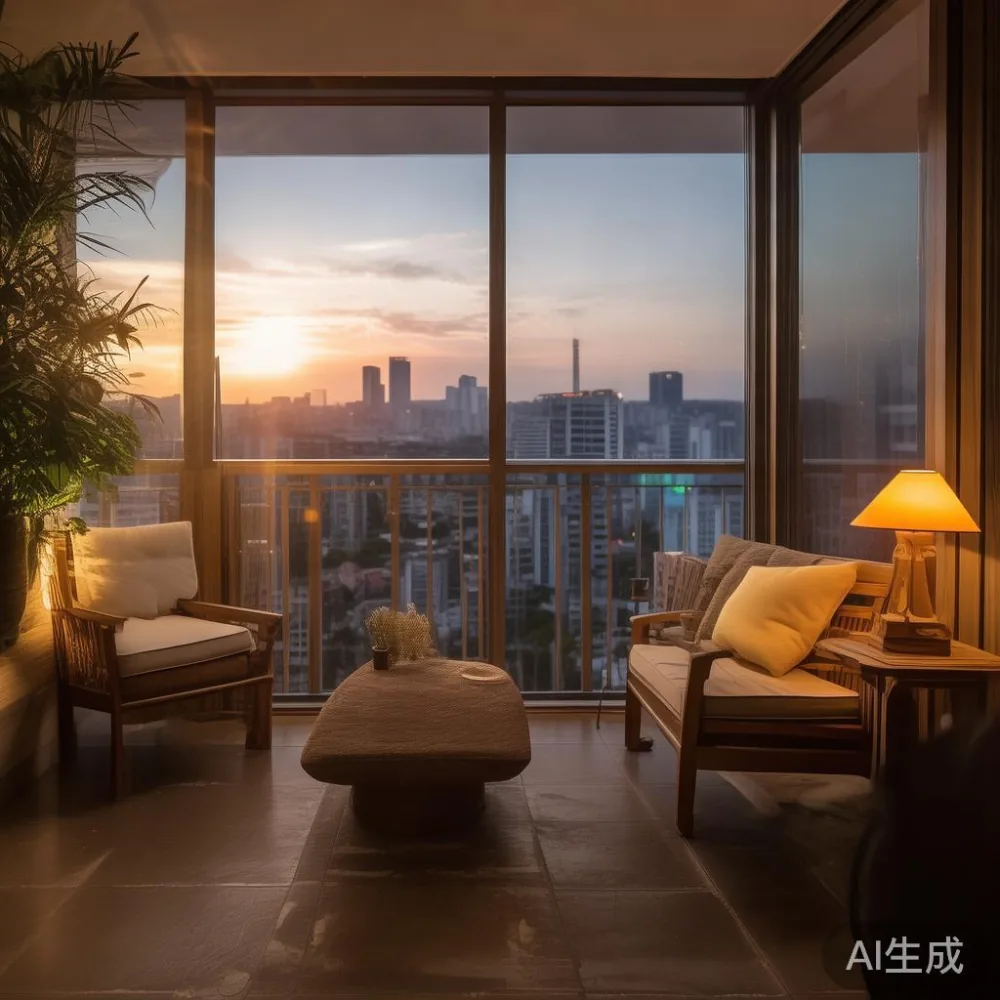
Which wood species survive a Tampines balcony the longest?
If you have spent a weekend walking through the Tampines Hub or Bedok Mall furniture sections, you have probably noticed three names on most price tags: rubberwood, acacia, and "teak oil finish". Here is what each one actually does on a Singapore balcony.
Rubberwood (Hevea brasiliensis) is the budget option. It is dense, machines cleanly, and takes paint well. Untreated, it is a fungus's best friend above 75% humidity. You will see black spotting within four to six months if it is left bare. A marine-grade varnish pushes that out to roughly two to three years on a sheltered balcony.
Acacia (Acacia mangium, often grown in Vietnam) has natural durability and ships at a moderate price. It handles humidity well but reacts badly to direct afternoon sun — you will get surface checking (fine cracks along the grain) on a west-facing service yard in Jurong or Bukit Batok. For S$480 to S$720 for a 120 cm balcony chair, the performance is fair.
Teak (Tectona grandis) is the gold standard for tropical outdoor and balcony furniture. Its natural oils resist moisture, and a slow, even humidity cycle does almost nothing to it. A solid teak balcony bench in the 150 cm to 180 cm range lands between S$980 and S$1,650 depending on joinery and finish. It is heavy, it is quiet, and it will outlast its owner.
For clients who want a warmer tone, American walnut and European oak are also reasonable choices, but they need an oil finish refreshed every 9 to 12 months. Below that, black mildew will colonise the grain in shaded corners.
Is Mid-century modern wardrobe worth it for storing outdoor cushions?
This question sounds off-topic for balcony furniture, but it comes up more than you might think. Singapore HDB bedrooms are tight — a typical 4-room flat in Bedok gives you about 11 sqm of master bedroom, and the wardrobe often doubles as linen and cushion storage. If you own balcony furniture, the seat cushions and scatter cushions usually live somewhere inside during heavy rain.
A mid-century modern wardrobe with solid wood doors and a low internal shelf is a sensible home for compressed foam balcony cushions. The real question is whether the styling holds up. If your living room runs toward a clean, mid-century line — tapered walnut legs, no visible hardware, restrained colour palette — then a mid-century modern wardrobe blends in. If your home is light luxury post-modern light luxury with marble tables and brushed brass, a mid-century piece will read as borrowed from a different apartment. For a typical 180 cm wide three-door wardrobe in solid ash or walnut, expect S$2,400 to S$3,800 delivered, with a 10-year structural warranty that covers joint failure even in a high-humidity bedroom.
How should I measure my balcony and corridor before ordering?
Singapore delivery logistics are tighter than most online product pages admit. HDB corridor widths are standardised, but service lift openings vary by estate. In Punggol Waterway and Sengkang, newer BTO lift doors measure around 900 mm wide by 2,100 mm tall. In older Tampines and Bedok blocks from the late 1980s and early 1990s, lift doors are often 800 mm wide. A solid wood dining table longer than 1,800 mm will not turn inside an 800 mm lift — you will be paying for a failed delivery, and GST at 9% still applies on the failed re-delivery fee.
Measure three things before clicking checkout: the lift door width, the corridor turning circle at the lift lobby, and the balcony door threshold. Most HDB sliding balcony doors are 700 mm to 800 mm clear opening, which is the bottleneck for any flat-pack or assembled balcony furniture. A 150 cm bench in two pieces clears this easily. A 180 cm bench in one piece does not, and the workshop will refuse to ship it assembled unless you confirm a wider service route.
For landed property in areas like Bukit Timah or Serangoon Gardens, the wider gates and larger service lifts solve the geometry, but you still need to plan the path from the truck to the patio. A 35 kg solid teak bench carried by two people is manageable on level ground; the same bench carried up a narrow side staircase on a hot afternoon is not.
How does MIDHILL handle the humidity problem at the factory level?
Workshop drying is the most misunderstood part of buying solid wood furniture in Southeast Asia. Kiln-dried European oak dried to 8% moisture content will absorb moisture aggressively once it lands in a Tampines condo running at 75% relative humidity. The fix is not to ship it bone dry — that leads to cracking and joint failure as the wood swells. The fix is to ship it at a moisture content close to the destination climate.
For Singapore orders, the workshop in Foshan conditions the components for 4 to 6 weeks in a humidity chamber set to 78% before final assembly. This raises the moisture content of the timber to roughly 13% to 14%, which is close to the long-term equilibrium for a sheltered Singapore balcony. The result is furniture that arrives, sits, and barely moves.
This kind of conditioning is invisible to the buyer, which is why so many generic brands skip it. A solid wood bed frame or solid wood wardrobe that arrives at 8% moisture content from a European warehouse will gain 1% to 2% in the first month in a Punggol bedroom, and that movement shows up as a 2 mm to 4 mm gap at the door panel in the dry season. The same piece from MIDHILL, shipped at the conditioned moisture level, holds tight.
What about the marble table everyone keeps asking for?
A small marble table on a balcony is a common Singapore request, usually from clients who want to extend a French provincial or light luxury post-modern look from the living room onto the balcony. Marble is heavy, stable, and humidity-neutral — it does not move with moisture the way wood does. The risk is the joint between the marble top and the wooden sub-frame. If the sub-frame swells, the marble can lift on one side, leaving a wobble.
The practical fix is to specify a marble top with a separate wooden apron, not a glued or epoxied mount. A 90 cm round marble top in Carrara or a grey vein pattern typically adds S$480 to S$720 over the same table in solid wood. For a true French light luxury reading — pale marble, brass-toned hardware, soft linen cushions — a 120 cm oval marble table in the S$1,800 to S$2,400 range pairs well with two solid wood balcony chairs in stained ash.
How should I care for balcony furniture week to week?
Routine care in Singapore is shorter than most owners expect. The key is consistency, not intensity. Wipe down balcony furniture once a week with a dry microfibre cloth to remove salt and dust. Every two weeks, wipe with a cloth barely dampened with distilled water — never tap water, which leaves mineral spotting on oiled finishes. Every three months, apply a thin coat of hard wax oil on exposed end grain, especially on bench legs, armrest ends, and the underside of the seat where moisture wicks fastest.
Air circulation matters more than most buyers realise. A 150 cm solid wood bench pushed flat against a HDB parapet wall will trap moisture behind it and develop surface mildew within six to eight weeks. Pull the bench 8 cm to 10 cm out from the wall, and the same piece stays clean. On a fully sheltered service yard, a small 30 cm USB fan running for four hours a day will cut the local relative humidity by roughly 8% to 12%, which is enough to protect oiled finishes through a wet December.
If black mildew spots do appear, sand lightly with 240-grit paper, wipe with a 1:10 white vinegar and water solution, dry for 24 hours, and re-oil. Skip the bleach — it raises the grain and leaves the surface rough.
How do shipping, GST and returns actually work for a Singapore buyer?
Free shipping kicks in above US$350, which at current exchange works out to roughly S$480 landed. Below that threshold, sea shipping to Singapore runs S$120 to S$220 per order depending on volume, plus a S$45 to S$80 customs handling fee. Air shipping is faster — 7 to 10 days door to door — but lands at S$380 to S$560 for a single bench. Sea shipping takes 22 to 32 days but is the standard for solid wood pieces because the slower transit gives the wood time to acclimatise gradually rather than shock.
GST at 9% is calculated on the declared customs value plus shipping. For a S$2,400 dining table with S$180 sea freight, expect around S$232 in GST at the door. Pay this and the courier clears the piece the same day.
Returns within 14 days are honoured for stock pieces in unopened packaging. Custom sizing, marble tops cut to spec, and any piece marked "made to order" is non-returnable but does carry the 10-year structural warranty. Refinishing — sanding, re-oiling, colour touch-up — is offered for the lifetime of the piece for a small materials fee, typically S$120 to S$280 per visit depending on size. Last month a client in Punggol emailed midhillco@gmail.com about a six-year-old teak bench that had faded on the sun-facing side; the refinishing visit cost S$180 and the bench came back looking close to new.
Frequently asked questions from Singapore buyers
Will my solid wood sofa survive on an open balcony? A solid wood sofa frame in teak or white meranti handles rain well, but the cushions will not. Either store the cushions inside or specify Sunbrella outdoor fabric, which adds roughly S$380 to S$560 per seat.
How do I style a Japandi sofa in room that opens onto a small balcony? Keep the sofa in a low walnut or ash tone, repeat the same wood on a 120 cm balcony bench just outside the sliding door, and let the visual line carry from living room to balcony. The continuity is what makes a small HDB feel larger.
How do I style a Japandi bed in room that already has wooden balcony furniture outside? Match the bed frame to the bench finish within one shade. If the bench is a warm honey teak, the bed frame should be a similar warm oak. If the bench is a cooler grey-washed ash, the bed frame should be a light oak or pale walnut. The point is one wood family across the threshold, not two unrelated species.
How do I style a French provincial sofa in room with a small service yard? French provincial runs heavier and more ornamented than the rest of this list, so do not try to repeat the wood on the balcony. Use a simpler solid wood bench in a neutral finish outside, and let the sofa carry the carved detail indoors.
light luxury sofa vs Italian light luxury sofa — what is the actual difference for a humid home? Both use solid wood frames, but the Italian version typically uses beech with a tighter, more uniform grain and a higher-gloss finish. In Singapore humidity, the higher-gloss finish traps more heat and shows dust more clearly. A standard light luxury sofa in ash or oak with a matte or satin finish wears better in daily use and ages more gracefully on a balcony that opens off the living room.
Is for sale Minimalist furniture a useful search phrase for balcony pieces? Yes — minimalist lines tend to use thinner profiles and exposed joinery, which is exactly what shows construction quality in solid wood. Filter minimalist listings for solid wood only, and you will avoid the MDF panels that fail in humid service yards within a year.
Putting it all together for your Tampines or Bedok home
The pattern that holds up across hundreds of Singapore deliveries over the past decade is simple: pick the right species, condition the wood for the climate, give the piece room to breathe, and maintain it on a short, steady schedule. A solid teak bench in the S$1,200 range, a solid ash dining table around S$2,100, and a pair of balcony chairs at S$320 to S$480 each will outlast a cheaper engineered set by a factor of three or four. The maths works out the same whether you live in a 4-room HDB in Bedok, a Punggol executive condo, or a landed house off Bukit Timah. Spend once on the right wood, spend a small amount every quarter on care, and your balcony furniture will quietly do its job through every wet season Singapore throws at it.