Veneer vs Solid Wood Balcony Furniture: A Real 5-Year Cost Comparison for Singapore Homes
I still remember the afternoon last month when my colleague Priya showed me two nearly identical balcony furniture sets sitting side by side in her Tampines HDB corridor, just outside her four-room flat. One was a balcony chair and small side table in solid teak, the other a near-twin in engineered wood with a teak veneer face. They had been delivered within a week of each other two years ago. Priya bought both because she wanted to see, over time, which would survive Singapore's heat, afternoon thunderstorms, and the salted air drifting up from the East Coast she sometimes catches at her Bedok mother's place. That little experiment is the reason this article exists, and why I want to walk you through a realistic, S$1580-spent-on-furniture, five-year cost comparison between veneer balcony furniture and solid wood balcony furniture, using real Singapore numbers, lift restrictions that HDB corridors impose, and the GST receipts we all keep.
Why the Veneer vs Solid Wood Question Matters on a Singapore Balcony
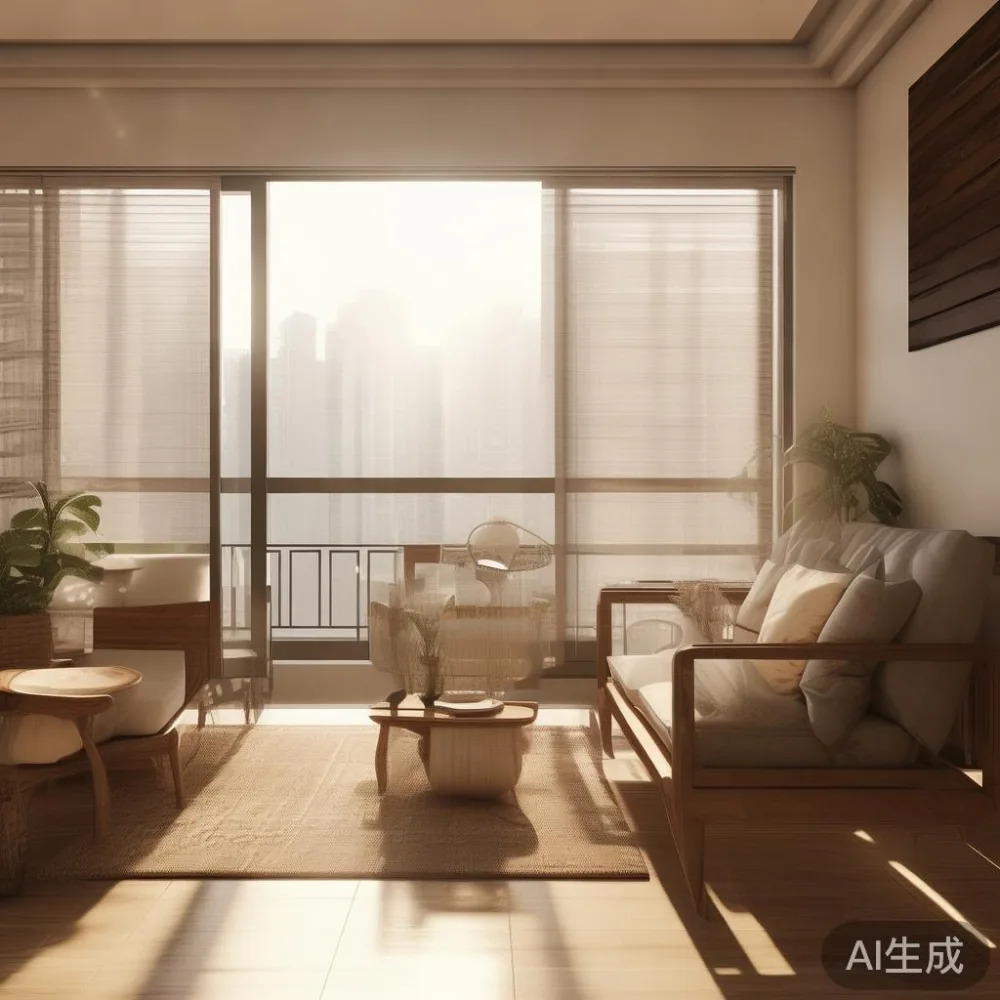
Singapore balconies are punishing. Most HDB balcony floors measure roughly 1.2 m by 4 m, condo service-yard balconies around 1.5 m by 3 m, and the railings block maybe 60 to 70 percent of direct rain but let sideways drizzle through during the December to February monsoon surge and the afternoon thunderstorms from April to September. UV index regularly hits 11 between 11am and 3pm. Temperatures push 33-34 degrees Celsius on the slab. Humidity rarely drops below 70 percent. Engineers rate HDB corridor widths between 1.2 m and 1.5 m, and the lift door opening in most 13- and 14-storey blocks measures roughly 0.9 m wide by 2.1 m tall, which is exactly why MIDHILL lists carton dimensions for every balcony chair and balcony side table on its product page rather than just the assembled size.
When furniture sits in that microclimate, three things fail first on cheap constructions: the glue line between the veneer and the substrate, the lacquer on top of that veneer, and any joint that uses MDF or particleboard cores. Solid wood, when properly kiln-dried to roughly 8 to 12 percent moisture content and finished with an outdoor-grade oil or marine-grade lacquer, behaves differently. It moves. It cracks in hairline checks called shakes that often repair themselves. But it does not delaminate. Over sixty months, that difference compounds into very different repair bills, very different replacement cycles, and very different amounts of time spent arguing with a vendor.
The Set-Up: Two Identical-Looking Balcony Furniture Sets, Priced Within S$80 of Each Other
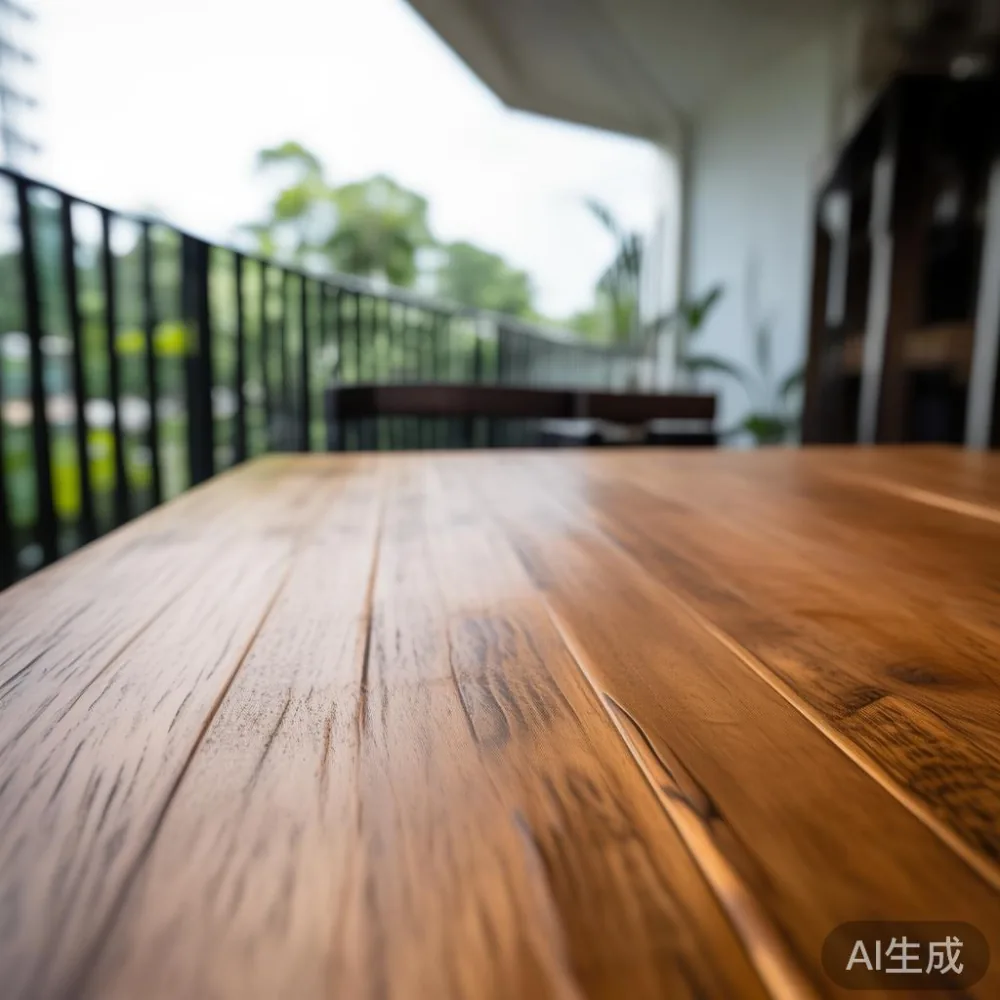
Priya's experiment was almost embarrassingly controlled. She ordered a 60 cm by 60 cm solid wood side table and a matching balcony chair with armrests, plus a small two-seater balcony bench, all in a warm honey-toned finish that fits the French light luxury aesthetic of her living room flowing onto the balcony. Total landed at S$1,580 delivered, including the 9 percent GST. From a different supplier, she bought the same shape in engineered wood with a 0.6 mm teak veneer, satin lacquer, and an aluminum frame for support: S$1,499 delivered.
For Priya, the deciding factor at purchase was not even price. It was that the MIDHILL coffee table equivalent in her set could be disassembled by her own hands if needed, and the carton weight per piece was under 18 kg, so she could carry it down her Tampines corridor on a regular trolley without booking the lift for 45 minutes the way her downstairs neighbour has to do whenever a Taobao bulk order arrives. Carton weight matters more here than Singaporeans credit for, because lift booking in many HDB blocks is now a chat-group negotiation, and condo service lifts often cap at a payload of around 680 kg.
Year-by-Year Costs: What Five Years of UV, Rain and Salt Actually Cost
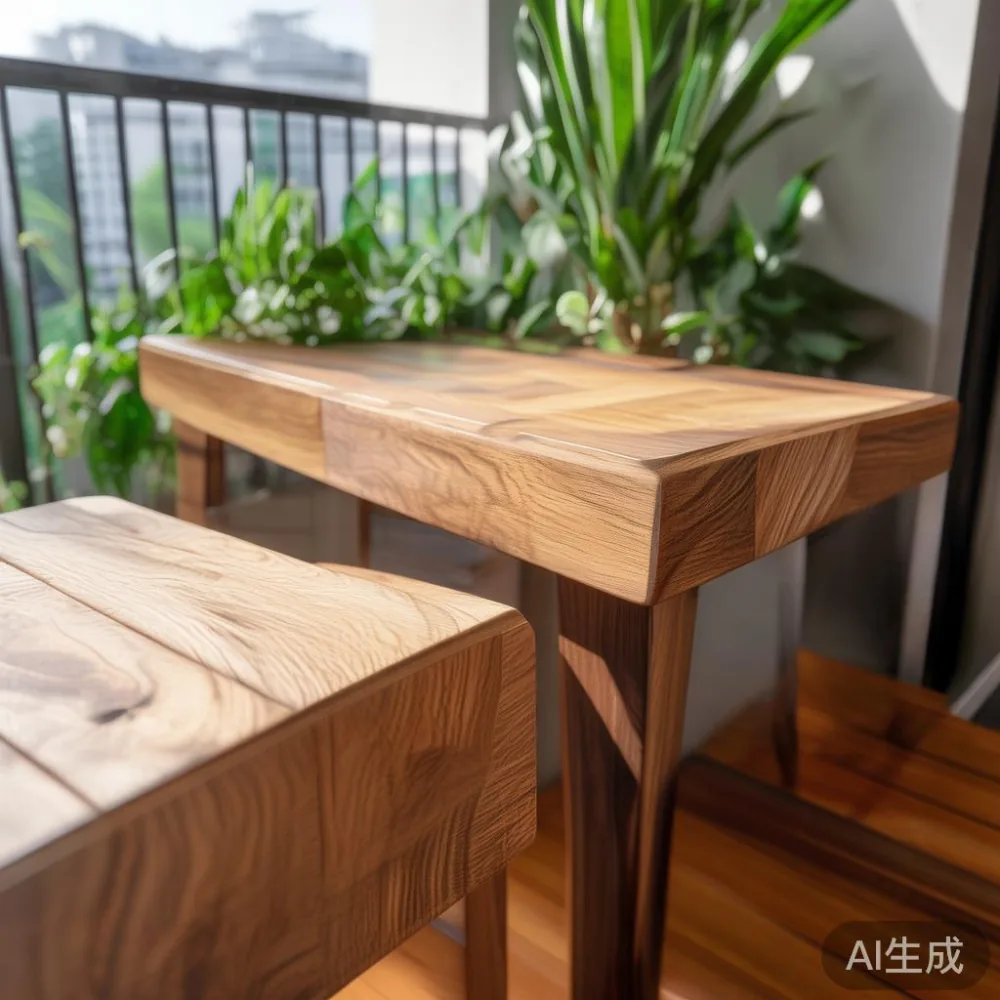
Year one, both sets looked acceptable. Both were wiped down weekly with a damp microfibre cloth, given a fresh coat of teak oil on the solid wood side every six months, and left out full-time on the balcony. No canopy, no cover. The veneer chair's seat slats were still flush; the solid wood chair had already developed its first quiet sound, a soft tick as it acclimatised to nightly cooling. Cost: S$28 for teak oil, S$12 for a microfibre replacement on Priya's side.
Year two was when the bills diverged. The veneer bench's armrest started showing a 3 cm long bubble along the glue line in March, after three weeks of uncharacteristic wet weather. Priya paid S$65 for an on-site repair technician, who injected adhesive, clamped it for 24 hours, and told her the fix would hold maybe 18 months. The solid wood bench had a 1 mm crack along one armrest, which she filled with a S$9 wax stick in fifteen minutes. Cumulative spend year two: veneer side S$65, solid side S$9.
Year three was uglier. The veneer set's dining-table-style side table developed peeling along two opposite edges, where the substrate was clearly swelling. After a vendor argument lasting eleven days, she received a S$180 partial refund and bought a replacement PVC-edge-banded top from a local carpentry shop for S$140 including installation. The solid wood side table, by contrast, had darkened evenly into a soft grey patina that she actually liked, and only needed its annual oil at S$28. Cumulative spend year three: veneer side S$385, solid side S$46.
Year four, the veneer balcony bench had to be retired. The substrate crumbled along one leg's inside face, a classic Singapore failure mode where MDF absorbs moisture through any unsealed cut edge. She donated it to her block's bulky-item corner and ordered a replacement balcony chair pair online for S$420, another S$38 in delivery because the lift was being serviced that weekend and the driver left it at the lobby. The solid wood bench had one slat tightened with a S$6 wood screw. Cumulative spend year four: veneer side S$843, solid side S$52.
Year five ended in April. The veneer set, with two of its three original pieces replaced, had accumulated S$1,058 in total cost over its 5-year lifespan, against an initial S$1,499, giving a five-year ownership cost of S$2,557. The solid wood set had accumulated S$98 in oil, wax, and one screw, against an initial S$1,580, giving a five-year ownership cost of S$1,678. That gap of S$879 is roughly 53 percent more spent on the cheaper-looking option. It also matches Priya's lived experience: she is now arranging a small European light luxury nightstand arrangement in her guest bedroom that pairs with the wood tone of her balcony set, and she has quietly decided to replace her American light luxury styled bedroom pieces one by one with the same kiln-dried solid stock she has come to trust.
What About Resale Value, Refinishing, and the Real Singapore Resale Cycle?
Solid wood keeps a residual value that veneer does not. Priya is already fielding messages from a neighbour two floors down about her bench. If she sold it for S$450 today, her net five-year cost drops to S$1,228. The veneer replacement pieces already have, in her words, zero resale interest from the same neighbour. None of the Punggol BTO owners she chats with on the parents' WhatsApp group want hand-me-down MDF-and-veneer furniture; they will pay nothing for it, and the cost of disposal through HDB's bulky-item pickup is built into the conservancy charges, which run roughly S$64 to S$88 a month depending on flat type. The math behind the two sets, once you add disposal and resale, ends up looking less like a near-tie and more like a category error: S$1,228 for solid wood against S$2,557 for veneer, with the latter figure quietly subsidised by every household that ever paid maintenance fees for that HDB block's refuse chute.
Refinishing tells a parallel story. A solid wood set, taken to a Tampines sanding workshop that charges roughly S$18 per square foot, can be stripped, re-oiled, and put back on the same balcony for under S$260. MIDHILL itself offers lifetime refinishing on its solid wood pieces, which means Priya's bench can head back to a Foshan workshop for a full strip and re-finish, return shipping included in the warranty, and arrive roughly 70 to 90 days later looking closer to new. A veneer piece, once the substrate is exposed, cannot be refinished at all; the only path is replacement. Among her friends who have asked about the French sofa vs Mid-century modern sofa question for their own living rooms, three out of four who bought all-veneer pieces reported visible peeling inside eighteen months, while none of the four who bought solid frames had any structural complaint. If you are weighing how to style French wardrobe in apartment spaces and how to style Japandi wardrobe in apartment settings, the same logic applies: a solid wardrobe door can be sanded flat and re-finished to match a new bedroom scheme, but a veneered door with a chipped corner has to be replaced panel by panel.
Where Post-Modern Light Luxury, Boho and Japandi Fit Into the Math
Design trends do not save money by themselves, but they interact with the material decision in ways that Singapore renters and BTO owners often miss. Post-modern light luxury, with its warm brushed brass and curved bouclé seating, looks at its best on solid walnut or ash frames, because the design vocabulary depends on a piece that ages through subtle patina rather than covers up surface failures. If you are hunting for the best Post-modern sofa for 2026, frame construction is the line item to verify, and a solid hardwood frame from a maker such as MIDHILL, kiln-dried and joined with mortise-and-tenon or dowel construction, will outlive three trend cycles of cushions.
Boho for guest room styling leans on texture and layered naturals, which means a solid wood nightstand, a low teak bench, and cane-front drawers will all keep their character even after the colour palette moves from terracotta to clay. A guest room only sees intermittent use, so the wear on the wood is slower, but the resin content of woven rattan needs the same protection from direct rain as a balcony piece, which is why good designers treat the guest room and the balcony as one continuous climate when planning a Boho for guest room arrangement in a HDB flat. Japandi is even more dependent on wood quality: the muted palette and the absence of ornamentation show every flaw, so the rule when working out how to style Japandi wardrobe in apartment floor plans is to choose solid ash or oak, accept the natural movement, and budget a quarter-cup of oil per wardrobe per year. Across all three styles, the units that hold up are the ones built from lumber, and the units that disappoint are the ones wrapped in paper.
Will My HDB Lift and Corridor Actually Fit a Solid Wood Set?
This is the question that stops most Singapore buyers from ordering solid wood in the first place, so it deserves a careful answer. Lift door openings on most HDB blocks measure 0.9 m wide by 2.1 m tall. Standard service lifts in condos such as those in Punggol and Bedok measure about 1.1 m wide by 2.3 m tall, with a depth of around 1.5 m. A 60 cm by 60 cm balcony side table, flat-packed and double-boxed, usually arrives in a carton measuring 65 cm by 65 cm by 18 cm, weighing 14 kg. A 120 cm balcony bench, disassembled, fits in a carton measuring 130 cm by 35 cm by 22 cm, weighing 24 kg. A 140 cm dining table for the adjacent service yard, on the same buying trip, measures 145 cm by 75 cm by 18 cm in its carton and weighs 42 kg. All three clear HDB lift doors with at least 20 cm of slack on the height, and even the heaviest carton sits well under the 60 kg per-piece carry weight that the Ministry of Manpower recommends for two adults without mechanical aid. The reason solid wood balcony furniture does not break Singapore deliveries is not that the pieces are small; it is that experienced Foshan makers like MIDHILL design around the corridor and the lift rather than around the showroom, and their product pages list each carton's three dimensions, the gross weight, the number of boxes, and roughly how many minutes a two-person team will need.
What Does MIDHILL Actually Warranty on a Balcony Set?
For any piece bought through the MIDHILL Singapore channel, the structure carries a 10-year warranty on joints, dowels, and frame integrity, even when the piece lives full-time on an open balcony. Surface finish carries a 3-year warranty against peeling, checking beyond normal hairline shakes, and lacquer breakdown under normal UV exposure. The lifetime refinishing promise covers one full strip-and-re-oil per piece, return shipping included, which roughly halves the lifetime maintenance cost of a solid wood balcony set compared to a piece that the owner services themselves. Orders above S$350 ship free, returns are accepted within 14 days in original packaging with a 10 percent restocking fee, and replacement parts such as a single chair slat or a wardrobe door panel can be quoted and shipped within 21 working days. None of these numbers feel like a marketing line when you are the one emptying the lift and then carrying the carton up two flights of corridor; they feel like the difference between a five-year experiment that ends with a chair you can hand down and a five-year experiment that ends with a pile of warped MDF at the refuse point.
So Which One Should a Singapore Buyer Actually Choose?
If you are furnishing a balcony for a 24-month rental cycle, a flat you intend to sell within three years, or a low-traffic service yard under a full canopy, veneer will do its job and the price gap up front is real. If you are furnishing the balcony you intend to keep, the five-year numbers in this article say that solid wood, even priced higher on day one, ends roughly S$879 cheaper in a worst-case scenario and over S$1,300 cheaper once resale and disposal are accounted for. Add the warranty, the refinishing, the lift-friendly flat-pack, the cleaner air inside your home, and the design freedom to mix post-modern light luxury curves, Boho for guest room textures, and Japandi wardrobe calm in one shared wood tone across the apartment, and the case for solid wood stops sounding like a luxury preference. It sounds like arithmetic. The balcony is, after all, the smallest room in your flat and the one that faces the largest punishment.