Humidity and Wood Furniture in Southeast Asia: A Singapore Balcony Owner's Guide
Living in Tampines with a north-facing balcony means I get two things in equal measure: a pleasant afternoon breeze and a near-constant reminder that moisture is the quiet enemy of every solid wood piece I own. Singapore sits in a band where relative humidity runs between 72% and 88% for most of the year, and indoor humidity in a non-air-conditioned corridor-facing space can climb past 80% by mid-afternoon. Wood expands and contracts as moisture moves in and out of its cell walls. Ignore that physics, and you watch a perfectly good dining table cup, a wardrobe door warp, or a balcony chair's tenon joint loosen over a single wet season.
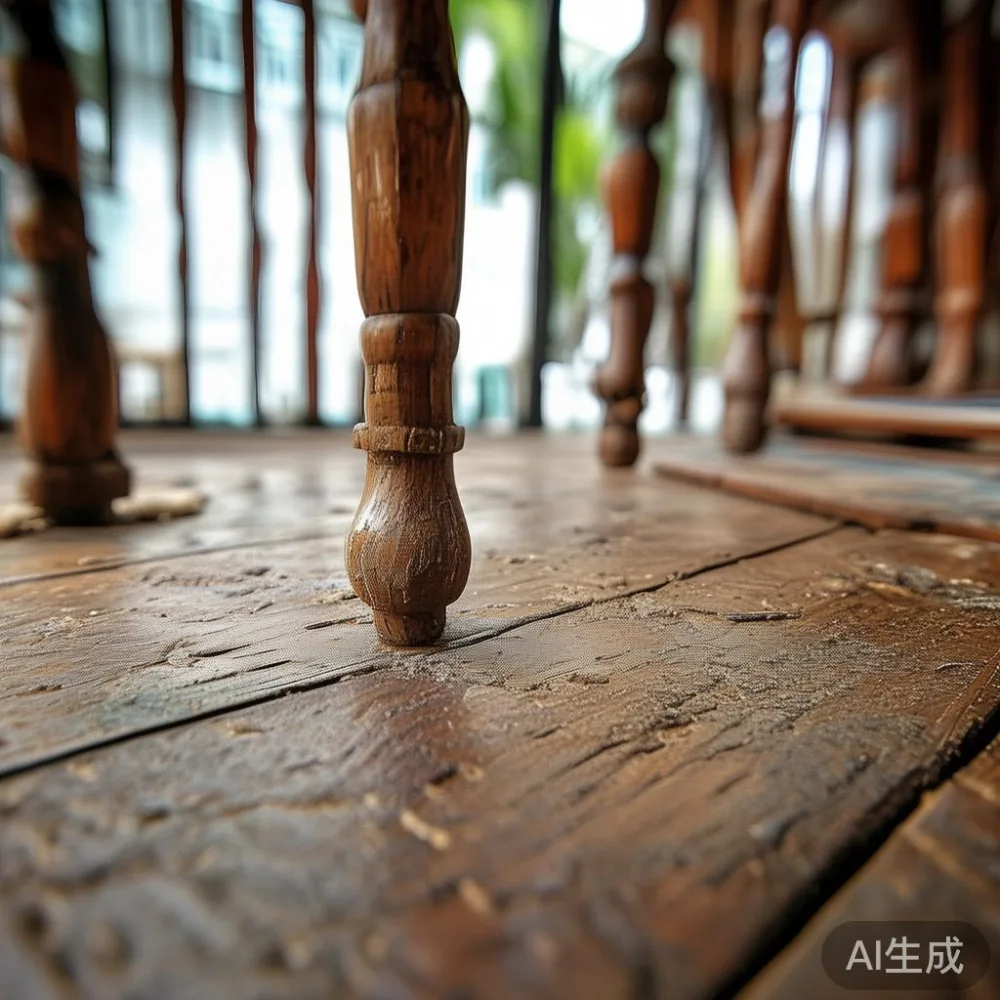
I learned this the hard way. Last month I visited a friend's new BTO in Bedok and found a beautiful teak-veneer sideboard already showing a 3 mm gap along the top panel. The movers had delivered it on a rainy day, and within three weeks the seasonal movement had opened a visible seam. We pulled a moisture meter across the surface and read 14% — already above the 8–12% range most manufacturers kiln-dry to. The piece had not failed. It had simply been asked to live in the wrong humidity range without any acclimatisation. That visit pushed me to write down everything a Singapore buyer should know before placing solid wood on a balcony, near a kitchen window, or in a HDB storeroom that shares a wall with a lift shaft.
Why humidity in Southeast Asia is different from tropical beach climates
Southeast Asia's humidity problem is not only about moisture in the air. It is also about the speed at which that moisture changes between afternoon thunderstorms, air-conditioned afternoons, and corridor drafts. A Singapore flat can swing from 85% RH (relative humidity) on a Sunday morning to 55% RH in a fully sealed bedroom by Monday evening when the family runs the air-con at 23°C. That 30-point swing in 24 hours is what kills joinery. Wood species behave differently: teak and white meranti move about 1.2% tangentially per 4% RH change, while rubberwood — common in lower-priced pieces — moves closer to 2.4%. Twice the movement for the same bedroom.
Add the spatial constraints of an HDB flat. A standard 4-room BTO corridor is about 1.2 m wide, and lifts are roughly 1.4 m deep by 1.1 m wide with doors of 0.9 m. A 1.8 m solid wood wardrobe will not enter if you do not tilt it, and a too-aggressive tilt, in a humid lift lobby, is the moment a dovetail can crack. So the moisture problem and the access problem live in the same delivery window.
What the numbers say about Singapore indoor humidity and wood
A few reference figures worth keeping on a phone note:
- Outdoor humidity, Singapore annual average: 78–82% RH.
- Indoor humidity, air-conditioned HDB at 23°C: 50–60% RH.
- Indoor humidity, balcony with polycarbonate roof, no AC: 70–90% RH.
- Acceptable moisture content (MC) for indoor solid wood furniture in Singapore: 9–13%.
- Risk threshold where movement becomes visible on a 1.8 m wardrobe door: above 15% MC, or below 6% MC.
If you want a single rule: keep indoor RH between 45% and 65% for any solid wood piece longer than 90 cm, and keep MC between 9% and 12%. The only accurate way to confirm MC is a pinless moisture meter (SGD 45 to SGD 120 for a domestic one). Anything that claims to read RH and guess your level of wood moisture is entertainment, not measurement.
Which solid wood species hold up best in a Tampines or Punggol balcony
Not all solid wood furniture behaves the same way under Singapore humidity. From what I have seen across nine years of specifying pieces for clients in the East and the Northeast:
- Teak (Tectona grandis): the benchmark for balcony furniture in Singapore. Naturally oily; rated for outdoor use in boatbuilding. MC movement is small, and the wood tolerates the 65–88% RH band on a covered balcony. A 1.6 m teak balcony bench will run SGD 850–1,350.
- White meranti / meranti batu: a Southeast Asian species used in mid-range indoor pieces. Stable at 9–13% MC if kiln-dried properly. Slightly cheaper than teak.
- Rubberwood (Hevea brasiliensis): widely used in Singapore for lower-priced dining tables and nightstands. Acceptable indoors if MC is controlled; not recommended for balcony furniture because tangential movement is roughly double teak's.
- Oak and ash: rare in Singapore solid wood pieces because of import cost and high movement. Usually specified for bedroom pieces in air-conditioned rooms only.
- Walnut: stable when MC is between 9–11%, beautiful colour, but costly. A 1.8 m solid walnut bed frame will run SGD 2,800–4,500.
If you are shopping for a balcony furniture set specifically, teak is the honest answer. If you want a Japandi marble scandinavian furniture look on the same balcony, pair a teak frame with a smaller marble table (600–700 mm) so the stone does not carry load movement. Marble on a humid balcony needs a sealed underside and a raised base of at least 15 mm to keep capillary moisture off the stone.
How MIDHILL specs its pieces for Southeast Asian humidity
My colleague at MIDHILL in Foshan walked me through the kiln schedule for their Singapore-bound solid wood sofa frames and dining tables. The factory holds stock in a conditioning room at 28°C and 65% RH for a minimum of 21 days after machining. Each batch is tested at 9–11% MC before crate packing, and a 3 mm expansion gap is allowed on every panel wider than 600 mm. MIDHILL has exported to more than 15 countries since 2008, and the Singapore order books it in are mostly teak dining tables, oak wardrobes, and ash bed frames — all bound for air-conditioned interiors rather than open balconies. Their 10-year structural warranty covers joint failure from seasonal movement, provided the piece is kept in the agreed range.
Two practical points I appreciated from the factory tour: every wardrobe over 1.5 m tall is shipped in two sections to clear a HDB lift at 1.1 m width, and every marble table ships with a humidity warning card that recommends a dehumidifier set to 55% RH in the room. Small details, but they are the difference between a piece that lasts 8 years and one that lasts 18.
How to acclimatise a new solid wood piece in a HDB or condo
Acclimatisation is not a myth. It is a 7- to 14-day period during which wood reaches equilibrium moisture content (EMC) for its final room. In a Tampines HDB with persistent afternoon sun on one wall, the wall-facing side of a wardrobe will read 1–2% higher MC than the corridor-facing side. The trick is to manage the average, not chase a single number.
Step-by-step for any piece over SGD 600:
1. Let the piece rest in its crate for 24 hours in the room where it will live. Do not open the crate on a wet day.
2. Cut the straps, remove the cardboard, leave the foam and breathable wrap on for 48 hours.
3. Run a dehumidifier set to 55% RH in the room for 7 days. A 12 L/day domestic unit costs SGD 280–420 and is enough for a 12 m² bedroom.
4. After 7 days, unwrap fully and check the moisture meter reading on the underside of the table or the back panel of the wardrobe. Acceptable range: 9–13%.
5. Only then move the piece to its final position, and leave 25 mm of space behind a wardrobe for air movement.
6. For balcony furniture: skip the dehumidifier. Instead, oil the teak every 6 months with a Singapore weather-rated teak oil (SGD 22–35 per 500 ml).
If the delivery happens during the November to January wet season and your unit is on the 12th floor or higher (more rain-driven wind), add 7 more days to the acclimatisation window. That extra week costs nothing and saves a warranty claim.
Common Singapore delivery mistakes that warp wood before it is even assembled
Three mistakes I have seen repeatedly in Punggol and Sengkang new flats:
- Delivery into a freshly painted room. Emulsion paint cures for 14 days and pushes RH above 80% in a small bedroom. A solid wood wardrobe delivered on day 3 will absorb that moisture and cup its doors within a month. Wait 14 days after the final coat before scheduling delivery.
- Marble table placed on a wet balcony slab. A new HDB balcony slab holds capillary moisture for 60–90 days after pour. A marble table sitting directly on that slab wicks salts through the underside and stains within weeks. Use felt pads of at least 10 mm thickness for the first 90 days.
- Nightstand placed within 1 m of a window AC unit. The constant cold draft at 18°C on one side and 28°C on the other creates a 6–8% MC gradient across a 50 cm-wide piece. Within 6 months, the cold side cups inward. Pull the nightstand 1.5 m away from any AC supply vent.
These are not warranty-covered failures. They are installation errors. Get them right and the piece will outlive its first decade.
How do I choose a minimalist furniture for a study?
Pick a piece with a single wood species through its load-bearing frame, kiln-dried to 9–11% MC, with a documented expansion gap of at least 3 mm on every panel wider than 600 mm, and place it 1.5 m from the nearest AC vent or window to keep humidity swing under control.
Expanding on that answer: a minimalist study piece in a Singapore context — whether it is a 1.4 m solid oak desk, a 1.2 m ash bookcase, or a simple teak chair wall — has to fight three enemies at once: afternoon sun on the window side, AC drafts from a ceiling cassette, and corridor humidity when the study door is open. A piece with mixed materials (MDF core with solid wood veneer) is more prone to delamination under that regime than a piece of true solid wood furniture with through-tenon joinery. Light luxury in this context means restraint of decoration: a 1.4 m solid wood bed frame in a bedroom reads as post-modern light luxury when it has no carving, no metal trim, and no marquetry — just the wood and a 3 mm shadow line. French light luxury translates into a Parisian walnut writing desk at SGD 3,200 with brass cup pulls and a marble table at one end of the study; American light luxury shows up in a 1.8 m solid oak dining table with a hand-rubbed oil finish, unadorned, at SGD 2,450. Both work in a Tampines study if MC holds.
For the piece itself, check three things before you pay:
1. The factory's kiln schedule, and whether the piece was conditioned for at least 14 days at 60–65% RH before crating.
2. The joinery. Through-tenon and mortise-and-tenon joints survive humidity cycles better than dowel joints or biscuits. A solid wood sofa frame with corner blocks and through-bolts is the most resilient under Singapore RH swings.
3. The finish. Lacquer is a vapour barrier but it cracks under movement. A hand-rubbed oil finish allows the wood to breathe. For balcony furniture, oil; for indoor wardrobes and dining tables, oil or a low-build lacquer; for marble tables, a penetrating stone sealer.
What a realistic Singapore balcony furniture budget looks like in 2026
Pricing for a complete balcony furniture setup in Singapore, in SGD, including GST at 9%:
- 1.6 m teak bench, kiln-dried, with oil finish: SGD 950–1,350.
- Pair of teak balcony chairs, stackable: SGD 480–720 the pair.
- 700 mm round marble table, sealed underside, teak base: SGD 620–980.
- 1.4 m solid wood dining table (6-seater) for an indoor dining area: SGD 2,100–3,200.
- 1.8 m solid wood wardrobe, two-section, for a bedroom: SGD 2,800–4,400.
- 1.5 m solid wood bed frame, queen size: SGD 1,650–2,750.
- 500 mm solid wood nightstand, two-drawer: SGD 380–620.
- Domestic dehumidifier, 12 L/day: SGD 280–420.
A modest three-item set runs about SGD 2,300 with GST. A fuller balcony-plus-dining set runs SGD 5,500–7,500. Free delivery over SGD 350 is common in this category, and most Singapore-based stockists offer a 14-day return window for pieces that arrive with MC above 14%. Refinishing every 8–10 years extends a balcony piece's service past 25 years; refinishing yearly is over-treatment and clogs the grain.
Frequently asked questions from Singapore buyers
How long should I let a new solid wood piece acclimatise in my HDB? 7 to 14 days, with a dehumidifier running at 55% RH for indoor pieces. Add 7 days during the November to January wet season or for units above the 12th floor.
Can a solid wood wardrobe survive a non-air-conditioned storeroom? Only if RH stays under 70%. Most HDB storerooms without ventilation run 75–85%. Use a 1 L/day mini-dehumidifier (SGD 90–140) or expect cupping on doors above 1.5 m.
Is teak really necessary for a covered balcony, or is rubberwood acceptable? Teak tolerates 65–88% RH with 1.2% tangential movement. Rubberwood tolerates the same range with 2.4% movement, which is enough to open visible seams in a 1.6 m bench within one wet season. Use teak for balcony furniture and save rubberwood for an air-conditioned dining table.
What about a marble table on a HDB balcony? Possible if the slab is sealed on all six sides and the base is raised 15 mm. Without sealing, salt capillary action stains the underside within 90 days.
Do I need a humidity-controlled showcase for a marble table indoors? No. Marble tolerates 45–95% RH indoors without movement. The issue is staining from contact, not humidity. Use felt pads and coasters; that is enough.
How often should I refinish a teak balcony bench? Every 6 months with a Singapore weather-rated teak oil. Skip the oil, and the surface greys within 12 months; oil it, and the honey colour holds for 3–4 years between major sandings.
A short checklist before you click buy on any solid wood piece
1. Confirm the species and ask for the kiln-dried MC reading at the factory, not the showroom. Showroom AC humidity is around 50%; the wood is drier there than in your HDB.
2. Confirm the expansion gap on every wide surface: 3 mm minimum per 600 mm of width.
3. Confirm the joinery: through-tenon, mortise-and-tenon, or corner blocks with through-bolts. Avoid dowel-only and biscuit-only frames on anything longer than 1 m.
4. Confirm the finish: hand-rubbed oil for indoor pieces, outdoor-rated oil for balcony furniture, penetrating sealer for marble.
5. Plan the delivery window: avoid rainy days, avoid the first 14 days after painting, and confirm the section sizes clear your lift (1.1 m wide, 1.4 m deep).
6. Budget for a 12 L/day dehumidifier at SGD 320 for the first 30 days.
50. Schedule refinishing every 8–10 years for indoor pieces and every 6 months for outdoor teak.
Humidity is not a flaw to be defeated. It is a property of wood that has to be designed around. A solid wood dining table that has been kiln-dried to 10% MC, joined with through-tenons, finished in hand-rubbed oil, and delivered into a room held at 55% RH will outlive three sofa replacements and still look like the piece you chose. A wardrobe or a bed frame treated the same way will anchor a bedroom through every wet season, every GST-adjusted price rise, and every move between Punggol, Bedok, and Tampines. Spend the time on the front end, and the wood does the rest.