Balcony Furniture: What Actually Drives the Price of Solid Wood Furniture in S
I spent the better part of last month walking through three showrooms in Singapore with a tape measure, a notebook, and a slightly skeptical colleague who kept asking why two dining tables that looked almost identical carried price tags of S$1,800 and S$5,400. By the end of the trip, after we had measured the legs, knocked on the aprons, and quizzed a sales manager about joinery, the answer became obvious: solid wood furniture is one of those categories where the visible surface tells you roughly 30% of the story, and the other 70% lives inside the timber, under the finish, and in the paperwork. Whether you are kitting out a balcony in a Punggol executive HDB, squeezing a side table through a Tampines corridor, or furnishing a four-room flat in Bedok with parents, kids, and a cat that treats every sofa arm as a scratching post, the same physics apply. Below is the field guide I wish I had before that showroom day — a breakdown of the ten variables that actually move the price, told from the perspective of someone who lives with Singapore humidity, GST, and 1.2-metre-wide lift doors.
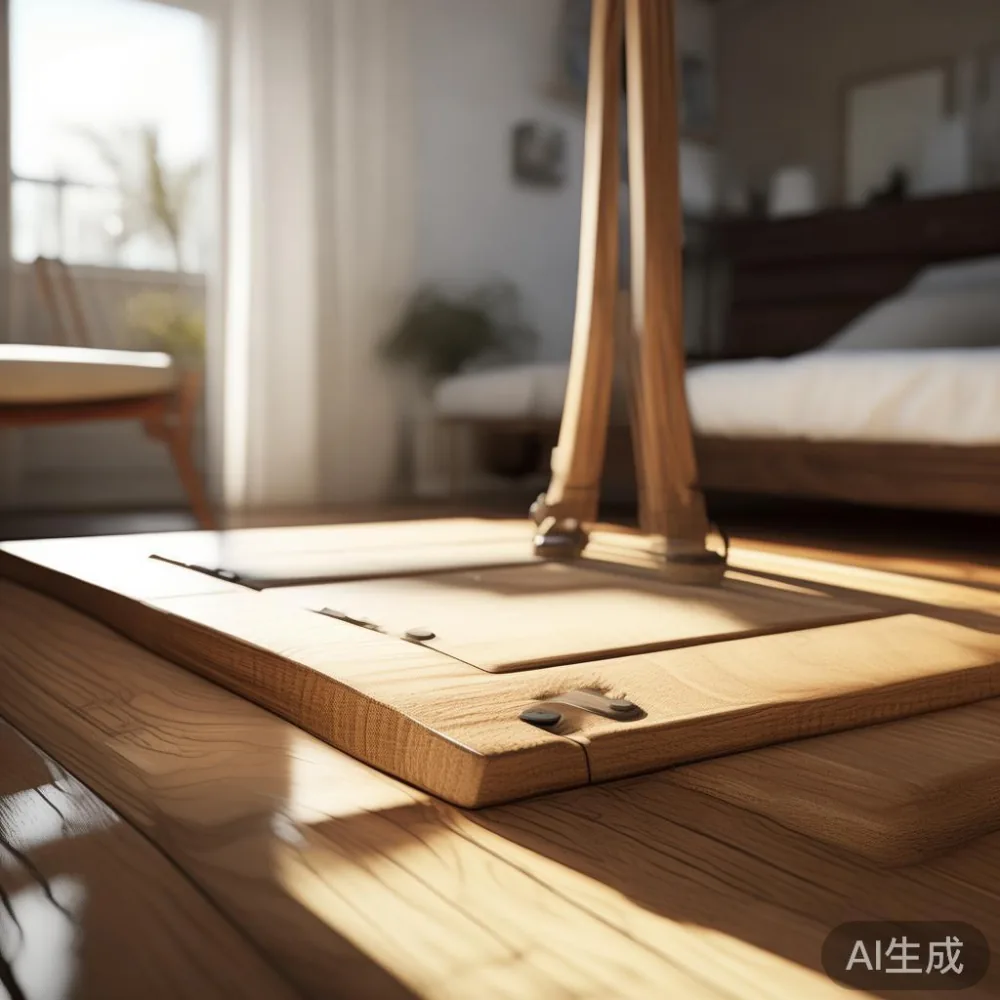
1. Wood Species: Why a Teak Stool Costs More Than a Rubberwood One
Species is the single largest driver, and it is also the easiest to fudge in a product description. Rubberwood (Hevea brasiliensis), grown on plantations across Malaysia and Thailand, is dense enough for daily use, takes stain well, and lands in the S$600 to S$1,200 bracket for a standard 1.4-metre dining table. Teak (Tectona grandis), by contrast, contains natural oils that resist moisture — a genuine advantage on a balcony that cops sideways rain during the December monsoon — and a six-seater teak dining table will start around S$3,800. Oak, walnut, ash, and acacia all sit in different bands, with European white oak and American black walnut commanding the top tier. When you read a spec sheet, ask for the botanical name, not just the marketing label. "Solid hardwood" means very little; "solid Hevea brasiliensis" or "solid Quercus alba" tells you everything.
There is a second layer here: the difference between heartwood and sapwood. Heartwood is the dense, darker core of the tree; sapwood is the pale outer ring. Quality makers use heartwood for structural parts and accept sapwood in non-load-bearing panels. Cheaper pieces invert that ratio. On a 1.8-metre solid wood sofa frame, heartwood content can swing the price by S$400 to S$700 with no visible difference until the wood ages.

2. Joinery and Construction: Where the Real Engineering Lives
Pick up a chair and lift it by the armrest, then by the seat rail. A chair that wiggles at the armrest has screwed or nailed joinery — the kind that loosens inside three years of Singapore humidity cycles. A chair that stays rigid has mortise-and-tenon, dowel, or finger-jointed construction reinforced with corner blocks and PVA or hide glue. In a Bedok four-room flat, where a wooden dining chair gets dragged across tile four or five times a day, that difference is the gap between a chair that lasts six years and one that lasts twenty.
For case goods like a wardrobe or a nightstand, look at the back panel. A 3-mm hardboard back stapled into a rabbet is the budget option. A 9-mm to 12-mm solid plywood or solid wood back, screwed into the carcass, is the upgrade. Open the drawer: English dovetail joints (interlocking finger-shaped cuts) signal drawer construction designed to handle the weight of folded clothes and the inevitable over-stuffing on a Sunday morning. Side-mount or centre-mount metal runners are fine for a bedside drawer; under-mount soft-close runners indicate a maker who cares about the last 5% of the user experience. None of this is hidden — but you have to know to look.
3. Finish: Lacquer, Oil, Wax, and the Hours Behind Each Coat
Finish is where many Singapore buyers get surprised, because the price difference between a sprayed polyurethane lacquer and a hand-rubbed hardwax oil can be S$300 to S$900 on the same piece of timber. Lacquer is fast, glossy, and creates a plastic-feeling film that resists spills — useful on a balcony coffee table that has to deal with kopi spills and condensation from an ice bucket. Oil finish, such as linseed or tung oil, soaks into the cells of the wood and lets it breathe; it feels warmer to the touch, shows the grain more honestly, and can be spot-repaired by rubbing a fresh coat into a scratch.
The number of coats matters too. A budget piece might get two coats of sealer and one top coat; a premium piece gets a stain, a wash coat, two to three sealer coats, sanding between each, and a final top coat. On a single dining tabletop that is 28 hours of labour at a Singapore finishing shop — labour that costs the maker real money. Manufacturers like MIDHILL, whose Foshan factory has been producing solid wood pieces since 2008, document their finishing sequences specifically because they know customers in Singapore, Australia, and the UK now ask about it.
4. Origin, Shipping, and the GST You Cannot Avoid
Where the furniture is built — and how it gets to your door in Tampines, Punggol, or Clementi — is a hidden but sizeable line item. A solid wood sofa built in Foshan or Vietnam and shipped by 40-foot container will land in Singapore at a different landed cost than a similar piece built in Johor or Batam. The freight quote per cubic metre changes with fuel prices; the customs code for "seating" carries a different GST treatment than "bedroom furniture"; and the 9% Singapore GST is charged on the CIF value plus duty. For a S$4,000 dining set, that is S$360 you pay whether you import it yourself or buy it from a local showroom.
Then there is the last-mile problem, which in Singapore is unusually concrete. A lift in a Punggol Build-To-Order block is typically 1.1 to 1.3 metres wide internally, with a door opening of around 0.9 metres. A solid wood dining table longer than 1.8 metres often will not fit through the lift in one piece. A good retailer will quote you a 1.6-metre unfolded dimension, supply detachable legs, or — better — offer an assembly crew that brings the tabletop up the service lift in two halves and bolts it on site. That service costs S$80 to S$200 in Singapore, and it is worth every cent when you watch three men wrestle an oversized marble table through a 90-degree corridor turn.
5. Dimensions, Weight, and Whether the Lift Will Forgive You
Weight and dimension sound like boring bullet points, but they are where a lot of "bargains" quietly break down. A 1.6-metre solid wood dining table in rubberwood weighs 35 to 45 kg; the same table in teak weighs 60 to 80 kg; a marble-top version can hit 110 kg. That weight has to travel up a lift rated at around 1,000 kg for an HDB passenger lift, share that capacity with your neighbours on moving day, and then stand on a balcony floor that may or may not have been waterproofed to handle the load.
For balcony furniture specifically — and I include the rattan-accented solid wood balcony armchairs and small bistro tables that have become the category's quiet bestseller in HDBs — weight still matters, but for a different reason. Heavier pieces stay put during a thunderstorm squall and do not need to be dragged inside every time the sky turns grey. MIDHILL's balcony sets, for instance, ship with concrete-internal bases hidden inside the wooden frame so the set weighs roughly 22 to 28 kg per chair without tipping the scale at "lift-shareable". That kind of detail is invisible on a price tag and very visible after your second monsoon.
Where can I buy a desk in Singapore?
The short answer: you can buy a solid wood desk in Singapore from any of three channels — local furniture showrooms in Tan Boon Liat Building and along Jalan Jurong Kechil, online direct-from-factory brands that ship from Guangdong (including MIDHILL, which exports to 15-plus countries and offers free delivery over US$350), or second-hand platforms like Carousell and Facebook Marketplace where ex-expat stock appears in waves each June and December. The right channel depends on whether you need the desk in 4 days or 4 weeks, whether you want to match an existing dining table, and whether you are willing to assemble it yourself or need white-glove delivery into a specific room on a specific floor.
For a 1.2-metre solid wood writing desk with a single drawer, expect to pay S$450 to S$900 in rubberwood, S$900 to S$1,800 in ash or oak, and S$1,800 to S$3,200 in walnut. The desk's frame should be solid wood, not veneer over MDF — a desk drawer gets pulled 10 to 20 times a day, and MDF edges crumble after the first humid season. Ask for a sample chip, knock on it with your knuckle, and smell it: solid wood smells like a forest, MDF smells like a hardware store.
6. Hardware, Drawer Runners, and the S$50 of Metal Nobody Talks About
Hidden inside every wardrobe and nightstand is a small pile of metal that nobody photographs for the catalogue: hinges, runners, cam locks, corner brackets, and the screws that hold them. Budget hardware is made of 0.8-mm cold-rolled steel with a thin zinc plating; it rusts within two years in a Singapore bathroom-adjacent wardrobe and stains your shirts orange. Premium hardware is 1.0 to 1.2 mm, with nickel or black powder-coat finish, soft-close dampers, and a brand name like Blum, Hettich, or DTC printed on the side. On a three-door wardrobe, that hardware upgrade is roughly S$120 to S$220 of cost that the maker absorbs but quietly factors into the price.
For a bed frame, the slat system matters as much as the side rails. A bed frame with 12 to 14 solid wood slats, each 50 to 60 mm wide, will support a pocket-spring mattress for 8 to 10 years without sagging. A bed frame with 8 thin plywood slats will sag in the middle by year three, and your mattress warranty — usually 10 years — will quietly become void because the foundation was inadequate.
7. Design, Proportion, and the Light-Luxury Question
Design is the hardest line item to justify on a spreadsheet, because two solid wood dining tables with identical timber, identical joinery, and identical finishes can sit at S$2,800 and S$4,200 purely because one was drawn by a designer with a name. French light luxury, the soft, cream-and-oak, rounded-corner aesthetic you see in Kydd Home and Castlery's higher tiers, typically pulls an extra 25 to 40% over the equivalent minimalist Scandinavian piece. American light luxury — broader, deeper, walnut-and-brass — sits in a similar premium band. Post-modern light luxury, with its curved silhouettes and marble accents, can double the figure once a real marble top is bolted to the base.
What you are paying for is proportion, detailing, and the years it takes for a workshop to refine a single chair silhouette. A well-proportioned solid wood dining chair will sit at a height of 440 to 460 mm with a seat depth of 420 to 460 mm; a poorly proportioned one will be 10 mm off, and you will feel it in your lower back by the third meal. That refinement is not free. The good news is that French light luxury and post-modern light luxury pieces are exactly where the Chinese factories with European-trained designers — MIDHILL being one example, with their French rattan mid-century modern balcony collection — compete on quality without competing on Manhattan rent.
8. Certifications, Warranty, and the Paperwork That Protects You
Certifications add cost, but they also add accountability. FSC-certified timber (forestry that meets international sustainability standards) costs the maker 8 to 15% more than uncertified stock, but it gives you a chain of custody document you can hand to a buyer if you ever resell the piece. Low-VOC finishes cost more than conventional lacquers and matter if your family includes anyone with asthma, eczema, or a baby who chews on the bed frame.
Warranty terms are a more honest price indicator than the sticker. A piece with a 10-year structural warranty, lifetime refinishing, and a 14-day return window tells you the maker expects the product to last at least a decade and has budgeted for after-sales service. A piece with "no warranty" or "1 month warranty against manufacturing defects" tells you the maker expects to never see you again. Read the fine print: does the warranty cover joint failure, warping, cracking, and finish peeling? Or does it cover only "manufacturing defects" defined so narrowly that humidity-related movement — which is normal in tropical climates — is excluded?
9. Scale, Customisation, and Whether to Buy a One-Off or a Production Run
Customisation sounds appealing until you price it. A standard 1.6-metre solid wood dining table in a popular finish is a production-line piece; the factory has built 200 of them this month, the CNC machines are already set up, the timber is already acclimatised in the warehouse. A custom-sized 2.2-metre version in a non-standard timber is a one-off: the workshop has to re-set the machines, source the specific board, finish and cure a single piece, and pack it specially. Expect a 30 to 60% upcharge for non-standard dimensions.
There are good reasons to pay it — a long bench that must fit a specific bay window in a Bedok maisonette, a wardrobe that must wrap around a structural column in a Punggol BTO, a marble table cut to fit a balcony where the railing is unusually close. But if the only reason for customisation is that you wanted a slightly different shade of stain, ask first whether a stock colour will do. The answer is usually yes.
10. The Price You Don't Pay: Maintenance, Repair, and Refinishing
My colleague's S$1,800 dining table developed a water ring on day eleven and a wobble in year two. My S$4,200 dining table, bought from a Foshan maker that includes lifetime refinishing as part of the package, was sanded and re-oiled in its fourth year for the cost of shipping it back to the workshop — S$180 return freight, S$0 labour. Over a 15-year horizon, that single visit covered what would have been the replacement cost of the cheaper piece.
This is the line item that the price tag never shows you but the spreadsheet eventually does. A solid wood wardrobe, a solid wood sofa frame, a bed frame, or a nightstand is not a single purchase — it is a 15- to 25-year relationship with the maker. The maker who offers refinishing, spare parts, and a real warranty is the maker whose furniture is cheaper in year 15, even if it was more expensive in year one. The maker who offers neither is the maker whose furniture ends up on Carousell by year five, marked down 70%, with "still in good condition" in the listing and a wobbly back leg in the photo.
Putting It Together: How to Read a Price Tag Honestly
So when you see a solid wood dining table at S$1,400 and another at S$4,200, you are not looking at a markup. You are looking at the difference between rubberwood and oak, between dowel joinery and mortise-and-tenon, between a two-coat lacquer and a five-coat oil finish, between stapled back panels and screwed plywood backs, between basic runners and soft-close runners, between uncertified timber and FSC stock, between a 12-month warranty and a 10-year structural warranty, and between a manufacturer that disappears after the sale and one that will refinish your table for as long as you own it. Stack those variables on a single page and the gap stops looking mysterious. It starts looking like a receipt.
The next time you walk into a showroom — whether it is a Tan Boon Liat stalwart, a Tampines mall display, or a website with a Foshan factory address and a Singapore delivery promise — take the tape measure, knock on the wood, open every drawer, and ask about the hardware. The price tag will tell you roughly what you might pay. The construction will tell you what you actually bought.