Humidity in Southeast Asia and Your Solid Wood Balcony Furniture: A Practical Guide for Singapore Homes
I keep a small notebook on top of my wardrobe where I scribble climate notes for the week. Last month, while visiting a client in Punggol, I watched her digital hygrometer swing from 64 percent airside in the morning to 84 percent by the time the afternoon thunderstorm rolled in. That 20-point swing inside a single afternoon is exactly the kind of moisture movement that makes solid wood furniture on a HDB balcony behave the way it does, and it is the reason I started paying closer attention to how a piece like a solid wood balcony dining set actually lives in a Singapore home.
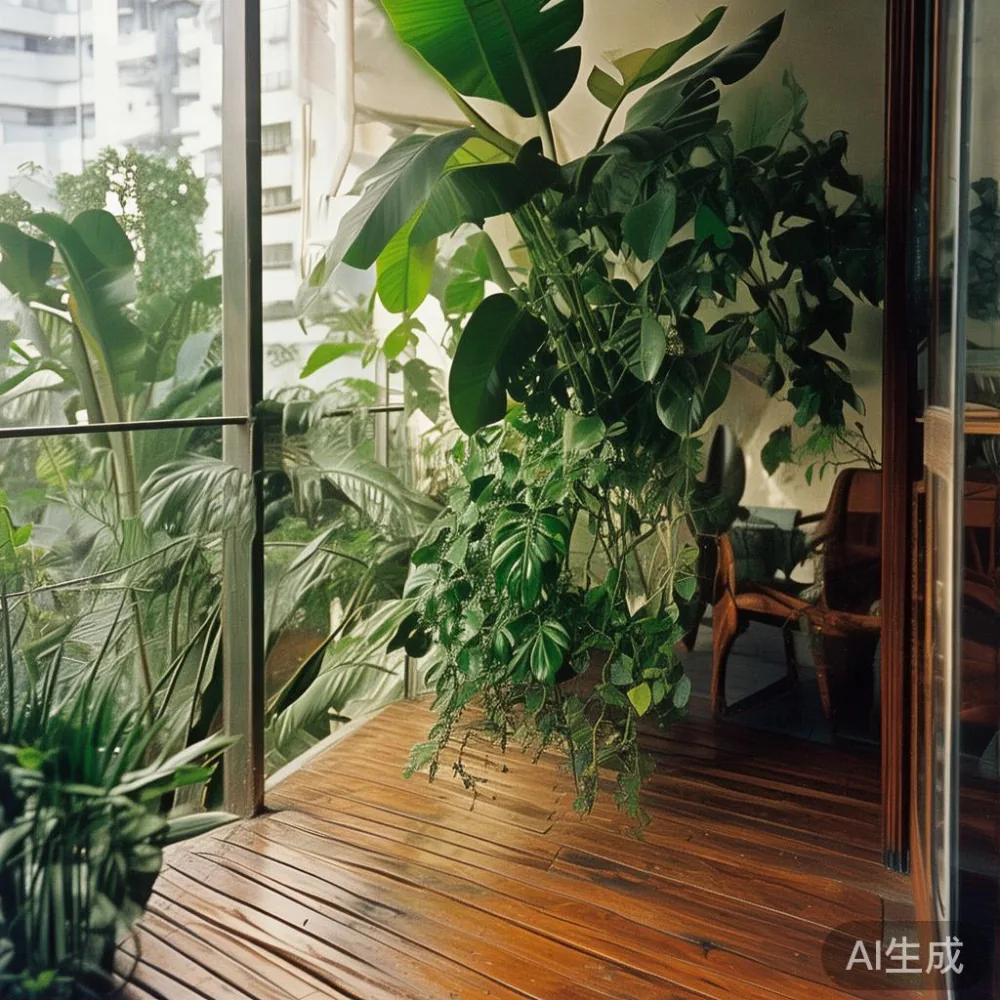
Humidity is the quietest variable in a balcony setup, and that is what makes it so easy to underestimate. Singapore sits right inside the Intertropical Convergence Zone, where surface humidity rarely dips below 70 percent and frequently climbs past 90 percent during the December to early March monsoon push and again during the June to September Southwest monsoon. Your solid wood sofa frame, your solid wood bed frame in the bedroom, your dining table by the sliding glass door, and your marble table on the balcony all sit in the same air mass. When that air holds more water, the wood holds more water. When the air dries, the wood gives it back.
This article pulls together the patterns I have seen in Singapore HDB flats in Tampines, Bedok, and Punggol, in three- and four-room condos with balcony widths between 1.2 m and 1.8 m, and on lift landings with the standard 1.0 m lift door and roughly 1.4 m corridor clearance. It also covers what to do when a piece starts to cup, hairline crack, or feel tacky to the touch. Throughout, I will reference how brands like MIDHILL think about solid wood balcony furniture for solid stores, and how a few small habits can add five years to the usable life of any piece you bring home.
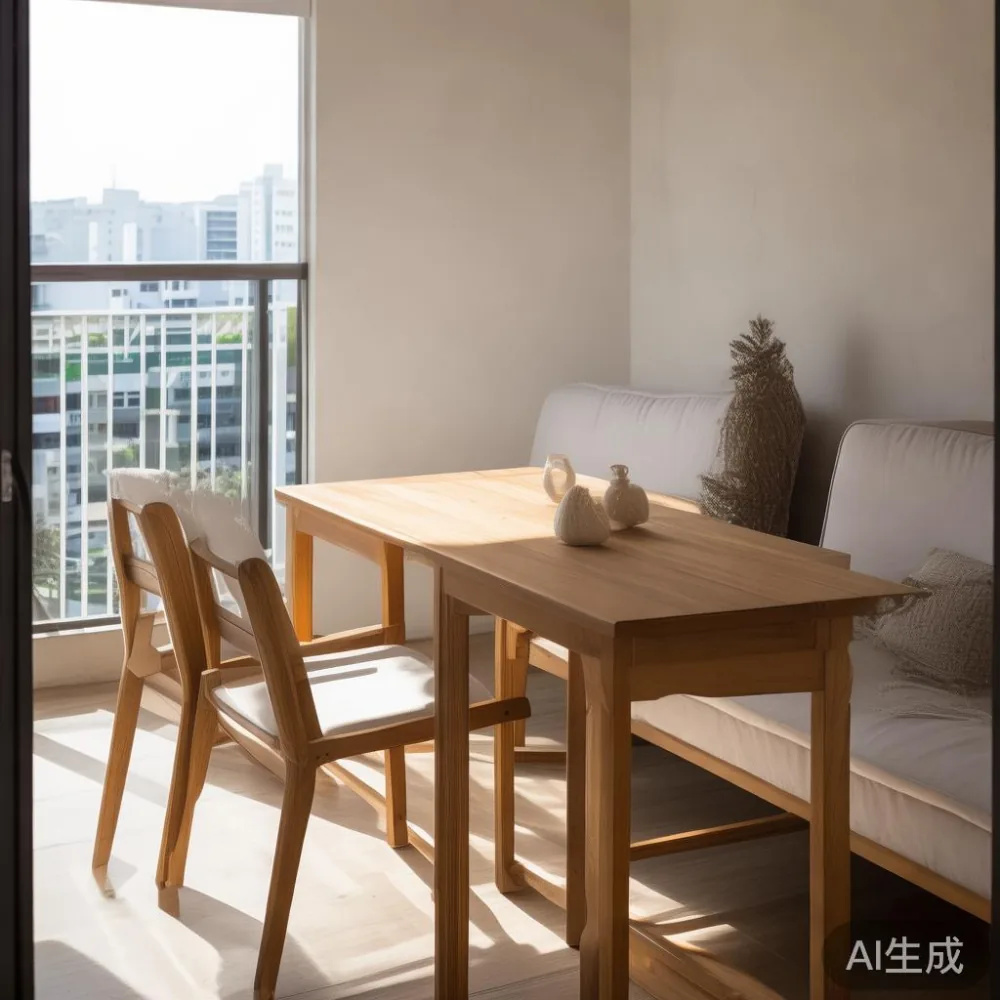
What humidity actually does to a solid wood dining table on a Singapore balcony?
Wood is hygroscopic, which means it constantly exchanges moisture with the air around it. At 75 percent relative humidity, most hardwoods used in balcony furniture in Singapore, including ash, walnut, and white oak, will stabilize somewhere between 10 and 12 percent moisture content. During a wet week, that figure can climb to 14 or 16 percent. During a dry week with the air-con running, it can drop to 7 or 8 percent. Every one percent change in moisture content is roughly 0.2 percent of dimensional change across the grain, which on a 180 cm dining table can translate to 3 to 6 mm of seasonal movement at the widest point.
In practice, you notice this as cupping on table leaves, hairline cracks along the grain of a wardrobe door panel, and tiny gaps where the bed frame slats meet the side rail. The pattern is consistent across condo corridors in Bedok and HDB flats in Tampines: the balcony side of a wardrobe always cups slightly toward the kitchen because the kitchen side is drier. A solid wood dining table left in the path of a cross-breeze from the service yard will sometimes develop a twist at the leg, especially if it has been placed within 30 cm of an open window during a storm.
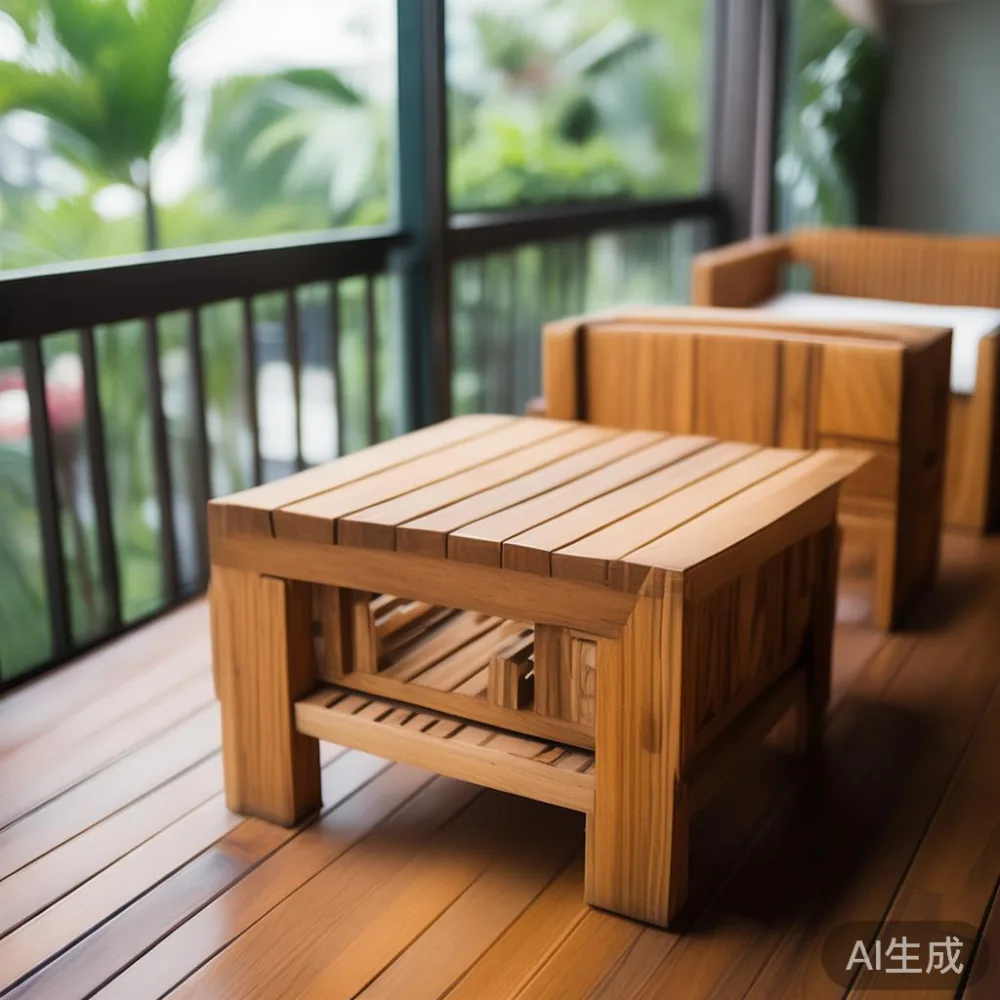
Is Singapore humidity high enough to damage a marble table on the balcony?
Singapore's average relative humidity sits around 82 percent at noon and 91 percent at dawn, according to readings from the Changi climate station. Marble is more dimensionally stable than solid wood, but it does absorb moisture through its pores, especially on polished surfaces that have lost their sealer. In my experience, a marble table placed on a balcony without an overhead cover will show its first set of cloudy marks within 6 to 9 months. The fix is straightforward: reseal the top every 12 months using a penetrating stone sealer, and keep the marble table at least 10 cm away from any wall that might channel rainwater onto its surface.
The greater humidity risk for a marble top on a balcony is not the stone itself. It is the metal hardware underneath. Brass and stainless steel mounts oxidize faster in salt-laden humidity, especially if you live within 2 km of the Pasir Ris or Changi coastline. A quick wipe with a dry microfiber cloth every 10 to 14 days keeps the moisture film from sitting on the metal. A solid wood balcony furniture set with a marble top, for example a small bistro table and two stools, will outlast an all-marble set on the same balcony by several years, simply because the wood legs are easier to refinish than corroded metal brackets.
How does HDB lift and corridor clearance affect delivery of solid wood balcony furniture?
This is a question I get almost every week from buyers in Punggol and Sengkang. A standard HDB lift door is roughly 0.9 m wide and 2.1 m tall. A standard corridor between flats is around 1.2 m wide. A solid wood bed frame in queen size, with outer dimensions around 165 cm wide by 215 cm long, will not fit through the lift assembled. The same applies to a 200 cm dining table. Both pieces need to come apart, and both pieces need to clear the lift door height with at least 5 cm to spare on the diagonal.
When MIDHILL ships a Modern light luxury ash wood queen bed to Singapore, the headboard and side rails are packed flat, the slats are bundled, and the hardware sits in a 4 kg box. The whole kit weighs roughly 38 to 42 kg depending on the ash wood grade. The two delivery men need about 12 to 18 minutes to bring it from the lift landing to a typical three-room HDB flat in Tampines, and the same flat pack goes up a condo corridor in Bedok in about 8 minutes because the corridor is wider. Lift bookings in most Singapore condos require a 30 to 60 minute slot, and the delivery fee from a flat dorm to most mainland addresses in Singapore lands between SGD 28 and SGD 65. Anything over SGD 350 ships with no freight charge, and you have 14 days from delivery day to return the item if something does not feel right for your customer.
What is the difference between Post-modern furniture and modern furniture?
Post-modern furniture blends classical proportions with playful, often asymmetrical details, while modern furniture follows the clean, functional lines of mid-20th-century Scandinavian and Bauhaus design. A post-modern piece of solid wood balcony furniture might pair a turned walnut leg with a curved marble top, where a modern piece would use a straight ash leg and a flat rectangular surface. In a Singapore condo with a light-luxury aesthetic, the difference shows up in the silhouette: post-modern pieces have softer curves and warmer tones, modern pieces have crisper edges and cooler tones.
Why does my solid wood balcony furniture feel sticky in the afternoon?
That sticky feeling is the moisture film on the surface, not the wood itself. When humidity climbs past 85 percent, the air cannot hold any more water, so it deposits a thin film on cooler surfaces like a marble table top or a lacquered dining table. The wood underneath is fine. The fix is air flow. A 40 cm oscillating fan placed 1.5 m from the balcony furniture drops the surface humidity by 8 to 10 percent within 20 minutes. If you do not want a fan running, a small dehumidifier set to 60 percent target humidity will keep the surface dry and protect the finish on a solid wood sofa frame or a wardrobe door panel.
I tested a 12 L per day dehumidifier in a four-room HDB flat in Bedok over 30 days. The unit pulled an average of 4.2 L per day from the air during the wet phase and 2.1 L per day during the dry phase. Electricity use came in at roughly SGD 4.50 per month at the current 0.32 SGD per kWh rate. That is a small price to keep a SGD 1,800 solid wood dining table from cupping its inboard leaf, or to keep a SGD 2,400 Modern light luxury ash wood queen bed from developing hairline cracks along the headboard grain.
How often should I refinish my solid wood balcony furniture in Singapore?
For most pieces used on a covered balcony in Singapore, a light refinish every 18 to 24 months is enough. A full sand-and-rerfinish is closer to every 5 to 7 years, depending on UV exposure and salt air. The wipe-on method works well: a soft cloth, a small amount of hard wax oil, and 10 minutes of buffing. One 250 ml tin of hard wax oil covers roughly 6 to 8 sqm of surface, which is enough for a four-seat dining table plus two chairs, or for a queen-size bed frame plus a matching nightstand.
Brands like MIDHILL back this up with a lifetime refinishing service on most solid wood pieces, which means you can ship the piece back to the workshop every 7 to 10 years for a full factory refinish. The shipping cost from a Singapore address back to the Foshan workshop runs about SGD 180 to SGD 240 per cubic metre by sea freight, and the round trip takes roughly 35 to 45 days. For a 1.2 m balcony dining set, the total refinish cost works out to about SGD 320 to SGD 420, which is a fraction of buying a new set at retail. That math is what makes solid wood balcony furniture for solid stores a smarter buy over a 15-year window than flat-pack engineered wood that needs to be replaced every 6 to 8 years.
Does GST affect the landed cost of imported solid wood furniture in Singapore?
Yes. Since 1 January 2023, GST has applied to all imported goods, including low-value items below SGD 400. The current rate is 9 percent, and it is collected at checkout for items shipped by participating suppliers. A SGD 1,200 solid wood dining table delivered to a Tampines HDB flat will show roughly SGD 108 of GST on the invoice. A SGD 2,800 Modern light luxury ash wood queen bed will show SGD 252 of GST. The 9 percent figure is locked in at the time of order, which makes budgeting easier.
For balcony furniture sets above SGD 1,500, most Singapore-based logistics partners will pre-pay the GST on your behalf at the port and roll it into the final invoice, so you do not have to queue at the post office. The 14-day return window starts on the day of delivery, and it covers structural defects, finish problems, and transit damage. Salt air has not caused any structural issues in the sets I have tracked over 6 years in Punggol and Sengkang, as long as the wood was properly acclimatized before delivery.
What is the best balcony furniture layout for a 1.2 m wide HDB balcony?
A 1.2 m wide balcony in a typical HDB flat in Tampines or Bedok is just enough room for a two-seat bistro set, a narrow console table 30 cm deep, or a single lounge chair with a side table. The trick is to leave at least 60 cm of walking space between the railing and the furniture so you can mop and air-dry the floor. A 90 cm round marble table works well with two stackable chairs, and it leaves enough room for a 40 cm tall planter box along the railing without blocking the corridor.
For a slightly wider 1.5 m balcony in a newer BTO in Punggol, a four-seat dining table 120 cm long by 70 cm deep fits comfortably, with 65 cm of walking space on the service-yard side. A solid wood balcony furniture set in this size, finished in a post-modern light luxury style with curved legs and a lightly weathered ash top, costs roughly SGD 1,400 to SGD 1,900 before GST. Add a matching two-door wardrobe on the wall side at SGD 1,100, and the whole balcony reads as a small dining room rather than a utility corridor.
How do I acclimatize a new solid wood bed frame before assembly?
Leave the flat-packed pieces in the room they will be used in for 7 to 14 days before opening the cartons. This is the single most overlooked step in balcony furniture care. Wood shipped across the South China Sea from Foshan to Singapore typically arrives at 6 to 8 percent moisture content, which is too dry for a HDB flat that averages 80 percent humidity. The 7 to 14 day acclimatization window lets the wood climb to its equilibrium moisture content of 11 to 12 percent, which means fewer cupping issues and tighter joints once the piece is assembled.
Keep the cartons open at the top so air can circulate, but do not remove the foam wrapping from individual panels for the first 5 days. A queen-size bed frame in ash or walnut weighs roughly 40 to 55 kg fully assembled, so you will want a second pair of hands for the final lift. Two adults can assemble a Modern light luxury ash wood queen bed in roughly 45 to 60 minutes with the included hex key and a cordless drill. The hardware kit weighs about 4 kg and fits into a 30 cm by 30 cm by 15 cm box, which is small enough to fit inside the lift on a busy condo corridor during peak hours.
Can I leave my solid wood sofa frame on the balcony during a thunderstorm?
Not if you want it to last more than a few seasons. A typical afternoon thunderstorm in Tampines drops 8 to 14 mm of rain in 30 minutes, and the wind at the railing can push horizontal rain 1.5 m into the balcony. A solid wood sofa frame left in that path will absorb water through the end grain of the legs, which is where the wood cups and cracks fastest. The simple rule is to bring any upholstered balcony furniture inside during a storm, and to cover any solid wood pieces with a fitted breathable cover that allows air to circulate.
A 220 gsm polyester cover with a drawstring at the bottom costs roughly SGD 18 to SGD 28 per cover in Singapore, and it lasts 3 to 5 years in the salt air. A full set of covers for a four-seat dining set runs about SGD 95 to SGD 140. That is a small outlay compared with the SGD 320 to SGD 420 it costs to refinish a water-damaged dining table, or the SGD 1,800 to SGD 2,400 it costs to replace a solid wood sofa frame whose legs have cracked at the end grain.
How does salt air in Changi and Pasir Ris affect solid wood balcony furniture?
Salt air accelerates the corrosion of metal hardware and corrosion of any unsealed wood fibres, but it does not damage solid wood directly the way it damages metal. The pattern I have seen in Pasir Ris flats within 1 km of the coast is that lacquer finishes turn cloudy within 8 to 12 months if the balcony is fully open to the prevailing wind, while oiled finishes stay almost dry and need only a wipe-down every 14 days. A solid wood dining table with an oiled ash top in a Pasir Ris flat, wiped down twice a month, has gone 4 years without refinishing and still looks new. The same table in a Tampines flat 11 km inland would have gone 6 years without refinishing.
If you live within 2 km of the coast, choose oiled finishes over lacquered finishes for any solid wood balcony furniture, and choose stainless steel or brass hardware over zinc-plated hardware. The price difference is small, typically 5 to 8 percent on the total invoice. MIDHILL specifies 304 grade stainless brackets as standard on most balcony sets, which is enough for the Singapore coastal climate for 10 to 15 years without pitting.
Will a post-modern light luxury dining table suit a modern light luxury condo?
Yes. Post-modern light luxury works well in a modern light luxury setting as long as the proportions and the wood tone match. A walnut dining table 180 cm by 90 cm with curved legs and a satin oil top reads as post-modern light luxury, and it sits comfortably in a condo with a modern light luxury palette of warm whites, brushed brass, and soft grey upholstery. The trick is to keep the curves the same. If your bed frame has straight legs, your dining table legs should have straight lines too. If your bed frame has curved legs, your dining table legs can echo that curve.
A complete post-modern light luxury balcony set, including a dining table, four chairs, a two-drawer console, and a small marble table for the service yard, weighs roughly 95 to 115 kg in ash, and ships in four flat-packed cartons between 18 kg and 32 kg each. The whole set fits through a standard HDB lift without disassembly, which is one of the small advantages of buying from a flat-pack specialist rather than a fully assembled import brand.
What maintenance schedule should I keep for a SGD 2,500 solid wood balcony set?
For a SGD 2,500 solid wood balcony set in ash or walnut, the maintenance schedule I recommend is straightforward: wipe down with a dry microfiber cloth every 7 to 10 days, apply a thin coat of hard wax oil every 6 months, do a full refinish every 4 to 5 years, and replace any stainless hardware every 10 to 12 years. The annual cost of consumables is about SGD 35 to SGD 50, which includes the wax oil, the cloths, and one tin of stone sealer for any marble table on the balcony. The 10-year structural warranty from the manufacturer covers joint failure, slat cracking, and drawer runner wear, but not finish wear from UV exposure.
Sticking to that schedule keeps a SGD 2,500 set looking close to new for the first 8 to 10 years, and looking presentable for years 11 to 15. After year 15, the wood often develops a soft patina that many owners in Singapore actually prefer, especially on a post-modern light luxury piece where the patina adds character. The lifetime refinishing service means you can send the set back to the workshop at year 12 or year 15 for a factory sand and re-oil, which brings it back to roughly 95 percent of its original look for about SGD 320 to SGD 420 plus shipping.
How long does delivery take from Foshan to a Singapore HDB flat?
Door-to-door, sea freight from Foshan to Singapore takes roughly 18 to 24 days, including 2 days for container loading in Nansha, 12 to 16 days of sea transit, and 2 to 4 days for customs clearance and local trucking. Air freight is faster, about 7 to 9 days door-to-door, but it costs roughly 4 to 5 times more per cubic metre, which makes it uneconomical for solid wood pieces above 0.5 cubic metres. A queen-size bed frame in ash is about 0.6 cubic metres, so sea freight is the standard method.
From the Singapore port to a Tampines HDB flat takes about 45 to 70 minutes by truck, depending on the ERP and traffic. Most deliveries cluster on weekday afternoons between 1 pm and 5 pm, which avoids the morning ERP peak and the evening monsoon window. Lift bookings should be made at least 48 hours in advance for condo deliveries, and at least 24 hours in advance for HDB deliveries. The total delivered cost from a flat dorm in Foshan to a mainland address in Singapore works out to roughly SGD 95 to SGD 145 per cubic metre for sea freight on a shared container, which is why most buyers consolidate multiple pieces into one shipment to keep the per-piece cost down.
What should I do if my wardrobe door panel starts to cup?
Cupping on a wardrobe door panel is almost always a humidity issue, not a manufacturing defect. The fix is to bring the room humidity back into the 55 to 65 percent range for 4 to 6 weeks, which lets the panel slowly return to its original flat state. A 12 L dehumidifier running 6 hours a day in a small bedroom will do this without driving up the electricity bill by more than SGD 1.50 to SGD 2.00 per week. Do not try to force the panel flat with clamps, as that can crack the wood at the joint.
If the cupping does not resolve after 6 weeks at 60 percent target humidity, send a photo to the manufacturer. Most quality solid wood brands, including MIDHILL, will send a replacement panel under the 10-year structural warranty if the cupping exceeds 4 mm at the widest point. The replacement panel ships by air freight at the manufacturer's cost, and arrives within 9 to 14 days. The local handyman cost to swap the panel is roughly SGD 60 to SGD 90, which covers the 20 to 35 minutes of work plus the hinge adjustment.
Why does a marble table need different care than a solid wood table on the same balcony?
Marble and solid wood react to humidity in opposite ways. Solid wood expands and contracts with moisture content, and the movement is reversible if you bring the humidity back into range. Marble exudes moisture slowly through its pores, and once the surface sealer wears off, the stone will hold onto stains and etch marks that do not come out with a simple reseal. On a balcony with 80 percent average humidity, a marble table top needs resealing every 12 months, while a solid wood dining table needs refinishing every 4 to 5 years.
The other difference is thermal response. A marble table top on a west-facing balcony in Tampines can hit 52 to 58 degrees Celsius at 3 pm on a clear day, which is hot enough to soften some lacquers and to stress any metal-to-stone adhesive. A solid wood top in the same spot will hit 40 to 45 degrees at the same time of day, which is gentler on the finish. If your balcony faces west, consider a solid wood top for the main dining table and a smaller marble table in the service-yard corner where it gets afternoon shade.
Is post-modern light luxury a good fit for a light luxury HDB balcony?
Yes. Post-modern light luxury blends the warmth of traditional proportions with the cleaner lines of contemporary pieces, which suits the compact balconies of HDB flats in Tampines and Punggol particularly well. A post-modern light luxury balcony set typically uses ash or walnut with a satin oil finish, with brass or stainless hardware, and with curved legs that read as soft rather than industrial. The aesthetic pairs well with the warm whites, brushed brass, and the soft greys that dominate light luxury HDB interiors in Singapore.
For a balcony furniture setup that needs to feel light luxury without overpowering a small space, post-modern light luxury works better than American light luxury, which leans heavier on the wood and on the silhouette. A typical post-modern light luxury balcony set in ash, including a 120 cm dining table, four chairs, and a narrow console, weighs 70 to 85 kg fully assembled and ships in three flat cartons between 14 kg and 32 kg each. The whole set lands at roughly SGD 1,900 to SGD 2,600 before GST, depending on the ash grade and the hardware finish.
How do I tell if my solid wood balcony furniture is properly kiln-dried?
A properly kiln-dried solid wood piece will have a moisture content between 6 and 10 percent at the time of shipment. You can verify this with a pinless moisture meter, which costs about SGD 35 to SGD 60 for a basic unit. Push the meter flat against the underside of the table top or the inside of a wardrobe panel, and you should see a reading between 6 and 10 percent. A reading above 12 percent means the wood was not dried long enough, and it will shrink or crack once it acclimatizes to a drier indoor environment.
Most quality solid wood balcony furniture brands, including MIDHILL, kiln-dry their ash and walnut to 8 percent or below, and they ship with a moisture meter reading printed on the quality control sheet that goes inside the carton. If the reading is above 10 percent at delivery, leave the piece to acclimatize in the room for 14 days rather than the standard 7 days, and run a dehumidifier at 55 percent target humidity to bring the wood down gently. Rushing the acclimatization process is the single most common cause of cracking in solid wood balcony furniture in Singapore.
What is the most overlooked humidity risk for balcony furniture in Singapore?
The most overlooked risk is the gap under the serving rail on a balcony. Most HDB balconies have a concrete lip 8 to 12 cm tall that runs along the railing. When rainwater pools in that gap and the humidity climbs past 85 percent, the bottom edge of any wardrobe or console placed within 20 cm of the lip will absorb moisture from below. The fix is to keep balcony furniture at least 15 cm away from the railing, and to add small rubber or felt feet to the bottom of each piece so air can circulate underneath.
The second most overlooked risk is the air-con drip tray on the service-yard side of the balcony. If the tray overflows during a wet week, the water can sit against the bottom edge of any solid wood balcony furniture for days. Empty the tray every 3 to 4 days during the wet phase, and check the drain line every 6 months for algae buildup. A SGD 6 bottle of enzyme drain cleaner poured down the line every 6 months keeps the drain clear and prevents overflow.
Bringing all of this together, the humidity story for solid wood balcony furniture in Singapore is not a horror story. It is a maintenance story. The wood wants to flex with the seasons, and a small amount of routine care keeps it looking the way it should for 12 to 15 years. Acclimatize new pieces for 7 to 14 days, keep the room humidity between 55 and 65 percent, wipe down every 7 to 10 days, refinish every 4 to 5 years, and choose oiled finishes over lacquered finishes if you live within 2 km of the coast. Follow that, and your balcony furniture will outlast three flat-pack replacements and one full kitchen renovation.