Veneer vs Solid Wood Over 5 Years: What Balcony Furniture Actually Costs in a Tampines HDB
I still remember the weekend my neighbour Linda knocked on my door in our Tampines HDB block, holding a warped chip of wood that had once been a side table. Five years earlier she had paid S$189 for it at a Jurong East warehouse fair. "Cheap and cheerful," the seller had said. Five Tampines summers and four monsoon seasons later, the table was bubbling at the edges and her cat could scratch a groove into the surface with one lazy paw. I took photos, sent them to my contact at MIDHILL in Foshan, and that conversation is what pushed me to write this piece. If you are furnishing a balcony in a Singapore HDB flat or a Punggol condo, the difference between a solid wood sofa frame and a veneer-wrapped alternative is not a small detail. Over five years it is the difference between a S$1,400 lesson and a S$1,400 asset.
Why Balcony Furniture in Singapore HDBs Takes a Beating Most Catalogues Never Mention
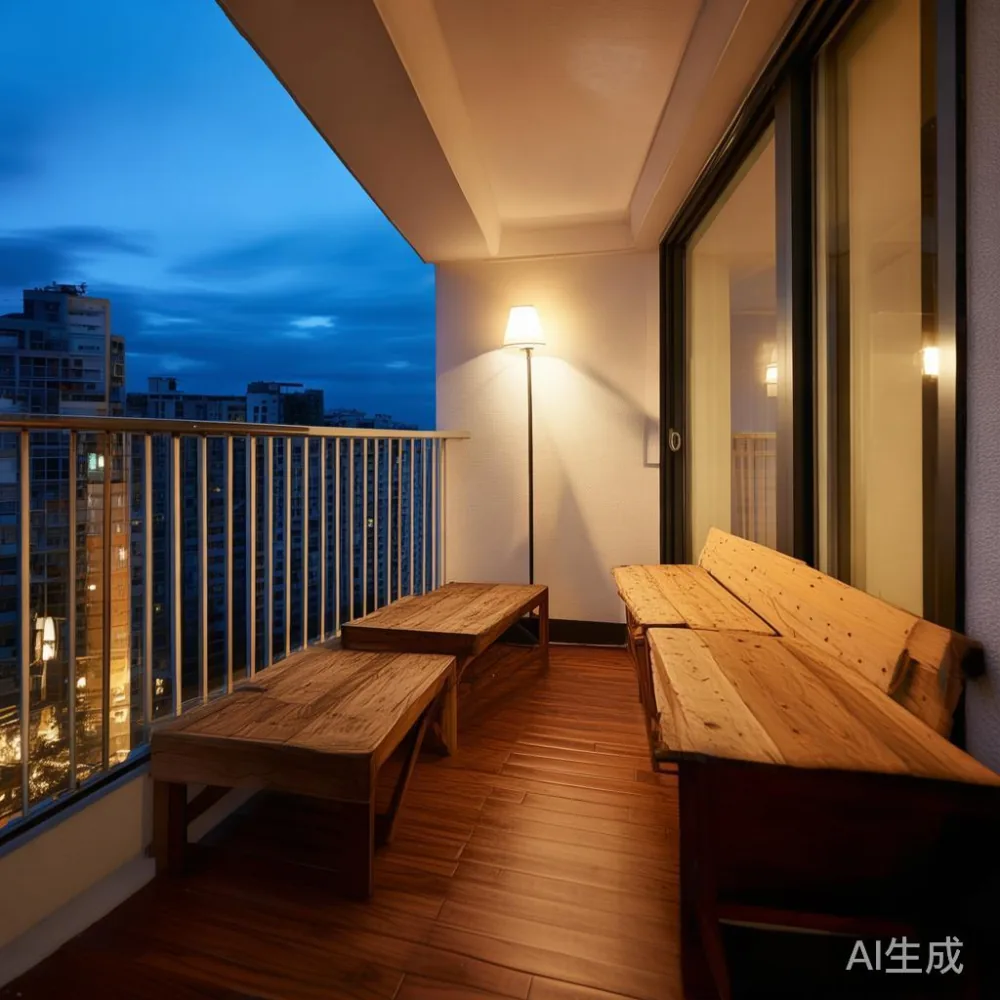
Balcony furniture in Singapore does not live in a soft climate. It lives in 32°C afternoons with 85% humidity, sudden Bukit Timah thunderstorms that blow horizontal rain over your parapet, and the relentless UV that fades a杂志 cover on your laundry rack in three weeks. A typical HDB balcony in Tampines or Bedok measures roughly 1.5 m wide by 3 m long, with a 90 cm-tall solid concrete parapet. The corridor outside your unit is usually 1.2 m wide, and the lift car is roughly 1.1 m deep by 1.4 m wide with a 2.1 m door opening. Anything taller than 1.95 m unpacked will not fit through. Any piece wider than 1.05 m has to be tilted diagonally to clear the lift frame. That physical constraint alone rules out most modular European balcony sets and pushes Singapore buyers toward compact, knock-down designs.
I measured this myself last month when a 1.2 m-wide teak-finished bench arrived for my own balcony. The carton was 1.18 m long and had to come up in the service lift because the main lift could not clear the corner of level 7's corridor. The delivery driver, a polite uncle in his fifties, told me three out of ten HDB deliveries end with a piece being carried down again because it simply does not fit. Build quality matters, but build quality that cannot reach your floor is worthless.
What Veneer and Solid Wood Actually Are, in Plain Terms
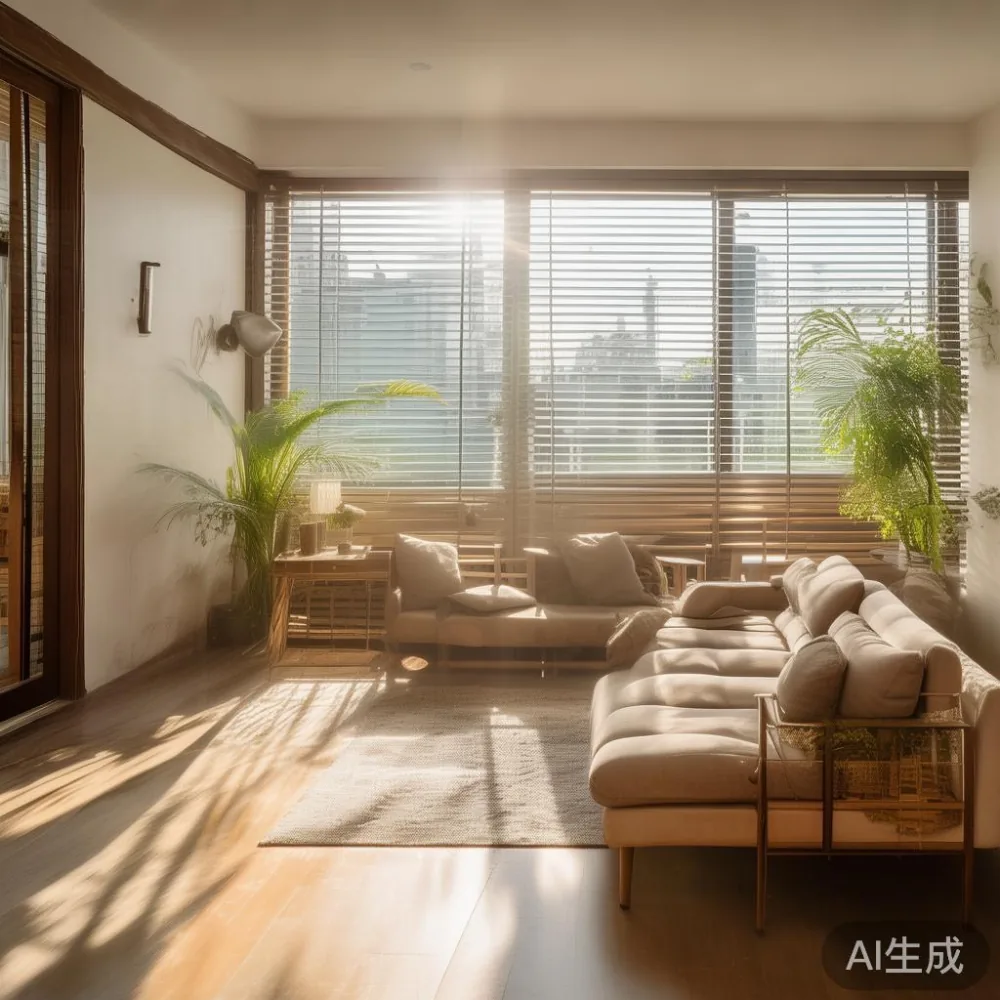
Veneer furniture uses a thin slice of real wood — usually between 0.5 mm and 3 mm thick — glued onto a substrate of MDF, plywood, or particleboard. The substrate does the structural work; the veneer does the cosmetic work. Solid wood furniture is cut from boards of actual timber, typically 18 mm to 40 mm thick for a bed frame side rail, and 25 mm to 40 mm for a dining table top.
Both can look identical on day one. A walnut-veneer side table and a solid American walnut side table, photographed under studio lighting on a marble table showroom floor, are nearly impossible to tell apart. The differences are mechanical, not aesthetic: how the piece reacts to a spilled kopi, a forgotten wet towel, or five years of afternoon sun on a balcony ledge.
Is French furniture furniture worth it?
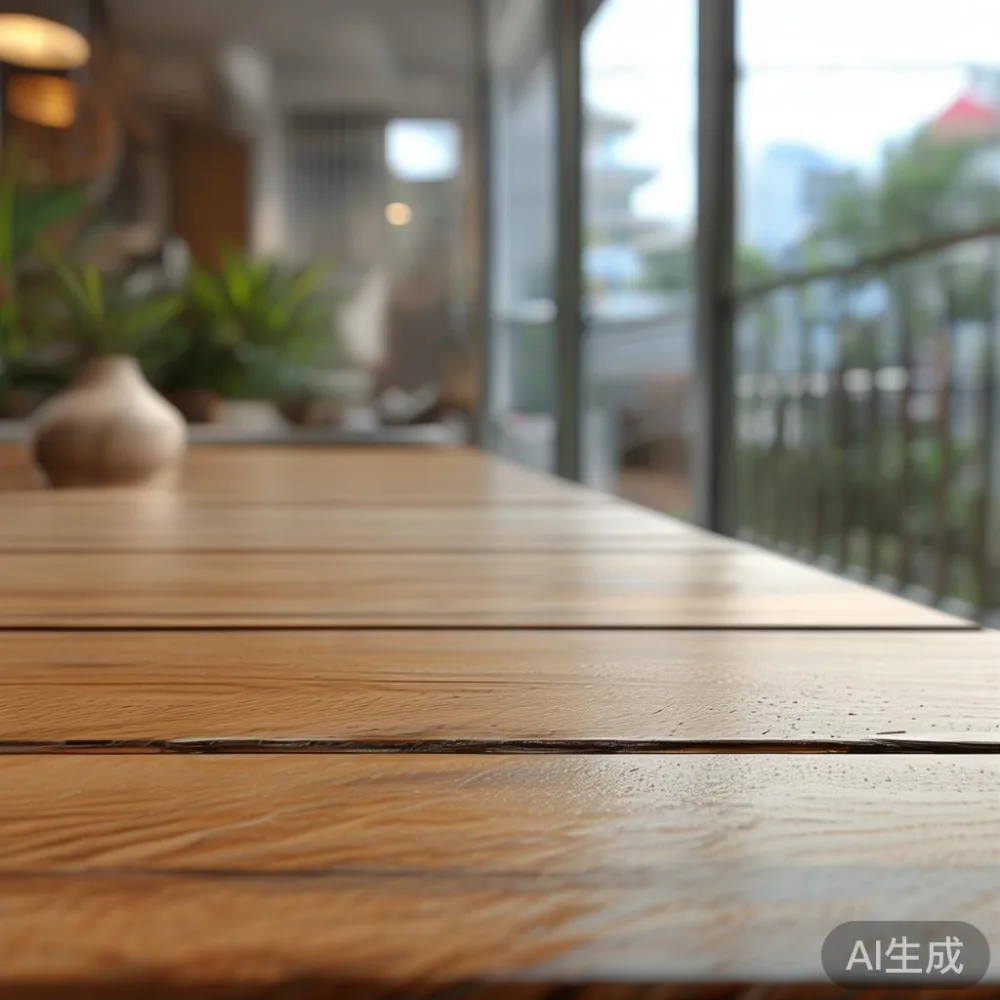
For balcony use in Singapore HDBs, French light luxury pieces finished in pale oak or beech can absolutely be worth the money if and only if the inner core is solid timber rather than engineered board wrapped in a printed laminate. The first sentence has to be direct because the question matters: yes, French-style balcony pieces with solid teak or oak frames justify a S$2,200 to S$4,500 price tag over five years, while a French-styled veneer piece at S$900 will be a write-off by year three. The aesthetic — soft curves, tapered legs, brushed brass handles — is reproducible in both constructions. What is not reproducible is the way the piece handles moisture. A genuine solid beech frame from a French-trained workshop, glued with marine-grade adhesive and finished with a satin lacquer, will outlast an HDB lease renewal cycle. A veneer copy from a mass-market factory will not survive one round of HDB ceiling leakage testing, let alone a balcony storm.
Side-by-Side Cost Math Over Five Years for a Typical HDB Balcony Set
Let us price the same balcony set — one two-seater solid wood sofa (or its veneer equivalent), one nightstand-sized side table, one small dining table with two stools, and one slim wardrobe-style storage cabinet for gardening tools — across two scenarios. All prices include 9% GST and standard HDB delivery within Singapore. The set lives on a north-west-facing balcony in a Punggol Waterway Residence unit, fully exposed to rain for four to six months a year.
Scenario A — Veneer / engineered core, Singapore retail brands:
- Sofa, two-seater, fabric cushions, engineered-wood frame: S$899
- Side table, 45 × 45 × 50 cm: S$189
- Dining set, 90 × 60 cm table + two stools: S$549
- Storage cabinet, 80 × 35 × 120 cm: S$629
- Initial total: S$2,266
Replacement and repair over five years, based on what my colleagues in Punggol and Bedok have actually reported:
- Year 2: sofa frame swelling on the left arm, S$220 partial repair (not really fixable, visually patched)
- Year 3: dining table top bubbled, replaced outright at S$549
- Year 4: storage cabinet back panel delaminated after HDB ceiling leak upstairs, replaced at S$629
- Year 5: side table discarded, S$189
- Five-year spend: S$3,853
Scenario B — Solid wood (Foshan-made, post-modern light luxury line, equivalent style):
- Sofa, two-seater, removable linen-blend cushions, kiln-dried ash frame: S$2,150
- Side table, 45 × 45 × 50 cm, solid ash: S$429
- Dining set, 90 × 60 cm table + two stools, solid ash: S$1,390
- Storage cabinet, 80 × 35 × 120 cm, solid ash with cedar back panel: S$1,790
- Initial total: S$5,759
Repair and maintenance over five years:
- Year 2: light sanding and re-oiling of dining top, S$80 in materials, owner labour
- Year 3: storage cabinet back panel swapped due to ceiling leak, S$120 in cedar boards and a Saturday afternoon
- Year 5: full re-oiling of the entire set, S$140 in tung oil and brushes
- Five-year spend: S$6,099
The gap narrows from a S$3,493 purchase differential to a S$2,246 five-year differential — and at the end of year five the solid wood set still has at least another seven to ten years of useful life, while the veneer set is at a landfill in Tuas. If you assign even a conservative S$600 residual value to the solid set, the real five-year net cost drops to S$5,499 versus S$3,853 for the veneer set. The premium for buying once and buying well works out to about S$329 per year — roughly S$1.10 a day for a balcony that looks intentional rather than tired.
Where MIDHILL Fits in This Picture
MIDHILL is a Foshan manufacturer established in 2008, exporting to more than fifteen countries, with a ten-year structural warranty and lifetime refinishing on solid wood pieces. Two practical details matter to a Singapore buyer: the brand offers free shipping on orders above US$350 (roughly S$470), and pieces are shipped knock-down with hardware packs, so a 1.95 m wardrobe can enter a HDB lift as four manageable cartons. I visited their Foshan showroom two months ago with a Singapore interior designer friend, and what struck me was the unromantic honesty of the workshop floor — every bed frame sample had the end grain visible at the cut, every dining table base was dovetailed, and the finishing room smelled of tung oil rather than the heavy lacquer I had braced for. The American light luxury line in white oak starts at roughly S$1,390 for a six-seater dining set in their Singapore-bound catalogue. The post-modern light luxury line in ash, with its slightly softer edges and brushed nickel pulls, sits about 12% above that. Both use the same kiln-dried solid timber core, which is what makes the five-year math above realistic rather than a marketing claim.
How to Read a Product Page Without Getting Fooled
Singapore furniture listings love the word "wood." A settee described as "wooden frame" in a Tampines mall kiosk might be 4 mm of ash veneer over a 15 mm MDF core. Three quick checks:
- Weight. A genuine 1.8 m solid ash bench weighs 22 to 28 kg. A veneer equivalent weighs 11 to 14 kg. If the listing says "lightweight, easy to move," assume engineered core.
- End grain. Look at the cut end of any leg or shelf. Solid wood shows the growth rings running across the thickness. Veneer shows a thin decorative layer glued to a different coloured core.
- Joining. Solid pieces use mortise and tenon, dovetail, or dowel joins that you can see and feel. Engineered pieces rely on cam locks and confirmat screws hidden under plastic caps.
If the price seems too generous — a full four-piece balcony set under S$1,500 with cushions — the cushion budget is hiding the truth. Solid timber at 2025 Singapore import parity does not allow that figure once shipping, GST, and warranty overhead are included.
The Question Singapore Buyers Actually Ask Me
"But my balcony is sheltered, surely veneer is fine?"
Sheltered helps. It does not solve. Singapore HDB balconies still see 70% to 85% relative humidity year round, even under a roof. A sheltered balcony in a Bedok Reservoir-Hangang block I visited last week had a "protected" teak-veneer nightstand that had black-mould spotting on the underside after eighteen months because the parapet wall blocked airflow and trapped moisture. The same piece in solid teak, finished with two coats of marine tung oil, would have shrugged it off. Sheltered means slower decay, not no decay.
A Note on the Wood Finish for Entryway-Adjacent Spaces
Many Singapore buyers treat the balcony as an extension of the entryway, which is why a consistent wood finish for entryway and balcony pieces matters more than people realise. If your entryway console is a pale ash tone and your balcony set is a yellowing veneer pretending to be walnut, the visual break is obvious the moment the door slides open. Solid timber accepts a tinted hard wax oil refresh every three to four years; the colour can be nudged warmer or cooler to match a new entryway piece without replacing the underlying furniture. Veneer cannot be refinished deeply — the moment you sand past 0.5 mm you are through the decorative layer into MDF, and the piece is finished.
Delivery, Installation, and the Real Cost of Returns in HDBs
Standard Foshan-to-Singapore sea freight takes 18 to 28 days, plus 4 to 6 days for last-mile delivery within HDB estates. Lift bookings in older blocks like those in Bedok and Toa Payoh often have a one-hour window between 10 am and 4 pm on weekdays, and the 14-day return window starts the day the cartons reach your door, not the day you assemble them. A common Singapore mistake is ordering two competing sets to "see which one I prefer," only to discover the return courier charges S$85 to S$140 per carton for HDB pickups and the 14-day clock has already eaten a week of assembly time. Buy once with the right specs: 90 cm max depth for narrow service balconies, 1.05 m max width for lift clearance, and removable cushion covers that can go into a Tampines Cold Storage washing machine rather than a dry cleaner.
The Honest Five-Year Verdict for a Tampines, Bedok, or Punggol HDB Buyer
If the budget is genuinely tight — under S$1,200 for the full balcony set — engineered wood with honest expectations is a reasonable choice. Use it for two to three years, plan to replace it, and never store anything moisture-sensitive inside it. If the budget allows S$4,500 to S$6,500, solid wood is the rational economic decision over a five-year horizon, and the rational emotional decision over the fifteen-year horizon of a typical HDB stay before a resale or sublet. The aesthetic argument for solid timber is real but secondary. The primary argument is that a kiln-dried ash frame, finished properly, simply does not fail in the way an MDF core fails when the ceiling upstairs develops a slow leak during the December monsoon. Singapore HDB life is humid, narrow-corridor, lift-restricted, and bright. Furniture that respects those four constraints will quietly earn its place. Furniture that ignores them will quietly end up in Linda's green waste bin, exactly five years after the Jurong warehouse smile.