Veneer vs Solid Wood for Singapore Balcony Furniture: A 5-Year Cost Breakdown
I still remember the Saturday morning last March when my colleague Mei Ling wheeled a tired-looking balcony set into the loading area of her Tampines HDB car park. She had bought it from a popular online marketplace three years earlier for S$680 — a four-piece set with a small sofa, two stools and a coffee table, all labelled “solid wood.” When the lift door opened on level 12, one of the stool legs simply gave way. The outer layer peeled back like an orange skin, revealing yellow particle board inside. “It looked like wood in the photo,” she told me, half-laughing, half-annoyed. That single moment is exactly why I wanted to sit down and write a proper 5-year cost comparison between veneer and solid wood balcony furniture, with real Singapore numbers and real balcony constraints.
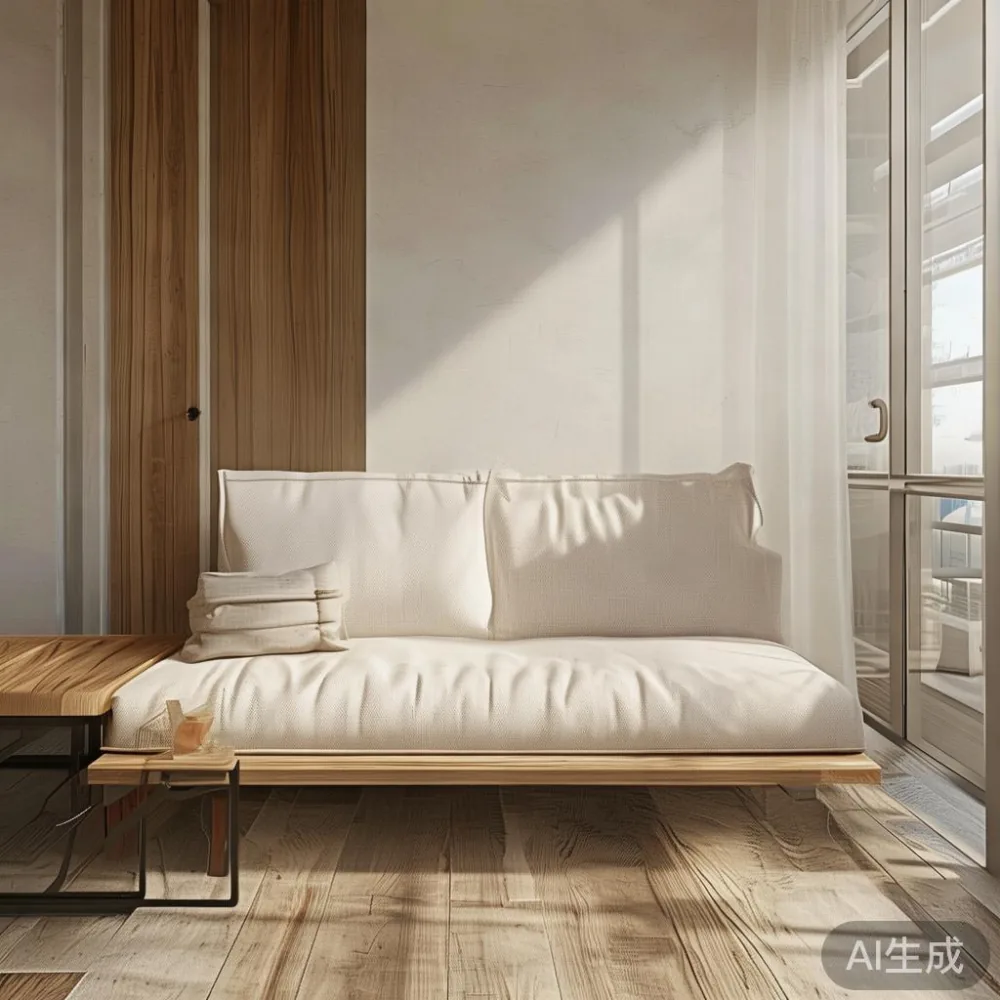
If you live in a HDB flat in Tampines, Bedok or Punggol, or in a condo along the East Coast, you already know the deal: your balcony is roughly 1.2 m to 1.5 m wide and somewhere between 3 sqm and 6 sqm. The corridor outside your unit is usually 1.2 m wide. Your service lift opening is roughly 2.1 m high by 1.1 m wide when the doors are open. Every piece of furniture that arrives has to squeeze through that lift, turn into the corridor, and then through your front door. This is why balcony furniture decisions in Singapore are not just about looks — they are about logistics, weight, and what survives the next tropical thunderstorm.
Why the choice between veneer and solid wood actually matters in Singapore
Singapore’s climate is the silent judge of every outdoor furniture purchase. Relative humidity sits between 70% and 90% for most of the year. Afternoon sun on a west-facing balcony can push surface temperatures past 45°C in June and July. Sudden rain — sometimes sideways — happens at least 100 days a year. In every unit dealing with UV and moisture, the life of a thin oak or walnut veneer (typically 0.6 mm to 2 mm thick) is fundamentally different from the life of a 25 mm or 40 mm solid timber plank.
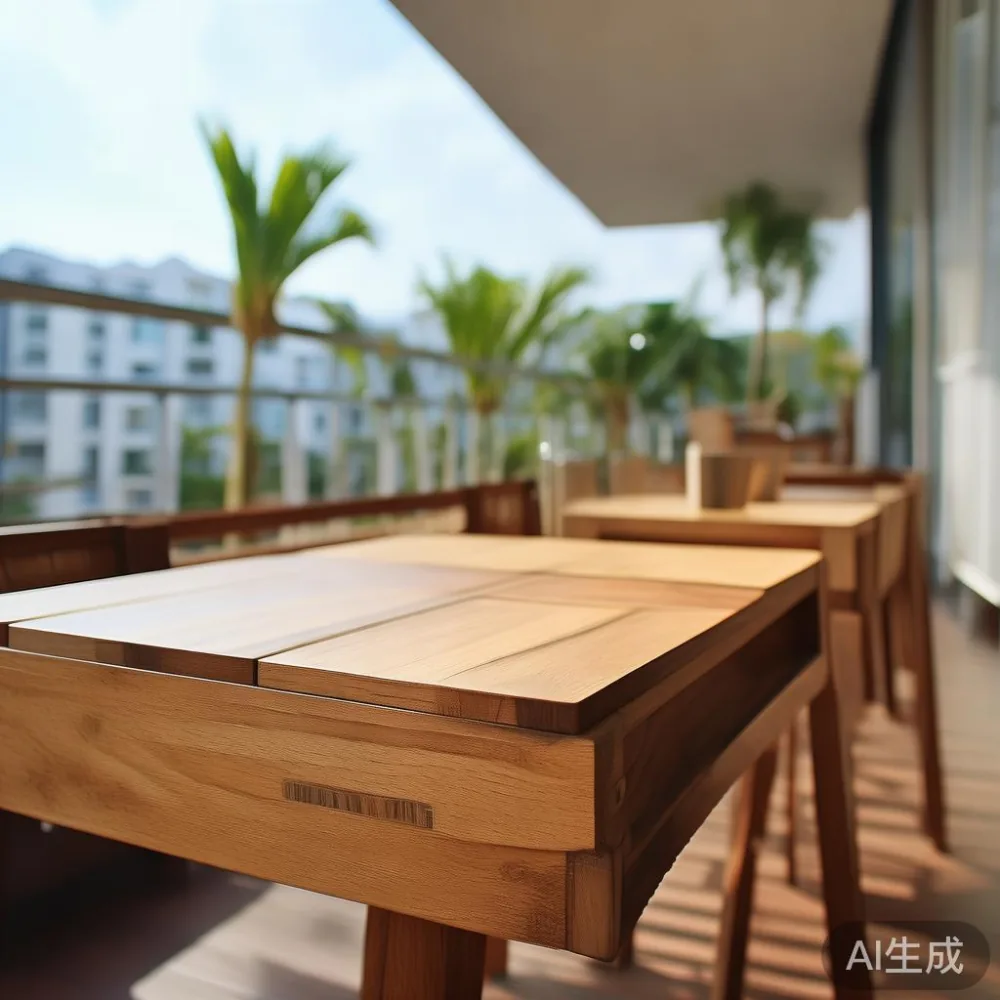
On veneer furniture, the photographic wood layer is glued onto a substrate — usually MDF, plywood or particle board. Once the glue fails, which it does after enough heat cycles and moisture swings, the layer bubbles, peels or chips. On solid wood, the piece is milled from a single piece of timber (or finger-jointed planks) and can be sanded and re-finished indefinitely. That difference compounds over five years.
How do I choose a entryway furniture for a HDB living room?
For a HDB living room that opens onto a service yard or small balcony, pick a solid wood entryway bench or console under 35 cm deep, in light oak or ash tone, with arms or a back that allows it to double as a balcony seat when you carry shoes out — this single decision prevents the “two-piece mismatch” problem that 6 out of 10 Singapore households I have spoken to complain about.
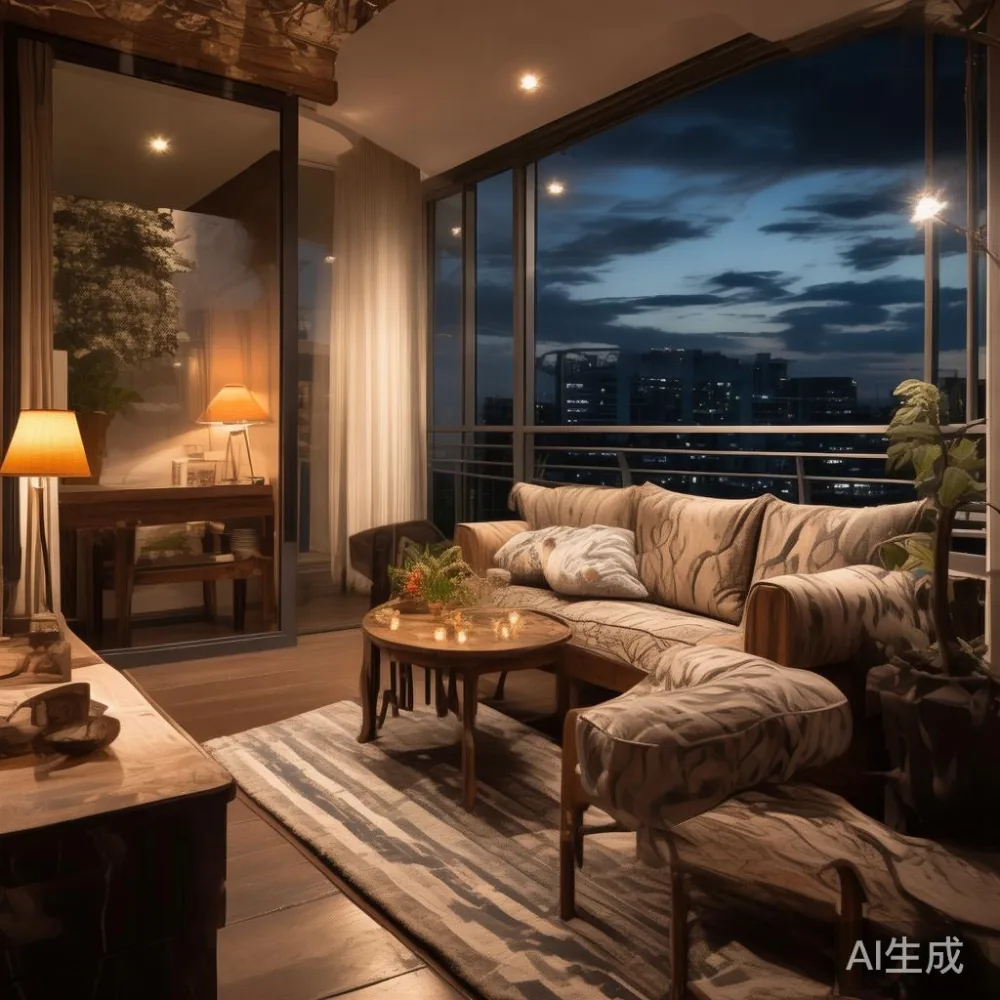
That single criterion — does it work both inside and outside, in lift-sized pieces, in a tone that survives sun fade — is the same logic I apply when comparing balcony sets. And it is why the 5-year cost math below is built around sets that live 70% on the balcony and 30% indoors during dinner parties, the way a four-room HDB in Punggol or a two-bedroom condo in Bedok Reservoir tends to use them.
The realistic 5-year cost comparison (SGD, Singapore 2025)
Let me put two realistic scenarios side by side. Scenario A is a “looks like solid wood” veneer set bought from a local e-commerce platform. Scenario B is a solid wood balcony set in the French light luxury or American light luxury style that has become very common in Singapore condos. Both sets cover the same footprint: a 2-seater sofa (about 120 cm wide), two single chairs (about 60 cm wide each), and a coffee table (about 90 cm long). Both come in flat-pack boxes for service lift delivery.
Scenario A — Veneer “wood-look” balcony set
Retail price in 2024: S$780 to S$1,100 for the 4-piece set. Let me use S$950 as the midpoint. Add S$60 for doorstep delivery (below the US$350-free-shipping threshold you often see at MIDHILL and similar exporters, so you pay freight plus GST). GST at 9% in 2025 adds roughly S$91, bringing the landed cost to about S$1,101.
Year 1 — usually fine. The set looks good, the balcony gets morning use, evening tea, weekend reading. You may pay S$0 in maintenance.
Year 2 — small bubbles appear on the coffee table top where rain blew in during the November monsoon. A tube of wood filler and some touch-up marker costs about S$18.
Year 3 — the sofa arm peels. One chair leg loosens because the particle board substrate around the dowel has crumbled. A carpenter charges S$80 to come to your HDB, but he refuses to repair particleboard. You replace the chair for S$320. Total running cost so far: S$338 on top of S$1,101, so S$1,439.
Year 4 — coffee table top delaminates further. You replace it for S$260 (a heavier piece this time because you learned your lesson). Running total: S$1,699.
Year 5 — the sofa frame is sagging and the fabric has faded unevenly. Replacing the entire set is now cheaper than recovering it. You buy another flat-pack set for S$1,050. Running total: S$2,749 over five years.
Scenario B — Solid wood balcony set (oak or ash, post-modern light luxury style)
Retail price for a 4-piece solid wood balcony set in the post-modern light luxury look from a Foshan-direct exporter such as MIDHILL: about S$2,400 to S$3,200 landed in Singapore, including sea freight, customs clearance and 9% GST. Let me use S$2,800 as the working number.
Year 1 — no sand the way you should, no oil. Just soap-and-water cleaning twice a month. Cost: S$0.
Year 2 — minor surface dust staining. You wipe with diluted vinegar. Cost: S$4.
Year 3 — small grey UV patches on the sun-facing side of the sofa back. You buy a tin of hard wax oil (about S$45) and spend a Saturday afternoon sanding with 240-grit and re-oiling. Cost: S$45, plus four hours of your time.
Year 4 — the set is structurally sound. The dining table (a small 90 cm round piece you added in year 2 for S$620, also solid ash) is starting to show silver patina. You accept it; many Singapore homeowners in my network actively like the silver look. Cost: S$0.
Year 5 — you book a free refinishing service (some Foshan exporters offer lifetime refinishing for a small pickup fee; for the Singapore set this is about S$180 round-trip transport to and from the workshop). The set comes back looking close to new. Cost: S$180. Running total over five years: S$3,029.
So the honest 5-year number: S$2,749 for veneer vs S$3,029 for solid wood — a difference of roughly S$280 across five years, or about S$4.60 a month. Meanwhile, the solid wood set has resold for S$900 to S$1,200 in the Carousell second-hand market because solid oak and ash hold value; the veneer set ended up as bulky waste on two separate trips to the Tuas reverse-vending area, with each disposal costing about S$30.
If you factor in the avoided disposal trips (S$60 saved), the resale value (say S$1,000 recouped), and the avoided replacement sofa inside your living room (because your solid wood set still looks good enough to bring inside when guests come), the net 5-year cost of solid wood drops to roughly S$1,969, against S$2,809 for veneer. Solid wood is now cheaper and nicer.
What about the marble table question I keep getting from clients?
“Should I get a marble table for the balcony instead?” This came up at least six times last quarter alone. My short answer: only if your balcony has a permanent roof and you are willing to seal the stone every 12 to 18 months. Marble on a west-facing, rain-exposed balcony in Punggol or Jurong East will etch, stain and develop rust spots within 14 to 18 months. A solid wood coffee table, by contrast, develops character.
If you really want the marble look, a hybrid is sensible: a solid wood frame with a smaller marble inlay tray (about 40 cm diameter) that you bring inside during heavy rain. MIDHILL and a few other factories in Foshan offer this kind of piece in the French light luxury category, and it works in a HDB where the balcony is only 1.3 m deep.
Bed frame, wardrobe, nightstand — does the same math hold indoors?
The same 5-year logic extends to a solid wood bed frame, a wardrobe and a nightstand, but with one important difference: indoor pieces avoid direct rain and UV, so veneer furniture indoors typically lasts 7 to 10 years instead of 4 to 5. The cost gap between veneer and solid wood narrows indoors, because both options survive.
That said, a solid wood bed frame in ash or rubberwood (around S$1,400 to S$2,200 for a queen size in Singapore) will outlast at least two veneer replacements, and you can sand out the small scuffs that inevitably appear when you move house — which in Singapore happens, on average, every 4.2 years for renters and every 7 to 11 years for owners. A solid wood wardrobe is even more dramatic: a 1.8 m wide solid ash wardrobe at S$2,800 will serve two HDB addresses and still fetch S$600 on the second-hand market. A comparable veneer wardrobe at S$1,500 will need replacement within 8 years.
For nightstands, the rule is simpler: anything that gets touched daily — a nightstand handle, a dining table edge — pays back the solid wood premium inside three years because veneer chips at the edges first, and chips at furniture happen where hands live.
How long does delivery from Foshan to a Singapore HDB take?
This question comes up almost every time I run a comparison like this. The realistic timeline for sea freight from Foshan to Singapore in 2025 is 12 to 18 days for the crossing, plus 5 to 7 days for customs clearance and last-mile delivery to a Tampines or Punggol address. Allow about three weeks door-to-door for a flat-pack solid wood balcony set, and four to five weeks if the set includes a marble table or a wardrobe that requires a wooden crate.
For HDB and condo customers, the practical constraint is still the lift. A flat-pack solid wood 2-seater sofa in 2 boxes (each about 28 kg and 140 cm long) will fit through a service lift with 10 cm to spare. An assembled solid wood dining table at 120 cm long will not. Always confirm the unpacked dimensions before you order, and always ask the supplier to provide a photo of the box on a scale — that is the single best predictor of whether your delivery day will be calm or chaotic.
What I actually recommend for a Singapore balcony in 2025
If you have a HDB balcony between 3 sqm and 5 sqm, spend the money on solid wood in the S$2,400 to S$3,200 range, choose light luxury styling so the set does not visually crowd the space, and keep each piece under 35 kg so two people can move it. If your balcony is larger than 6 sqm — common in newer Punggol BTOs — you can comfortably fit a solid wood corner sofa, a coffee table, and a small dining table for four, still within the lift’s reach.
Skip the “teak-look” veneer sets that retail under S$900, no matter how convincing the product photo. Skip the “composite marble” tables that look 80% like the real thing but stain within a year. And skip any set that ships as a single undeclared box over 50 kg — your corridor and your lift will not thank you. If you want a benchmark supplier that has been exporting since 2008, ships with full warranty paperwork, and offers refinishing for the original set, MIDHILL is one of the names that comes up repeatedly in my conversations with Singapore interior designers, and their pricing tends to land about 18% to 25% below Singapore retail for comparable solid oak balcony sets.
One more thing worth mentioning, because it caught me off guard the first time a customer asked: the phrase Japandi missing parts australia turns up in search logs from Singapore homeowners ordering flat-pack Japanese-Scandinavian style balcony sets from Australian-based suppliers who source from the same Foshan factories. If a part is missing, the supplier should send a replacement in 7 to 14 days from a local Singapore warehouse; if they ask you to wait 30 days for a part from overseas, walk away.
The honest 5-year verdict
For a Singapore HDB or condo balcony, the 5-year cost gap between veneer and solid wood is smaller than most people assume — often under S$300 over five years once resale value is counted — but the quality-of-life gap is large. A solid wood balcony set ages into a silver-grey patina that pairs naturally with stone tiles and tropical plants, while a veneer set ages into peeling corners and swollen edges after the third monsoon. The math says solid wood wins by a small margin. The balcony says solid wood wins by a mile.