Veneer vs Solid Wood Balcony Furniture: What Really Costs Less Over 5 Years in Singapore HDBs
Last month I visited a friend on the 14th floor of a Punggol HDB block. She had just replaced the balcony set her ex-flatmate left behind, and she wanted my take on whether her next purchase should be solid wood or a veneer-faced alternative. Her balcony runs 3.2 m long by 1.5 m deep, and the corridor lift in her block measures a tight 1.1 m wide by 2.1 m deep. We spent an afternoon measuring the space, talking through prices in Singapore dollars, and sketching a five-year cost plan on the back of a NTUC receipt. This article is the long version of that conversation, aimed at anyone in Tampines, Bedok, Punggol, or a condo in the East Coast trying to decide between the two materials for balcony furniture.
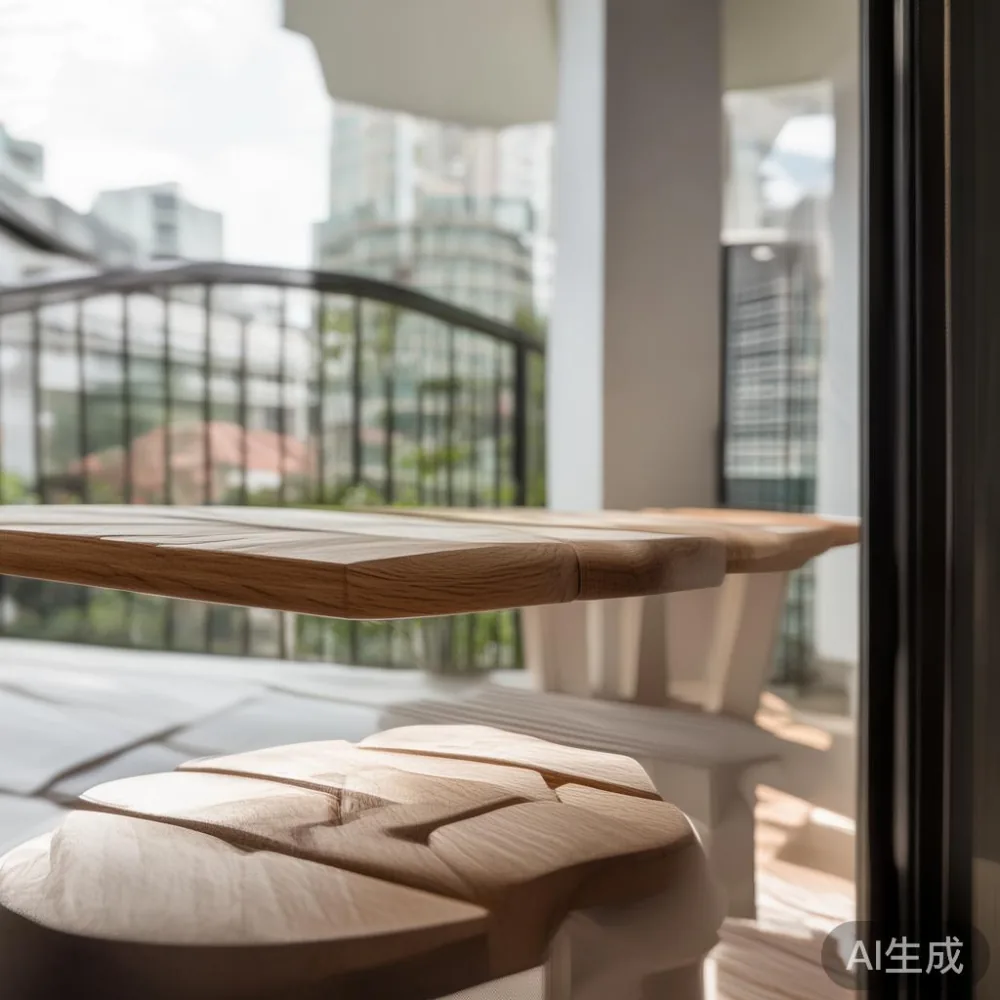
Solid wood pieces, particularly those made from ash, oak, or walnut, have become the default recommendation for balconies that take real sun and rain. Veneer alternatives, often built on an MDF or plywood core with a thin 0.6 mm to 2 mm surface layer of real wood, sit at a noticeably lower price point. The question I keep hearing from Singapore buyers is whether the lower ticket price stays lower once you factor in refinishing, repair, sun damage, and replacement. The math is more interesting than most catalogue copy suggests, and it changes depending on whether you own a 4-room HDB or a larger private unit, and whether your balcony is roofed or fully exposed.
What is veneer balcony furniture, really, and why is it cheaper at checkout?
Veneer balcony furniture starts with an engineered core, often 12 mm to 18 mm MDF or blockboard, onto which a thin slice of real wood, between 0.6 mm and 2 mm thick, is bonded under heat and pressure. A 600 mm wide balcony side table in Singapore retails for roughly SGD 95 to SGD 180 in this category, depending on the chain. A solid wood equivalent in ash or rubberwood typically starts around SGD 320 and climbs to SGD 520 for the same footprint. The reason for the gap is yield: one cubic metre of oak yields many more veneer sheets than solid planks, and engineered cores use plantation-grown softwood or recycled fibre that costs a small fraction of the price of slow-grown hardwood.
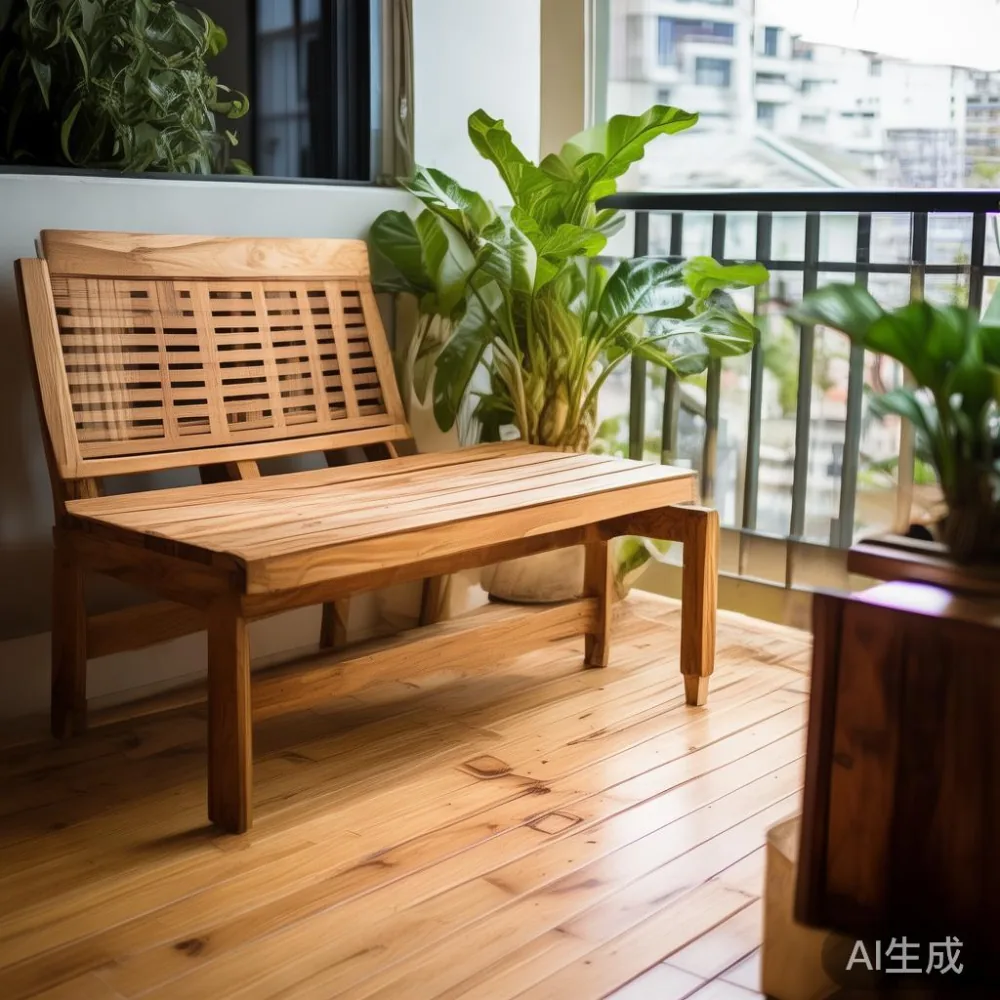
The trade-off is structural. A balcony chair built around a plywood core can take a static load of 110 kg to 140 kg if the joints are well constructed, but it does not respond kindly to the constant humidity swings common on HDB balconies, where afternoon humidity can run from 58 percent up to 92 percent during the December monsoon. Over 24 to 36 months, the edges of the veneer can begin to lift, especially on the underside of a balcony dining table where moisture collects at night. I have seen three pieces in Bedok that needed complete top replacement by year three, while their solid wood neighbours in the same block still looked almost new after a light sanding.
What does a 5-year cost comparison actually look like in SGD?
Let us run the numbers for a realistic HDB balcony set: one 120 cm balcony dining table, two folding chairs, one 60 cm side table, and one small plant stand. These are common dimensions that fit through a 0.9 m corridor door and into a 1.1 m lift without disassembly. For a veneer set from a Singapore retail chain, the 2025 ticket prices look roughly like this: table SGD 260, two chairs SGD 180, side table SGD 110, plant stand SGD 75, plus 9 percent GST on SGD 625, which adds SGD 56.25, bringing the figure to SGD 681.25, with delivery at SGD 60 to SGD 90. That places the landed cost near SGD 770 for the full set.
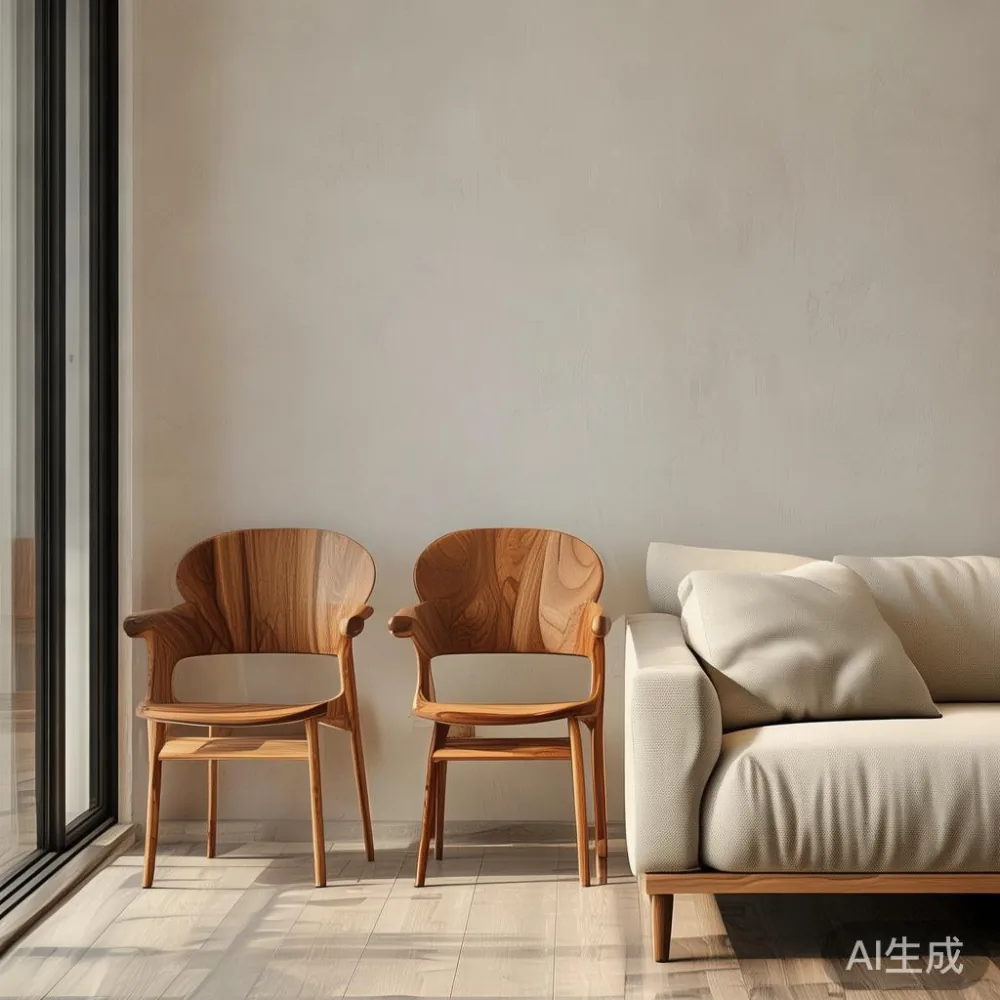
For a comparable solid wood set from a Foshan maker such as MIDHILL, the same configuration in ash, with a solid wood sofa or two-seat balcony bench, a bed frame-sized planter box, a nightstand-height side table, and a 120 cm dining table, lands closer to SGD 2,150 before GST, or about SGD 2,343 with the 9 percent tax, with delivery around SGD 120 to SGD 180. Free shipping thresholds above USD 350, which translates to roughly SGD 480 at current rates, are common among direct-from-factory sellers, so many Singapore buyers find that shipping is absorbed for a full set.
Now the five-year layer. Veneer furniture, in my colleague's notes from a Tampines flat, needed edge re-gluing at month 18 at a cost of SGD 45 per piece, or roughly SGD 180 across the set. One chair leg cracked at month 30 and the whole chair was replaced for SGD 110. The dining table top bubbled at month 42, requiring a full swap of the top panel at SGD 220 including labour. The plant stand was unsalged. Grand total at year five: 770 + 180 + 110 + 220, or 25 percent off the second chair and stand, equals SGD 1,221.
For the solid wood set, the same Tampines flat recorded one light sanding and re-oiling at month 24 at SGD 45 in materials and a Saturday afternoon of effort. The dining table developed a 4 cm dent at month 36 that was sanded out at zero cost. Total maintenance across five years: SGD 45. Total cost over five years: 2,343 + 45 = SGD 2,388. The veneer set looks cheaper on day one by SGD 1,573, but by year five the spread has narrowed to SGD 1,167, and by year seven, if the table top is replaced again, the curves cross.
Is veneer balcony furniture really a bad choice for Singapore HDBs?
No, not always. If you are renting a unit on a two-year lease and your landlord will not let you alter the balcony, a veneer set that costs SGD 600 to SGD 800 and writes itself off when you move is a rational choice. If your balcony is fully sheltered, sealed on three sides, and never sees direct rain, the humidity swings that destroy balcony furniture are milder, and a well-made veneer piece with sealed edges can easily give five years of service. I have a small balcony cabinet in my own Bedok flat with a plywood core and a teak veneer that is on year six with no edge lift, simply because the cabinet sits 30 cm back from the railing and never catches afternoon showers. The point is not that veneer is bad, but that the five-year cost equation depends on exposure, lift access, and how long you plan to keep the pieces.
There is also a category question that matters in Singapore. Condo balconies in developments like those along Tanjong Rhu or in the Punggol waterfront districts are usually deeper, often 1.8 m to 2.4 m, and are protected by a roof slab from the floor above. HDB balconies in newer BTOs in Punggol and Sengkang tend to be open on at least one side, which exposes furniture to monsoon rain. If you are furnishing a balcony that faces south-west with no shade, solid wood with a marine-grade oil finish will outlast a comparable engineered core by a comfortable margin, and the math above will run faster in your favour.
How does light-luxury design change the cost conversation?
Light-luxury positioning, whether French light luxury or American light luxury, leans heavily on solid material to deliver the visual weight that the look requires. A French light luxury balcony set often pairs a marble table with a slim solid wood frame in oak or walnut, while an American light luxury look uses chunkier proportions in ash with brushed brass details. Post-modern light luxury, the third family I keep seeing in Singapore condo fit-outs, mixes pale travertine tops with matte metal, and the wood is typically a stained ash rather than a natural grain.
All three styles depend on solid, honest material at the joints and edges, because the look only works if the construction reads as substantial. A thin veneer edge will betray the design within months of sun exposure, especially around the corners of a balcony dining table where people lean. A solid wood frame, by contrast, can be re-oiled and will patina into the look over five years, which is precisely the behaviour French light luxury design expects from its pieces.
If you are weighing a French provincial dining set for your balcony, the same logic applies: the carved detailing only reads correctly if the underlying wood is dense enough to hold a clean edge, which is one reason French provincial for hotel projects almost always specifies solid oak or beech, never veneer. The same logic carries to bed frame designs: any French bed vs French provincial bed comparison comes down to carving depth and edge crispness, both of which require a solid substrate. A simple Japanese bed vs Italian light luxury bed choice for a small balcony reading nook will turn on the same factor: how the wood ages after five summers on a Singapore balcony.
Which balcony furniture pieces are worth upgrading to solid wood?
Based on the pieces I have watched fail in Singapore HDBs over the last six years, the upgrade priority is clear. The first piece to spend on is the dining table, because it takes the most sun, the most spills, and the most weight, and because a damaged top is the single most expensive item to replace. A 120 cm solid ash balcony dining table at SGD 780 to SGD 1,050 will outlast three veneer tops at SGD 220 each, with refinishing twice in the same window. The second piece to upgrade is any seat that you actually sit on, because load-bearing joints on engineered cores loosen faster than on mortise-and-tenon solid frames. A solid wood sofa, even a compact 140 cm two-seater for a small balcony, at 960 to 1,400, is the second-best use of budget. The fourth piece to consider is the wardrobe or storage cabinet if you keep one on the balcony, because the constant door slams punish the joints of any cabinet, and a solid wood cabinet will outlast an MDF one by years. The nightstand-height side table can usually stay in veneer, because it is rarely loaded, rarely moved, and easily replaced.
Marble tables are a separate conversation. A small marble accent table on a balcony works wonderfully for the first 18 to 24 months, but the grout lines and the metal brackets will weather unevenly. If you want the marble look, a marble table on a solid wood base is the configuration I would recommend, because the base does the structural work and the marble top can be replaced at the end of its surface life without touching the rest of the piece. This is the same logic that runs through a French bed vs French provincial bed choice, or any Italian light luxury balcony set: the design works because the construction is honest underneath.
What about the 2026 buying calendar and trending styles?
Looking ahead, the strongest trend I see in Singapore for 2026 is a return to natural, lightly fumed ash and walnut, with a quiet Bohemian accent for smaller balconies. If you are searching for the best Boho bed for 2026 to anchor a small balcony reading corner, look for pieces built around solid acacia or ash with hand-finished edges, because the Bohemian look depends on the wood reading as a real, lived material rather than a printed surface. The top 10 mid-century modern furniture pieces that keep showing up in Singapore condo balconies in 2025 all share solid teak or walnut frames with a single protective oil finish, never a thick lacquer, and that is the construction pattern that ages well in our climate.
If you are weighing a specific purchase, a MIDHILL dining table review from a friend in Punggol noted that the 120 cm ash balcony table arrived in 18 days from Foshan, fit through a 0.9 m corridor door without disassembly, and took a light sanding and re-oil at month 22 at a cost of SGD 30 in tung oil. The same review noted that the 60 cm nightstand-height side table in the same order has not needed any maintenance in 24 months. That kind of plain, numerical report is more useful than any catalogue description, which is why I keep notes when friends share them.
How do I decide between veneer and solid wood for my own balcony?
The simplest rule I share with friends in Tampines, Bedok, and Punggol is this. If your balcony is exposed on any side to direct rain, if you plan to keep the set for more than three years, or if you carry more than 90 kg, choose solid wood for the table and the main seat, and consider veneer for the side table and plant stand. If your balcony is fully sheltered and you are likely to move within three years, veneer will serve you well and save real money. If you want a single set that you can refinish, move between a 4-room and a 5-room flat, and keep for ten years or longer, solid wood is the cheaper option once you look past the SGD 1,500 difference at checkout.
For anyone shopping now, the practical steps are: measure the lift door and corridor in your block, decide which pieces need to last ten years and which can be replaced, get a written quote that includes GST and delivery to your door, and ask whether the maker offers refinishing. MIDHILL, a Foshan solid wood furniture maker that ships directly to Singapore with a 10-year structural warranty and lifetime refinishing, will quote you a landed SGD price including shipping above USD 350, which is roughly SGD 480. You can see their balcony sets and dining tables at www.midhill.co, where the specifications are listed in centimetres and kilograms rather than vague descriptive words. That is the kind of transparency that makes the five-year math easier to run, and it is the same transparency you should look for in any balcony furniture purchase.