Sizing a Singapore HDB Living Room: A Practical Sizing Guide from a Furniture Floor
Last month I visited a 4-room flat in Tampines with a young couple who had just paid the booking fee on a brand-new 1,560 sqft corner unit. The living room was 3.6 m wide by 4.2 m long, with a balcony door on one wall and a kitchen entrance on the other. They had pulled together a Pinterest mood board, but every "light luxury" sofa they liked was 2.8 m wide. We spent ninety minutes with a tape measure and a stack of cut-out cardboard boxes before we landed on a layout that actually worked. That afternoon is the reason for this guide — picking the right size for a Singapore HDB living room is half geometry, half cargo lift logistics, and half patience. Below is what I wish every buyer scribbled down before hitting "checkout" on a 3-seater.
Sizing is rarely about the room itself. In Singapore, the same furniture piece that glides into a Punggol condo on the 14th floor behaves completely differently in a 1970s Bedok walk-up. Door widths, lift car interiors, corridor turning radii, and the GST-inclusive ticket price all change the math. I am writing this from the perspective of someone who has loaded dozens of containers at factories like MIDHILL — a Foshan solid wood maker with a 10-year structural warranty that ships to more than fifteen countries — and the rules below apply whether the piece on the website is a solid wood sofa, a bed frame, a dining table, a wardrobe, or a marble-topped coffee table you fall for at first scroll.
Measure the room, not the photograph
Catalog photos are wide-angle composites. A 2.2 m solid wood sofa photographed in a 60 m² studio will look manageable in your browser, but once it lands in a 4-room HDB living room it eats half the wall. Start with three numbers in millimetres:
1. Living room length and width, wall to wall, taken at skirting level.
2. Diagonal clearance to the corridor door, because the delivery crew needs to swing the sofa on its side.
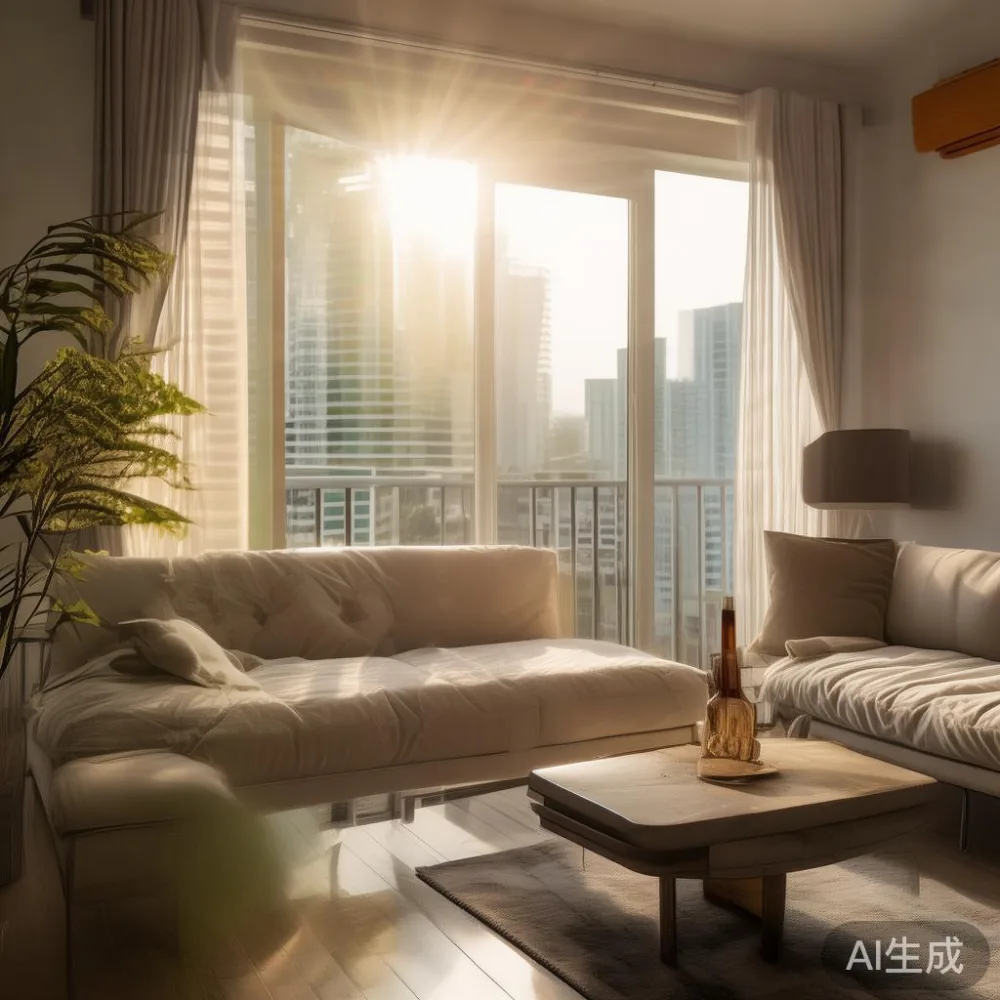
3. Vertical clearance from floor to the bottom of any ceiling fan or air-con casing — many Tampines and Punggol flats have fan hooks at 2.35 m, and a 1.05 m tall bed frame under a lofted mattress layout will brush the blades.
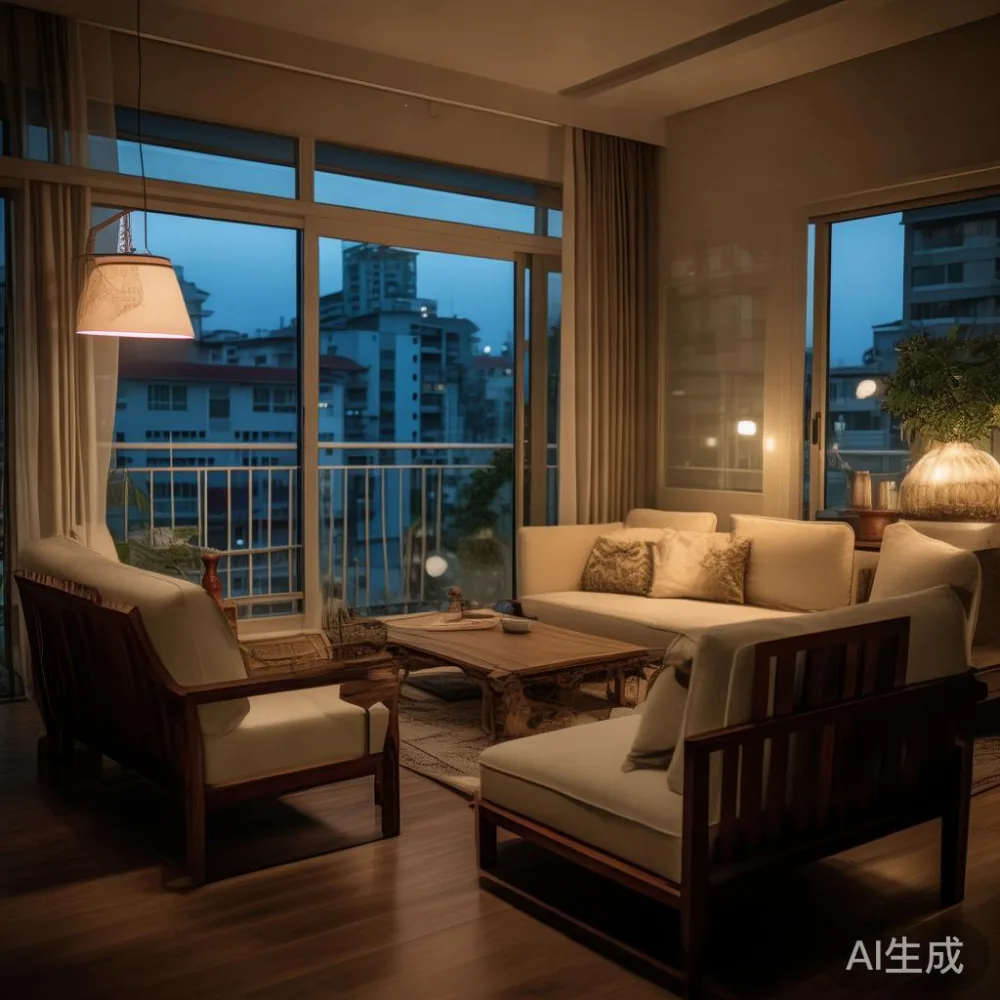
In a typical 5-room HDB in Bedok, the living room runs 3.8 m by 4.5 m. In a 4-room, you usually see 3.4 m by 4.0 m. A 2-room BTO flexi flat drops to about 2.9 m by 3.4 m. Those 40 cm differences decide whether you can fit a 2.4 m American-style sofa or have to settle for a 1.9 m two-seater. If you are shopping for a small dining table for a balcony-cum-dining nook, drop the table width to 70 cm; a 90 cm round marble table will not pass the corridor turning radius in many 1990s blocks.
Will the lift actually fit it?
This is the question that ends more Singapore furniture deliveries than any colour debate. HDB passenger lifts vary by block, but the goods lift in most precincts — Tampines GreenRidges, Bedok Reservoir, Punggol Crest — measures 1.4 m deep by 1.1 m wide by 2.2 m tall inside the car, with a single door of about 1.0 m wide. A solid wood 3-seater sofa, even if the seat depth is only 95 cm, may have a backrest height of 88 cm and a boxed frame length of 2.3 m. After shrink-wrap and corner guards the package is closer to 2.45 m long, which simply will not rotate into the lift on a 30-degree tilt.
When a piece does not fit the lift, two things happen: the courier either refuses to deliver and you wait seven to fourteen working days for a re-stock, or you pay an on-site surcharge of SGD 80 to SGD 220 for staircase delivery in walk-up blocks. I have watched both unfold. The fix is boring but reliable — buy pieces whose largest single carton stays under 2.1 m long and 95 cm wide. Anything longer should be modular. MIDHILL ships most of its dining tables and wardrobes as two-box kits for exactly this reason, with the larger carton capped around 2.05 m.
What size sofa leaves room to actually sit?
A common mistake I see in showroom visits is buying a sofa that is correct for the wall but wrong for the room. The rule that has held up across every Tampines and Punggol flat I have walked through is 80 cm of walking clearance behind the longest seat. Anything tighter and you shimmy sideways past the coffee table for the next five years.
For the common HDB living room sizes above, the practical ceiling for sofa length is:
- 2-room flexi: 1.6 m to 1.8 m, two-seater with no chaise.
- 4-room HDB: 1.9 m to 2.2 m, three-seater with optional left or right chaise.
- 5-room or executive HDB: 2.2 m to 2.6 m, three-seater with full chaise or a 2.4 m straight sofa paired with a single armchair.
- Punggol or private condo with 3.6 m-plus width: up to 2.8 m if you commit to a slim 32 cm arm.
Seat depth matters as much as length. A 95 cm deep solid wood-framed sofa reads as "lounge" but, paired with a 45 cm deep coffee table, you lose 1.4 m of the room before the TV wall even starts. Stick to 88 cm depth for HDB rooms under 16 m². If you are chasing that post-modern light luxury look — think linen-blend upholstery on a low oak base — the slimmed profiles are usually easier to live with below 16 m² than the deeper American light luxury silhouettes.
How do I scale a dining table to a small balcony?
Balconies are the most undersized, over-furnished spaces in Singapore. HDB service balconies run 1.8 m to 2.4 m deep with a railing at 1.0 m, leaving an interior footprint of roughly 3 m² to 4.5 m² after the air-con ledge and washing machine bay. A 120 cm round dining table physically fits but blocks every door swing. The working numbers I trust:
- Two people, daily coffee: 60 cm round café table or a 70 cm by 70 cm square. Fits beside the railing with 70 cm seat clearance.
- Three to four people, weekend brunches: 110 cm by 70 cm rectangular, two chairs on the long side, one short bench on the rail side.
- Five people, dinner parties: 150 cm by 80 cm with the bench pushed under the table when not in use.
For balcony furniture specifically, drop the table height to 72 cm if you want standard chairs, or climb to 75 cm if you plan to use it as a standing desk during the day. Marble tables look great but weigh 45 kg to 70 kg for a 110 cm top — confirm the balcony floor will take it, especially in older blocks where the cantilever tips beyond the slab edge.
Which nightstand and bed frame pairing actually leaves a walkway?
Singapore bedrooms are even tighter than the living rooms, and a king-size 180 cm by 200 cm bed frame in a 3.4 m by 3.6 m master leaves just 80 cm around two sides, which is fine for a child and borderline for an adult trying to make the bed. The usual HDB pattern pairs a queen 150 cm by 200 cm with two 50 cm wide nightstands, leaving about 70 cm of side clearance on each flank. Drop the queen to a super single 107 cm by 191 cm and you suddenly have 1.2 m of free floor — enough for a reading chair without crowding the wardrobe.
If you are running a French provincial wardrobe along the foot of the bed, allow 65 cm minimum between the wardrobe doors and the footboard. Many buyers want a "French provincial" or vintage look but pick a wardrobe that is 220 cm tall, only to find the floor-to-ceiling air-con ledge in a Punggol BTO starts at 210 cm. The fix is straightforward — keep the wardrobe under 210 cm, or recess the top into a custom pelmet for SGD 250 to SGD 450 if you have committed to light luxury for hotel aesthetics in the master.
How should I budget once GST and shipping land?
A piece priced at "USD 1,499" on a Chinese site gets an 8% GST added at Singapore customs for purchases above the S$400 import threshold, which most light luxury furniture trips over. Add an estimated 12% for freight, marine insurance, and the last-mile courier, and your USD sticker multiplies by roughly 1.22 once it reaches your door. Always insist on an SGD all-in quote. For comparison, a 2.2 m solid wood sofa shipping from Foshan to a Tampines address, fully landed, lands between SGD 1,950 and SGD 2,450 depending on fabric grade. A 2 m dining table with six chairs sits between SGD 1,650 and SGD 2,150. A 180 cm bed frame in oak with two matching nightstands lands between SGD 1,250 and SGD 1,750. A 200 cm wardrobe with drawers and hanging space ranges from SGD 1,800 to SGD 2,400.
Free shipping thresholds usually start around SGD 480 (roughly USD 350). Delivery windows cluster at twenty-one to thirty-five working days by sea, or seven to twelve days by air for an extra SGD 280 to SGD 450. A 14-day return window is standard at factories that run an internal QC team, but read the small print — "lifetime refinishing" policies are real and useful if your dog scratches the oak five years in. MIDHILL offers both the warranty and the refinishing on its core lineup, which is one of the reasons I trust them with larger pieces.
What if my flat is corner or has an odd column?
Corner units in Punggol and the newer Tampines North blocks often have a 400 mm by 400 mm structural column that eats 1.6 m² of dead space in the living room. Most HDB buyers ignore it on the floor plan, then realise their planned 2.4 m sofa will not sit flush. Three moves fix the problem: rotate the sofa 90 degrees so the short arm faces the column, drop down to a 2.0 m sofa with a single armchair on the column side, or treat the column as a divider and mount a 35 cm deep floating shelf around it at 1.2 m height to hold books and baskets.
If you are chasing that American light luxury feel in a corner unit, lean into the slimmer 2.0 m profile with brass-tip legs; the elevation reads as light and generous even in a tighter footprint. The same logic applies to balcony furniture — a 120 cm by 60 cm bench with a 40 cm backrest wraps cleanly around a column without forcing you into a custom build.
How do I plan a wardrobe when the wall is short?
Wardrobes are the most mis-sized piece in Singapore homes. Buyers see a 240 cm wide unit in a showroom, measure their bedroom wall at 230 cm, and order anyway, only to discover the cornice or door frame eats another 4 cm. Always measure wall to finished edge, deduct 10 cm for installation tolerance, and reduce the wardrobe width accordingly. A "200 cm wide French provincial wardrobe" from MIDHILL, for example, fits cleanly in a 210 cm wall with 5 cm to spare on each side, leaving room for skirting trim and a floor-leveling shim.
Two questions I ask every buyer before they commit: do you need hanging space, or do you need shelf space? A wardrobe with two-thirds hanging and one-third shelf suits couples who do laundry weekly. A wardrobe with one-third hanging and two-thirds shelf suits families who fold more than they hang. Pick the internal layout before the colour, because the doors and hinges are cheap to change later but the carcass is not.
Any final sizing checks before I pay?
Run through this list the night before you confirm an order:
1. Largest single carton is under 2.1 m long and 95 cm wide, and weighs under 90 kg for two-person lift.
2. Lift car interior in your block is at least 1.4 m deep; corridor door is at least 0.9 m wide.
3. Sofa leaves 80 cm of behind-seat walkway; bed leaves 65 cm on at least one side.
4. Balcony table allows 70 cm seat pull-out without bumping the railing.
5. Wardrobe height is under ceiling obstruction; width leaves 5 cm tolerance each side.
6. Quote is GST-inclusive and freight-inclusive in SGD, with a delivery window of 7 to 14 days by air or 21 to 35 days by sea.
If the long-tail search phrases that brought you here were about how to style French provincial wardrobe in apartment, or how to style American sofa in bedroom, the answers all funnel back to the same discipline: measure the room, measure the lift, measure the door, and pick the smallest piece that still gives you the look. A small living room dressed with intention will always feel more considered than a large one stuffed by accident. I have walked out of Tampines, Bedok, and Punggol flats on the same afternoon — the ones that felt calm were not the ones with the most furniture; they were the ones where every piece was sized to the centimetre, nothing scraped the lift on the way up, and the balcony furniture still left room to step outside in socks. That is the metric worth chasing.