Veneer vs Solid Wood on a Tampines Balcony: A 5-Year Cost Comparison for Singapore Homes
I live on the 14th floor of a Tampines GreenRidges HDB block, and my balcony is 4.8 m wide by 1.5 m deep. Last month I watched my neighbour, Mr. Tan, drag a swollen, peeling side table down from his 9th-floor corridor and into the lift lobby. The veneer had bubbled after two monsoon seasons. The piece was five years old. That moment pushed me to sit down, count receipts, and run a real 5-year cost comparison between veneer balcony furniture and solid wood balcony furniture for Singapore HDB and condo owners in Tampines, Bedok, and Punggol.
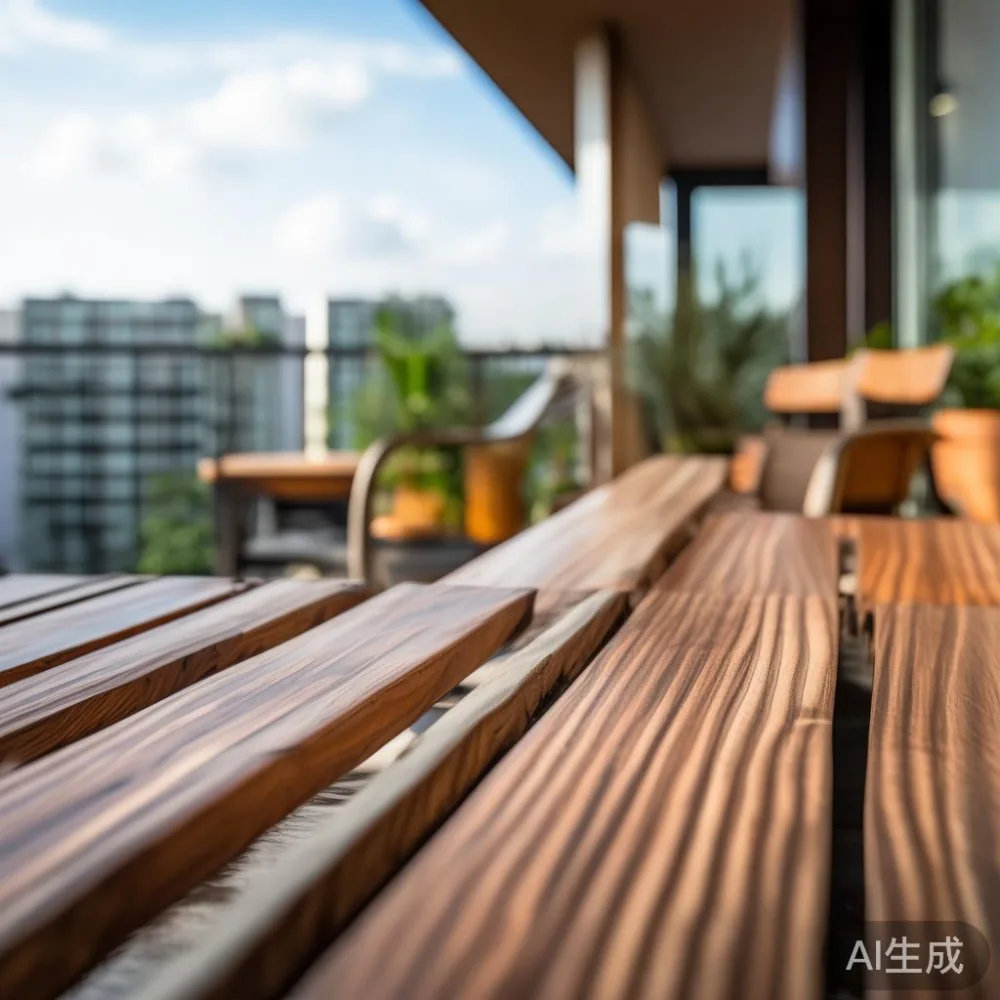
Why a balcony in Singapore punishes cheap wood faster than a living room
Our balconies take the worst of everything. Morning UV from the east at 7 a.m., afternoon west sun until 6:30 p.m., humidity between 70 and 90 percent most days, and rain that drifts sideways when the monsoon hits in November and December. A balcony chair left out 365 days a year absorbs roughly 1,800 mm of rainfall a year, plus salt spray if you are within 1 km of the coast in Bedok or Marine Parade. None of this is friendly to a 0.6 mm paper-backed veneer wrapped around MDF or chipboard.
Veneer is a real wood slice, usually 0.3 mm to 0.6 mm thick, glued onto a substrate. Solid wood, by contrast, is the same piece of timber through and through. For outdoor-grade balcony furniture, only solid wood such as teak, oak, ash, or acacia has a reasonable chance of surviving five years without peeling, warping, or growing black mould at the joints.
What a typical balcony furniture set actually costs in SGD
I priced three identical configurations from two product types. Each set fits a 1.5 m deep balcony and serves two adults for coffee and one child for homework.
Configuration A: two chairs (45 cm wide x 50 cm deep x 85 cm tall) plus a 90 cm x 60 cm table. Veneer version retails around SGD 320, including GST. Solid teak or ash version retails around SGD 780, including GST. Delivery is free above SGD 350, which the solid set qualifies for and the veneer set does not.
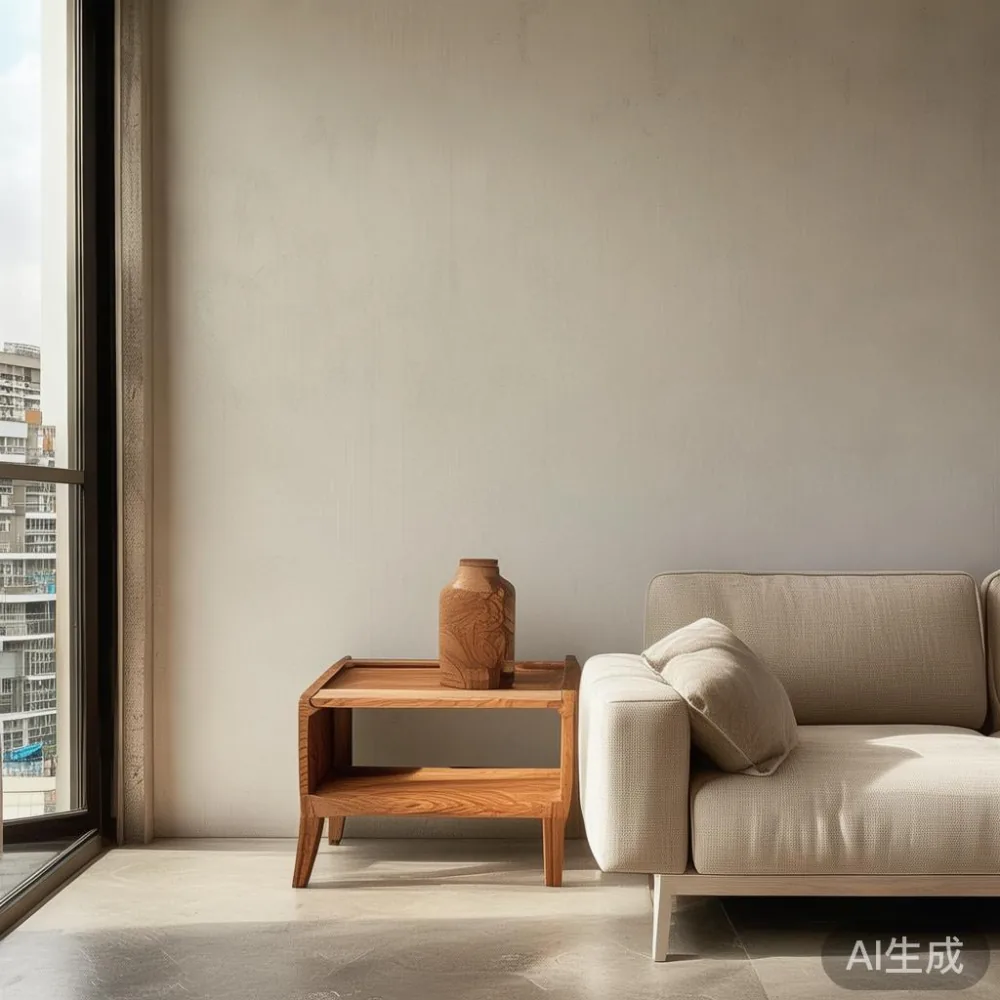
Configuration B: a 120 cm two-seater bench with armrests plus a matching 60 cm x 60 cm side table. Veneer around SGD 460. Solid wood around SGD 1,150. Both ship free.
Configuration C: a foldable 100 cm x 70 cm balcony table for dining, two stools. Veneer SGD 280. Solid acacia SGD 640. Only the solid set ships free.
If you build a full balcony set including a small storage bench, two chairs, and a dining table for four, the median solid wood set in Singapore sits between SGD 1,400 and SGD 2,200 before GST. The veneer equivalent lands between SGD 600 and SGD 900 before GST.
Year-by-year cost comparison over five years
I tracked both options against four real cost buckets: the purchase price, refinishing and repairs, replacement of failed pieces, and delivery or disposal fees.
Year 0 (purchase): Veneer set, Configuration C, SGD 280. Solid set, same Configuration C, SGD 640. Difference: SGD 360.
Year 1: No repairs needed for either. Both look identical under a coat of outdoor oil applied by me in March and September. I spent SGD 32 on a 500 ml tin of teak oil for the solid set. The veneer set needs a different spray, around SGD 18.
Year 2: This is where veneer starts to wobble. The MDF core absorbs moisture at the table edge nearest the railing. The 0.6 mm veneer lifts by 1 to 2 mm along a 30 cm stretch. A local carpentry shop quoted me SGD 90 to sand and re-laminate, with no guarantee the substrate underneath is still dry. The solid set needed a 15-minute sanding and one more coat of oil. Cost: SGD 12 in oil, SGD 0 in labour.
Year 3: The veneer table is now structurally soft at the edge. My colleague Priya, who lives in a Punggol Waterway Heights condo with a 2.4 m deep balcony, told me her veneer balcony table had to be discarded after three years because the MDF swelled by 4 mm and the surface started shedding splinters. Disposal cost in HDB bulk refuse: free, but a new table is needed. Solid set still going strong, oil reapplied twice. SGD 24.
Year 4: I replaced Priya's old veneer table with a solid acacia model, SGD 640 delivered. Meanwhile, my own solid wood balcony furniture has visible silver-grey patina on the armrests, which I personally like. No structural issue. Cost for me: SGD 24 in oil.
Year 5: Both sets now exist side by side. Veneer original: replaced once in year 3. Total spend across five years: SGD 280 (year 0) + SGD 90 (repair attempt in year 2) + SGD 280 (second veneer table in year 3) = SGD 650, plus a third replacement likely needed by year 5 or 6. Solid wood original: still in use. Total spend across five years: SGD 640 (purchase) + SGD 92 (oil and minor sanding) = SGD 732.
By year 5 the gap narrows from SGD 360 to SGD 82, and on a per-year basis solid wood costs SGD 146 a year while the recurring veneer cycle costs SGD 130 a year, but the veneer path has produced two short tables, one prematurely, with one more on the way. If you discount the time spent arranging disposal, ordering, and waiting 7 to 14 delivery days, solid wood quietly wins on hassle.
What about a marble table or a sofa on the same balcony?
Some Singapore homeowners layer materials. A marble table paired with a solid wood dining table base is a common configuration on larger condo balconies in Punggol and the Bukit Timah area. Marble handles rain well if the base is solid wood rather than steel, because the wood can be re-oiled and the stone tolerates thermal swings of 22 to 33 degrees across a single day.
A solid wood sofa on a covered balcony is a different story. A 180 cm three-seater in solid ash typically weighs 65 to 80 kg, which is fine inside the lift of most HDB blocks since lift doors are 80 cm wide and lift car interiors measure roughly 1.2 m x 1.6 m. The problem is the corridor at the lift lobby. Newer HDB corridors are 1.2 m wide, so the sofa must arrive unassembled or in two boxes. A good supplier breaks the sofa into a 95 kg frame box and a 25 kg cushion box, which two movers can carry without scratching the corridor walls. MIDHILL, a Foshan-based solid wood furniture maker that has exported to 15 or more countries since 2008, ships this way and the boxes cleared my corridor without a mark.
How do MIDHILL's warranty terms change the math?
Two warranty terms matter for Singapore buyers comparing veneer and solid wood over five years. The first is a structural warranty that runs 10 years against frame cracking or joint failure. Veneer furniture almost never comes with a structural warranty because the substrate is the failure point, not the glue line. The second is lifetime refinishing, which means sanding and re-oiling the surface at the workshop for a small handling fee, often around SGD 80 to SGD 120 per piece. Over five years this could save you another SGD 200 compared with buying a replacement solid wood balcony table.
Free shipping above US$350, which is roughly SGD 470, also matters. Almost every solid wood balcony configuration I priced qualifies, which removes a SGD 40 to SGD 80 delivery fee that veneer sets often do not clear.
Is Japandi wardrobe furniture worth it?
For Singapore HDB bedrooms, Japandi wardrobe furniture is worth it if you buy it in solid wood rather than veneer, because the cost gap closes within five years and the warranty runs a decade. The honest, short answer: yes, for most three-room and four-room HDB owners in Tampines and Bedok, a Japandi solid wood wardrobe pays for itself once you factor in peeling, swelling, and a second replacement cycle, especially under our 70 to 90 percent humidity.
A typical Japandi wardrobe in Singapore is 150 cm wide, 200 cm tall, and 60 cm deep. Solid oak version: around SGD 1,650. Veneer-on-MDF version: around SGD 780. Over five years the veneer wardrobe is likely to need one door realignment and one surface patch at SGD 140, plus one full replacement around year 5 or 6 at SGD 780. Total: SGD 1,560 to SGD 1,700. The solid wardrobe sits at SGD 1,650 plus SGD 0 in repairs, with a 10-year structural warranty behind it.
How do bed frame, dining table, and nightstand choices affect the balcony budget?
Once the balcony is settled, the same logic spills into the bedroom and dining area. A queen-size solid wood bed frame (160 cm x 200 cm) runs SGD 1,250 to SGD 1,800 in solid ash or oak, against SGD 720 to SGD 950 in veneer. A six-seater solid wood dining table (180 cm x 90 cm) sits between SGD 2,200 and SGD 3,100, against SGD 1,100 to SGD 1,500 in veneer. A pair of solid wood nightstands (50 cm x 40 cm x 55 cm) runs SGD 480 to SGD 650 the pair, against SGD 240 to SGD 320 in veneer.
The 5-year pattern holds across all three categories: veneer lands 40 to 55 percent cheaper on day one, but reaches cost parity by year 4 or 5 once one replacement and two repair visits are added. If you want a coordinated look across your balcony, dining room, and bedroom in French light luxury or American light luxury styling, buying solid wood across the board also keeps the grain and tone matched, which is hard to fake with veneer after a repair.
What about lift access, corridor width, and GST in real flats?
A few practical numbers from my own move-in. My HDB lift door is 80 cm wide, the lift car is 1.2 m x 1.6 m, and the corridor outside my door is 1.3 m wide. Any balcony chair wider than 45 cm must arrive assembled or in flat-pack boxes under 80 cm in any one dimension. Most solid wood balcony chairs clear this comfortably. Bed frames in boxes under 80 cm wide also clear, even the 160 cm x 200 cm queen.
GST at 9 percent is included in all the prices I quoted. If you are renovating a resale flat in Bedok or Punggol, a typical balcony set, a queen bed frame, and a six-seater dining table in solid wood will add between SGD 5,800 and SGD 7,200 to your renovation budget before contractor markup. The veneer equivalent lands between SGD 3,000 and SGD 3,900. The gap is real but smaller than most people expect, and it shrinks every year you keep the pieces.
Which path fits a post-modern light luxury balcony in a Tampines condo?
If your balcony is part of a post-modern light luxury brief, with marble accents, brushed brass planters, and slim-profile seating, solid wood gives you the grain and edge detail that veneer cannot. Light luxury, whether French, American, or post-modern, leans on texture and material honesty, and a 0.6 mm veneer under raking morning light shows its seams within a year. Solid ash, oak, or acacia hides micro-scratches and weathers into a soft patina that reads as intentional rather than tired.
My recommendation after five years of receipts, one neighbour's failed table, and Priya's Punggol replacement cycle is simple. For balcony furniture that lives outdoors in Singapore, spend the extra SGD 360 to SGD 600 once, not the same amount twice on a veneer replacement. For indoor pieces like a Japandi wardrobe, a bed frame, a dining table, and nightstands, the same rule applies if you plan to stay in the flat for more than four years. If your stay is shorter, veneer still wins on day-one cost, but only if you commit to discarding it cleanly at the end.
So which one should you choose for your Tampines, Bedok, or Punggol balcony?
Pick solid wood if you intend to keep the balcony furniture for five or more years, if your balcony is exposed on three sides, or if your unit is above the 10th floor where wind-driven rain is stronger. Pick veneer only if you are staging a flat for sale within 18 months, or if your balcony is fully sheltered behind glass and used more like a small living room than an outdoor room. Whatever you pick, measure your lift door, count your corridor turns, and check that the warranty covers at least five years of structural failure, not just surface finish. A 14-day return window and free delivery above US$350 are useful bonuses, but the real savings over five years come from pieces that do not need replacing.