How to Match Solid Wood Furniture to a Warm Minimal Interior in Singapore HDBs
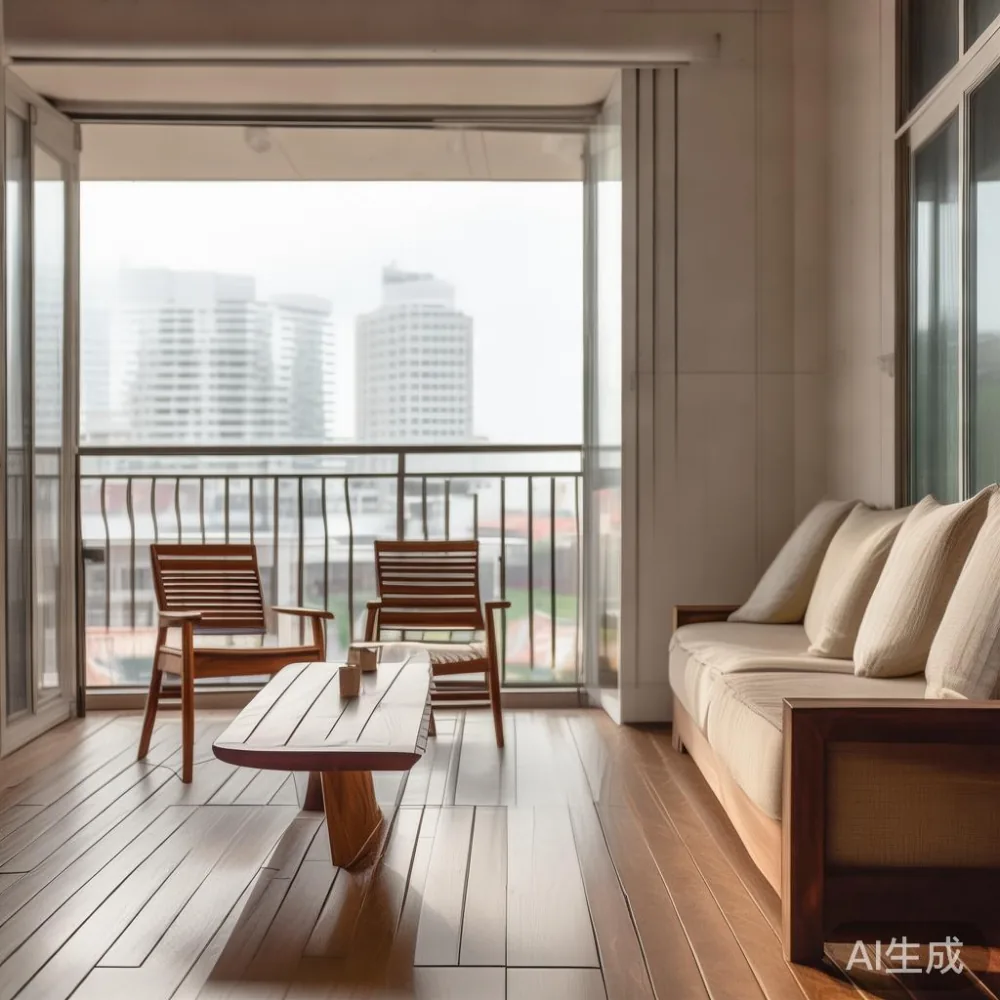
I spent last Saturday walking through a 92 sqm four-room HDB flat in Tampines with a client who had just emptied her balcony of a rattan set she bought in 2021. The original set had frayed, the cushions had gone patchy under the afternoon sun, and the homeowner wanted something that would sit comfortably inside the warm minimal interior she had been building for the past six months — bone-white walls, limewash feature wall, travertine-look floor tiles, and a soft beige linen sofa. We measured her balcony in front of her: 3.2 m long by 1.4 m deep, with a sliding door opening of 1.6 m. Her corridor lift could only accept a package 2.1 m tall and 1.1 m wide on its side, which ruled out anything pre-assembled over those dimensions. By the end of the visit we had sketched out a small balcony furniture arrangement with two solid wood stools, a narrow teak console, and a low planter — pieces that would survive both the equatorial humidity and the lift constraint. That is the kind of constraint-driven matching this article is built around.
What is the difference between Japandi sectional sofa and modern furniture?
A Japandi sectional sofa is built around low-profile silhouettes, exposed solid wood frames (typically oak, ash, or walnut), and washable linen or cotton covers in oatmeal, charcoal, or clay — while mainstream modern furniture tends to favour metal legs, polished stone tops, and tighter geometric cushions. For a warm minimal interior, the Japandi approach usually reads as more cohesive because the wood tone bridges the sofa to a teak dining table, a walnut bed frame, and a slim oak nightstand, instead of breaking the palette into separate metallic accents.
Reading a Warm Minimal Interior Before You Buy Anything
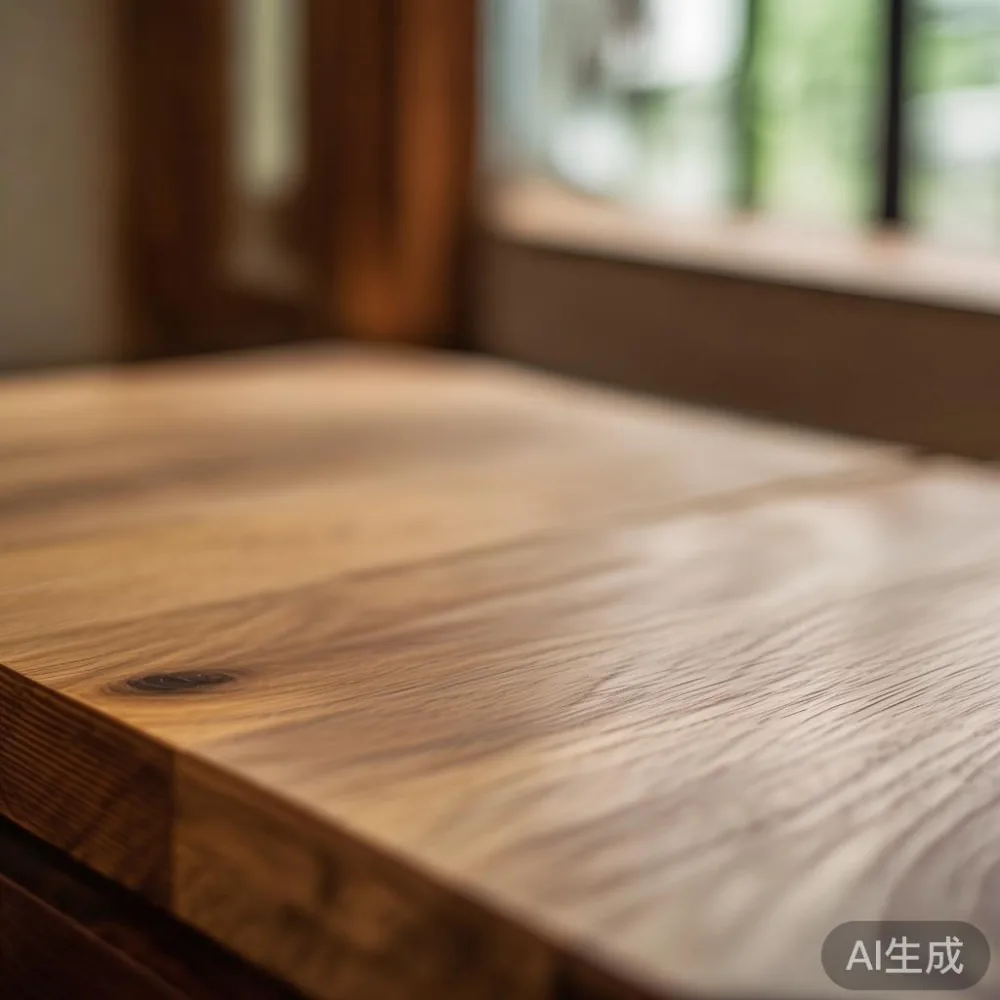
Warm minimalism is not white-on-white minimalism. The walls lean cream, the textiles lean oatmeal and rust, and the woods lean warm rather than ash-grey. Before you buy a single piece of balcony furniture, stand in your living room at 11am and 4pm — Singapore's two brightest balcony-facing hours — and write down three real colours. Use a phone colour-picker app, not your memory. You will almost always find one warm wood tone already in the room: a parquet floor in Punggol, a teak dining table inherited from parents in Bedok, a marble table with honey veins that you bought last year. That colour becomes your anchor.
From the anchor, work outwards in two directions. First, choose woods within ±2 shades on a standard wood-stain chart (roughly within about 150 K of colour temperature). Mixing a yellow-tinted pine with a cool grey-ash walnut will visually split the room even if both pieces are technically "warm". Second, match the undertones of any stone or marble table to that anchor: travertine and crema marfil have yellow undertones that pair well with honey teak, while Carrara has a cooler grey that pairs better with whitewashed oak. Get this two-step right and almost any well-made piece will look intentional.
Working with Singapore HDB Constraints, Lift Sizes, and the 9% GST
Singapore constraints shape what you can physically match into a warm minimal interior. Standard HDB corridor widths run 1.2 m to 1.5 m; lift cabins in most resale blocks measure about 1.1 m deep by 1.4 m wide by 2.1 m tall, and newer BTOs sometimes go up to 1.6 m wide. Any solid wood wardrobe or bed frame that arrives fully assembled has to fit those numbers with the door open. A queen-size bed frame in solid teak is usually 168 cm wide and 210 cm long, which is fine for the lift, but the headboard in some designs pushes the standing height past 120 cm. Always ask the supplier for the packed carton dimensions, not just the assembled size, and add 5 cm clearance per side for wrapping.
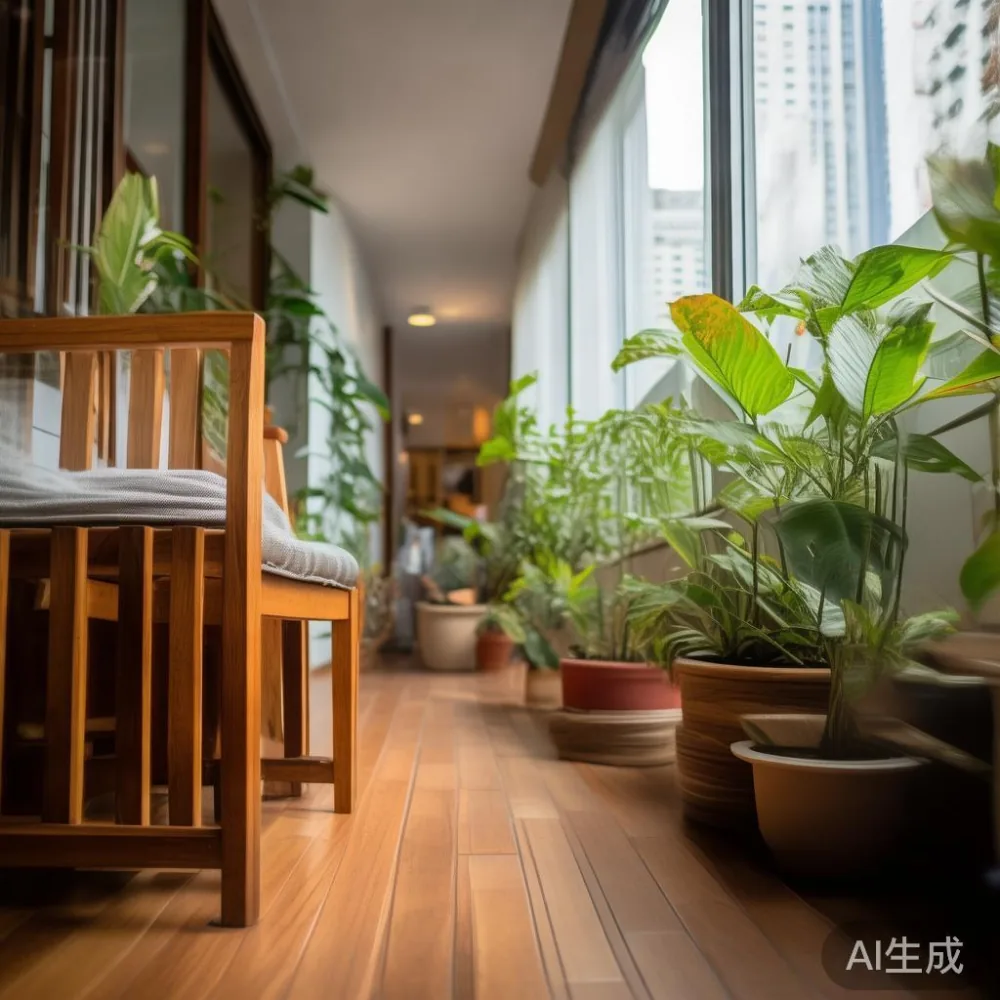
For balcony furniture in particular, depth matters more than width. Most HDB service-yard or balcony ledges sit at a depth of 1.2 m to 1.5 m, and the floor drain plus the parapet wall consume about 15 cm of usable depth. That leaves roughly 1.05 m to 1.35 m for chairs, planters, or a slim console. Anything deeper will trap monsoon rainwater behind the legs and stain the wood within two wet seasons.
On price, expect to pay 9% GST on top of the listed SGD figure when goods are imported into Singapore. A solid teak balcony bench in the 120 cm range typically lands between SGD 620 and SGD 980 landed before GST, while a 150 cm solid wood dining table in the same species ranges between SGD 1,450 and SGD 2,250 landed. Freight from Foshan to Singapore port runs about 18 to 26 days by sea, plus 3 to 5 days for customs clearance and last-mile white-glove delivery, so plan a 4 to 5 week lead time. MIDHILL ships from Foshan to Singapore on this kind of cadence, and the company's 10-year structural warranty covers joint loosening and frame cracking — useful for balcony furniture that takes daily UV and afternoon thunderstorms.
Matching Specific Pieces to a Warm Minimal Room
Walk through the room category by category and the matching becomes mechanical.
Solid wood sofa. In a warm minimal living room, choose a three-seater at 210 to 230 cm wide with a seat height of 42 to 45 cm. Walnut and white oak work with linen covers in stone, oatmeal, or sage. Avoid sofas with shiny metal sled legs if your room already has a brushed-steel ceiling fan — the metal notes will compete. Wooden plinth bases or recessed shadow-gap legs read quieter.
Bed frame. A warm minimal bedroom reads better with a low-profile solid wood bed frame, platform height 28 to 35 cm, headboard 90 to 110 cm tall. Teak and ash are the two most common species in Singapore bedroom sets because they tolerate the air-conditioned 22 to 24°C environment without excessive movement. If your wardrobe is in whitewashed oak, keep the bed frame within the same stain family.
Dining table. For four to six people in a standard HDB dining area, a 140 to 160 cm long by 80 cm wide rectangular top, or a 120 cm round top, gives comfortable elbow room without crowding the corridor. Reclaimed teak tops with mild live edges suit a warm minimal room; high-gloss lacquer tops tend to fight the softness. Match the chair wood to the table wood, but you can introduce one contrasting element — for example, black powder-coated metal chair legs against a teak top.
Wardrobe. Floor-to-ceiling wardrobes (240 cm tall) in flat-cut oak or ash veneer with slim 1 cm finger pulls read more minimal than moulded handles. Inside, plan for at least 60 cm of hanging depth, two drawers per person, and a dedicated 40 cm tall shelf stack for bags.
Nightstand. Keep the height within 5 cm of your mattress top. A 45 to 50 cm tall nightstand in the same wood as the bed frame closes the visual loop. One drawer, one open shelf, no more.
Marble table. A small marble table — round, 45 to 55 cm diameter, with a honed (not polished) top in travertine or crema marfil — works as a warm minimal side table next to the sofa or bed. Honed finishes hide the chalky water rings that plague polished marble in Singapore humidity.
Balcony furniture. For balcony furniture specifically, choose solid teak or eucalyptus over pine, and look for kiln-dried stock with a moisture reading under 12%. Cushions should be in solution-dyed acrylic (Sunbrella-grade) rather than polyester, because polyester fades within a year under direct equatorial sun. Two stacking stools at 38 cm seat height, a 100 cm folding console, and a 60 cm square side table cover most balcony needs without crowding the 1.2 m depth.
American Light Luxury vs French Light Luxury vs Post-Modern Light Luxury — Which Suits a Warm Minimal Room?
Light luxury is a useful shorthand in furniture buying, but the three most common dialects behave differently in a warm minimal interior. French light luxury leans into curved silhouettes, cabriole legs softened by a century of reinterpretation, brushed brass or champagne hardware, and fabric bouclé in ivory or dusty rose. It pairs with warm minimal rooms when you hold the curves to one or two pieces — say, a single accent chair or a marble table with a rounded apron — and keep the rest strictly rectilinear. American light luxury tends to be larger-scaled, more architectural, with deep seat sofas, oversized club chairs, and chunky solid wood frames in walnut or quarter-sawn white oak. It suits bigger HDB living rooms of 18 sqm and up, especially in Punggol and Sengkang BTOs with the wider Type 5 layout. Post-modern light luxury mixes materials more aggressively: lacquered fronts, smoked glass, brass inlays, fluted columns, and the occasional terrazzo top. It can drift cold quickly, so I usually recommend post-modern touches only on one focal piece — a fluted wardrobe door, or a marble table with a brass-trimmed base — and keep the rest of the room pared back.
A real-world example: a client in Bedok combined a French light luxury bouclé accent chair (about SGD 1,180) with an American light luxury walnut three-seater solid wood sofa (about SGD 2,650) and a post-modern fluted oak TV console (about SGD 1,420). The mix worked because all three pieces shared the same warm walnut undertone, and only one piece per category introduced a non-wood accent. Without that colour discipline the room would have felt like a showroom rather than a home.
How to Avoid an Italian Light Luxury Colour Mismatch in Saudi Arabia-Style Climate Conditions
A common pitfall when sourcing Italian light luxury furniture into a Saudi Arabia-style climate — which is the closest analogue to Singapore's year-round 28 to 32°C and 75 to 90% humidity — is the Italian light luxury colour mismatch saudi arabia problem: pieces photographed under the cool, dry studio lighting of a Milan showroom arrive looking noticeably warmer, more orange, or more yellow once they sit in a humid equatorial room for three weeks. The fix is straightforward. Ask the supplier for a finish sample no smaller than 8 cm by 8 cm, and view it in your own room at 11am, 2pm, and under the lights you actually use at night. If the sample shifts more than one shade between midday sun and 4000K LED lighting, the finish is too reactive for your room and you should request a different stain batch. Most reputable Foshan makers, including MIDHILL, will send finish chips on request before the production run starts — it costs nothing and saves a SGD 2,000 to SGD 4,000 re-order.
What should I do before my solid wood balcony furniture arrives?
Three checks save most of the regret I have seen over the past year.
- Measure the balcony depth at the parapet and at the floor drain, and write the smaller number on a Post-it next to the door. Anything deeper than that number will not survive the first monsoon without pooling.
- Confirm the lift carton limit with your HDB branch if you live above the 18th floor — some blocks run smaller service lifts on upper storeys that cap carton height at 1.95 m.
- Decide on the wood finish in your room, not in the showroom. Place the finish chip on the existing floor tile, next to the marble table or dining table, and under the actual lights you use. Photograph at midday and at 9pm.
These three checks take 25 minutes and prevent almost every colour and size mismatch I have come across in Singapore HDB projects from Tampines to Punggol.
Care, Refinishing, and the Long Tail of Solid Wood
A warm minimal interior is forgiving on day one and unforgiving on day 365, because every scratch and water ring becomes more visible against the calm backdrop. Solid wood pieces recover better than veneer because the surface can be sanded back and re-oiled. For balcony furniture in Singapore, plan a light sanding and re-oiling once a year — typically in a drier week in February or July — using a teak oil or hard wax oil rated for outdoor use. Indoor pieces such as the dining table and nightstand need only a re-oil every 18 to 24 months.
MIDHILL offers lifetime refinishing on its solid wood frames, which means a worn surface can be sent back to the Foshan workshop for sanding, re-oiling, and minor joint tightening rather than being replaced. For a 60-year HDB lease that is a meaningful distinction: the bed frame your parents bought can be refinished once for your own bedroom, and again before it moves to a study or guest room.
Putting It Together for a Real HDB
Take the Tampines flat from the opening of this article as a worked example. Total budget, including 9% GST and white-glove delivery into the unit: about SGD 7,800.
- Solid wood sofa, three-seater, walnut frame with oatmeal linen covers: SGD 2,650
- Solid wood dining table, 150 cm by 80 cm, teak top with black metal legs: SGD 1,820
- Four dining chairs, teak seat and back, black metal legs: SGD 920 total
- Bed frame, queen, ash with platform storage: SGD 1,650
- Two nightstands, ash, 50 cm tall: SGD 520 total
- Wardrobe, 240 cm by 220 cm, whitewashed oak: SGD 2,180
- Marble table, round, 50 cm, honed travertine top with ash base: SGD 780
- Balcony furniture set: two teak folding stools, one 110 cm console, one 55 cm side table: SGD 940
Every wood in that list sits within ±1 shade on a standard stain chart, every stone pairs with the wall colour, and every piece fits the lift, the corridor, and the balcony depth. Delivery takes 22 to 28 days from Foshan to the Tampines door, with 14-day returns if a finish or dimension is off and a 10-year structural warranty on every frame. That is what a matched warm minimal interior looks like on paper and on the balcony.
What are the most common mistakes when matching warm minimal furniture in a small HDB?
The four mistakes I see most often are: mixing too many wood species (more than three reads busy in a small room), choosing polished marble where honed would be safer, buying balcony furniture in pine because it is cheaper (pine rots in two wet seasons in Singapore), and ignoring lift carton dimensions until moving day. Fixing any one of these four usually solves the visible problem; fixing all four is what separates a warm minimal interior that photographs well from one that lives well.