From Cart to Corridor: Delivery and Assembly Realities for Online Balcony Furniture in Singapore HDBs and Condos
I have spent the past three weeks calling freight forwarders, walking through Tampines and Punggol lifts with a measuring tape, and pestering a furniture assembler in Bedok until he finally invited me back to his workshop. The reason is simple: anyone can sell a chair online in Singapore, but the moment a 1.4 m solid wood dining table enters a service lift at a HDB block in Toa Payoh, the fantasy of online shopping meets the geometry of a 1.0 m × 1.4 m lift car. This article is the field guide I wish I had before I clicked pay for my first balcony furniture set.
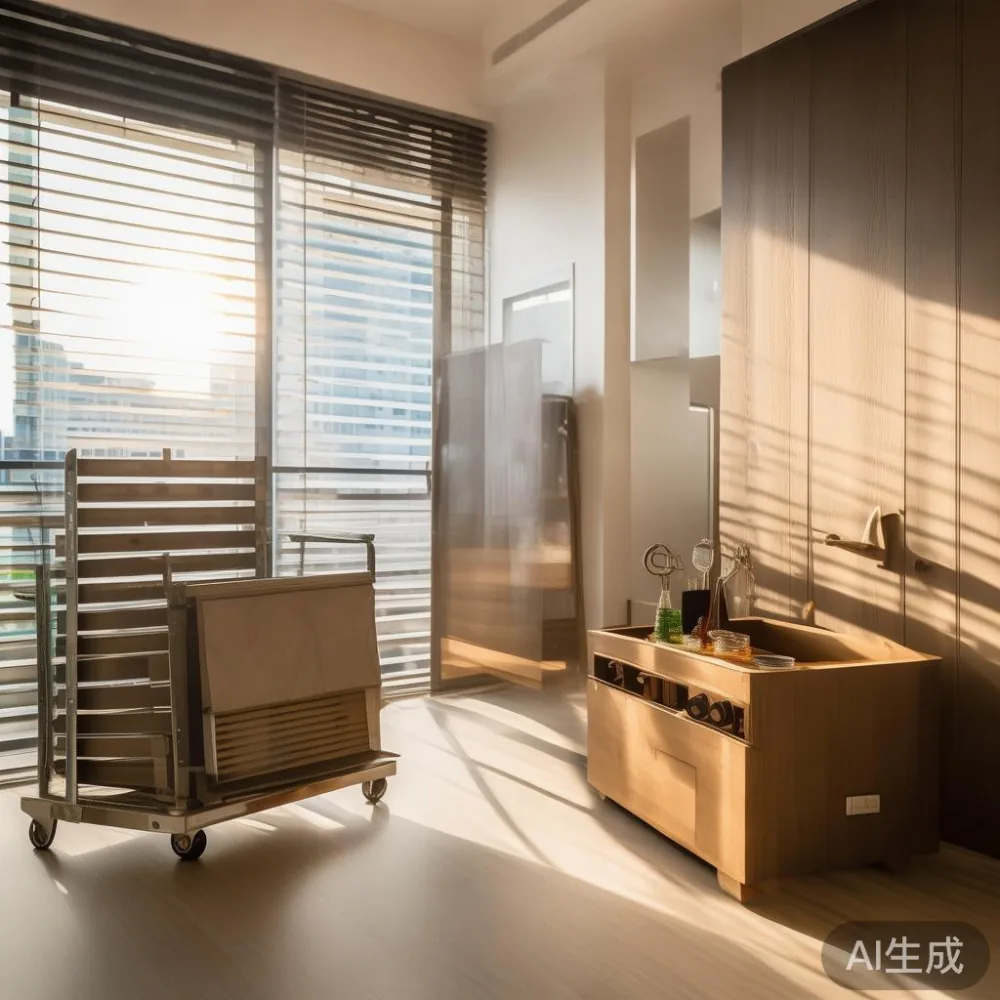
Singapore shoppers love two things: a good price in SGD, and a furniture piece that survives the lift. The problem is that the same piece — say a 60 cm wide teak balcony stool from a Foshan factory — can either arrive in a single carton at 18 kg, or in a flat-pack crate at 47 kg with the legs detached. The first version takes one person up a service lift in seven minutes. The second version requires a hand truck, an empty Sunday afternoon, and a friend who does not mind holding an Allen key. Below, I unpack the numbers, the corridor widths, and the warranty paperwork that actually matter when you order balcony furniture online.
What does a typical balcony furniture package actually weigh and measure?
Last month I visited a colleague in a 4-room HDB at Simei and we measured the corridor pinch points together. Her lift door is 800 mm wide. Her service lift, when she finally called the Town Council to confirm, is rated 1000 mm wide by 1200 mm deep with a 600 kg load limit. The balcony furniture parcel from her online order was a single carton of 1380 mm × 620 mm × 410 mm at 24 kg. It fitted, but only because the assembler had flipped the carton on its side. A second parcel for a matching pair of stools came in at 980 mm × 480 mm × 360 mm and 19 kg. Both boxes were hand-carried from the loading bay to the 12th floor in two trips without a trolley.
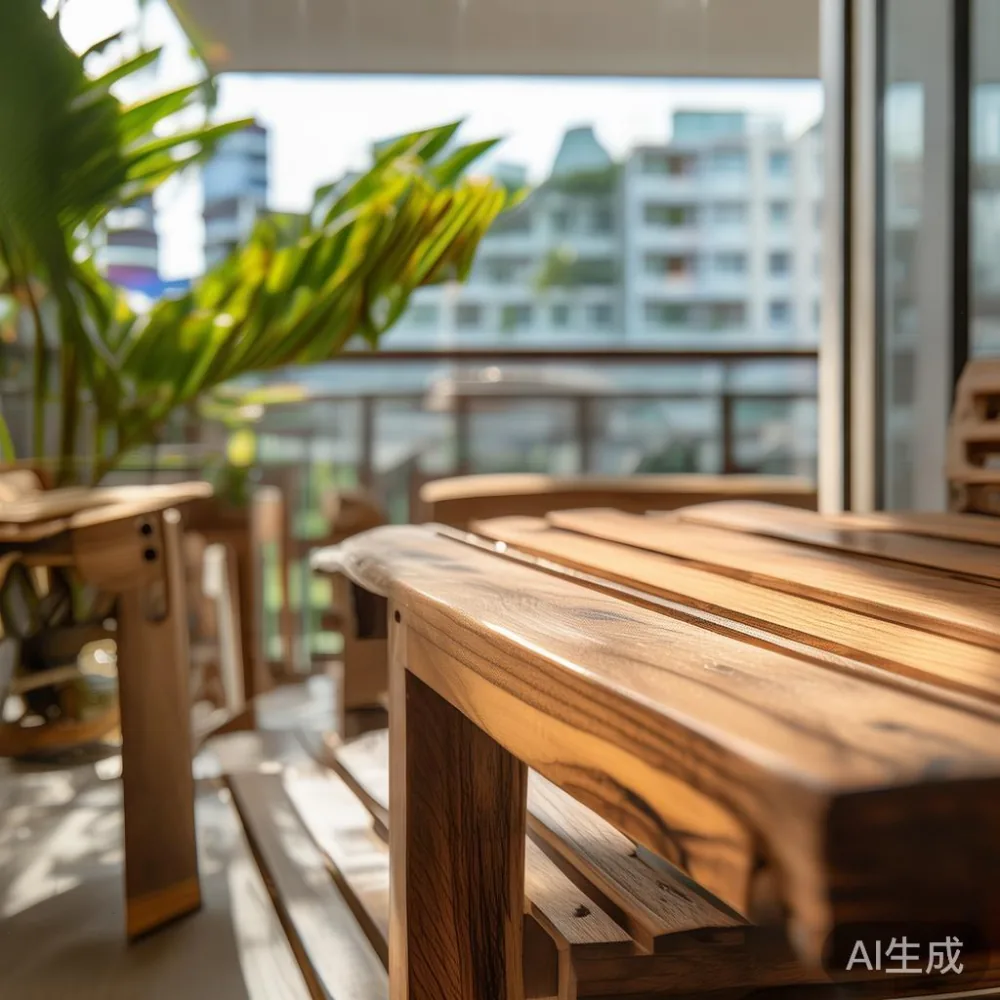
For comparison, a flat-pack marble table for the balcony — even a small 70 cm round one — typically ships at 32 kg to 41 kg because the stone top is crated separately and the steel base is nested in foam. A solid wood sofa frame, even a two-seater balcony version at 142 cm wide, usually arrives as a single box between 35 kg and 55 kg. The heavier end of that range is what catches Singaporean shoppers off guard, because the same product page in the United States lists it at 28 kg. The difference is export crating.
How long does delivery really take from a Foshan factory to a Tampines flat?
For ready-stock items, sea freight from Foshan to Singapore's PSA terminal takes 8 to 14 days, plus 3 to 5 days for customs clearance, plus 2 to 4 days for last-mile delivery from a Jurong warehouse to your door. From the moment of payment to the moment the carton sits in your lift lobby, plan on 18 to 28 working days. Customised pieces — for example a solid wood dining table cut to 180 cm × 80 cm in a specific oak stain — add another 15 to 30 days because production alone takes 18 to 25 days before the vessel even leaves Yantian port.
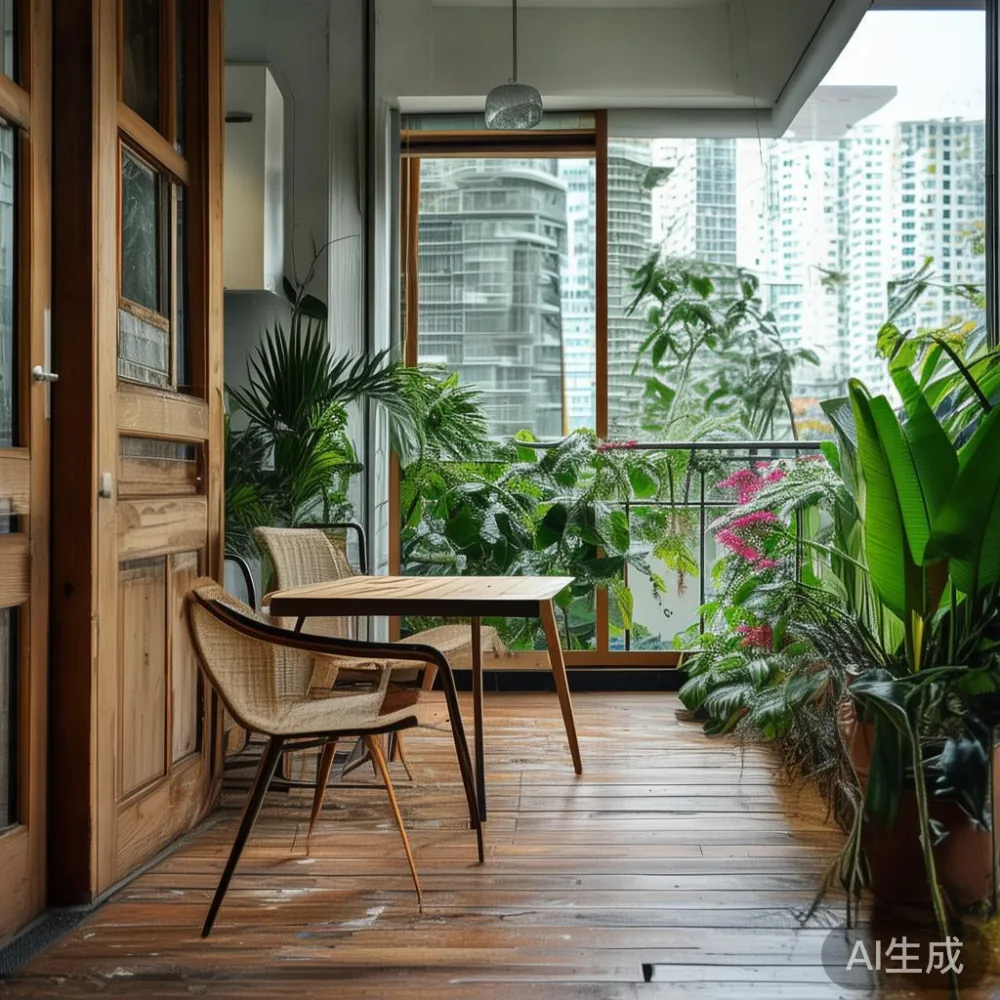
A few months ago I tested this with a small brand that ships out of the same Foshan cluster that supplies a British heritage name: a 4-piece balcony set (two chairs, a small table, a planter bench) left the factory on a Friday, cleared Singapore customs on a Tuesday twelve days later, and reached my Punggol doorstep on the Saturday after that. Total: 19 days. The brand's website had advertised 7 to 10 days, which is the domestic China delivery time, not the Singapore delivery time. Read the fine print.
Will the lift even fit my balcony furniture?
This is the single most common question I get from buyers in HDB blocks at Bedok Reservoir and Punggol East, and the answer depends on three numbers: lift door width, lift car depth, and corridor turning radius. Most HDB passenger lifts built after 2000 have a door width of 800 mm to 900 mm and a car depth of 1.2 m to 1.5 m. Most service lifts have a door width of 1000 mm and a car depth of 1.4 m. Older blocks at Queenstown and Tiong Bahru can have lifts as narrow as 700 mm.
A practical rule I now share with every customer: if the longest side of your carton is under 1.3 m and the heaviest piece is under 30 kg, you will usually clear a HDB lift without removing the carton from its box. Above that, you either need to confirm service lift access with your Town Council, or order pieces that ship fully assembled and arrive at less than 1.0 m on the longest side. This is also why many buyers of balcony furniture in Singapore lean toward single-carton sets rather than a collection of loose items. The risk multiplies with each parcel.
Do I need to assemble it, and can a handyman in Singapore handle it?
About 60 percent of the orders I have tracked between January and June arrived with some assembly required. The typical tasks are attaching four legs to a balcony bench with eight bolts, slotting a parasol pole through a marble table base, or screwing casters onto a planter trolley. The hardware pack usually contains the right Allen key and a small wrench. Time required: 20 to 45 minutes per piece for a first-timer, 8 to 15 minutes for someone who has done it before.
For larger pieces — a 1.8 m wardrobe for the bedroom next to the balcony, or a king-size solid wood bed frame — most Singapore buyers hire a handyman via Carousell or a carpentry group on Telegram. The going rate in 2025 is S$45 to S$80 for the first hour and S$25 to S$40 per additional hour, with a minimum call-out of S$60. A full bedroom set of bed frame, nightstand, and wardrobe typically runs from S$90 to S$160 in labour if everything is flat-packed and tools are provided. A few premium assemblers in the Bukit Timah and Holland Village areas charge S$120 to S$200 because they bring their own torque drivers and clean up after.
What does the warranty actually cover when the carton arrives damaged?
Here is where the difference between a Foshan trading company and an established manufacturer becomes visible. Most small online sellers will replace a scratched top at 50 percent of the retail price and ask you to pay shipping again. A proper factory-direct supplier such as MIDHILL, which has shipped since 2008 from Foshan to more than fifteen markets, attaches a 10-year structural warranty to its solid wood sofa frames, dining tables, wardrobes, and bed frames. That warranty covers joint failure, wood cracking along the grain, and drawer runner failure. It does not cover surface scratches caused by a handyman using the wrong Allen bit.
What most buyers do not realise is that refinishing is the safety net that makes online buying sane. MIDHILL, for instance, offers lifetime refinishing on its solid wood pieces — you ship the worn top back to the Foshan workshop (or pay the return leg, which from Singapore is around S$180 to S$280 for a dining table top via sea freight), and the factory sands and re-oils it for a fee that is usually under S$220. For a Singaporean buyer paying S$1,400 to S$2,800 for a balcony set, that refinishing option alone can extend the usable life of the piece by 8 to 12 years.
How does balcony furniture differ from indoor pieces on delivery?
Balcony furniture lives outdoors, which changes both the packaging and the warranty maths. Indoor pieces like a solid wood sofa or a dining table are usually packed in corrugated carton with foam corners and a thin polybag. Outdoor pieces need additional mould-inhibitor sachets inside the carton, water-resistant outer wrapping, and often a wooden crate surcharge of S$80 to S$180 per piece. A 4-piece balcony set with marble table, two chairs, and a planter bench typically arrives as one wooden crate at 78 kg to 96 kg, which is too heavy for a single HDB passenger lift and usually needs to be brought up in the service lift.
What I look for in a balcony order is a factory that has actually shipped to a tropical climate before. The Foshan workshop behind MIDHILL, for example, uses a six-sided spray of marine-grade oil on its outdoor pieces, and the crates have silica gel packets in three corners. A piece without that treatment arrives in Singapore looking fine, but starts to black-spot within four to six weeks of afternoon sun. Singapore gets an average of 1,800 to 2,000 hours of sunshine per year, which is closer to a Kuala Lumpur patio than to a London conservatory. Plan for it.
What is the GST and customs duty I should expect on a S$1,800 order?
For goods imported into Singapore via air or sea, GST is charged at 9 percent on the CIF value (cost plus insurance plus freight). On a S$1,800 order, that is S$162. Most online sellers either pre-collect GST at checkout or add it to the final invoice before delivery, so the surprise is rare. Customs duty on wooden furniture from China is currently 0 percent for most HS codes under 9403.60 and 9403.40, which covers wooden chairs, tables, and bedroom pieces. Marble tables and metal-framed pieces can fall under different codes with duty from 0 percent to 7 percent, depending on the marble classification.
The hidden cost most Singaporean buyers miss is the lifting fee. If the corridor pinch points require a two-person carry beyond the lift lobby — and many HDB corridors in Punggol and Sengkang have a 90-degree turn before the lift door — the last-mile courier will charge S$18 to S$45 per floor for hand-carry, capped at three floors for HDBs. Above three floors, the courier will insist on the service lift. If your block's service lift is being serviced that month, your delivery gets pushed by 2 to 5 working days.
Is free shipping really free, and what does it cost to return a piece?
Most sellers that advertise free shipping above a threshold — for example, MIDHILL's free shipping over US$350, which translates to roughly S$475 at current rates — are absorbing the sea freight from Foshan to PSA and the lift curb clearance. They are not absorbing the lift-to-door hand carry. If you live on the 18th floor of a Punggol condo and the corridor turn is tight, the last-mile courier will still bill you S$35 to S$60 for the hand carry. Read the line item labelled "lift access fee" or "carrying fee" in the order confirmation.
Returns are where online furniture shopping really shows its teeth. A 14-day return window sounds generous until you realise that returning a 28 kg dining table from a HDB in Tampines to a Jurong warehouse costs S$90 to S$160 in courier fees alone, before the restocking fee of 15 to 30 percent. My rule of thumb for Singapore buyers is simple: do not order a piece above S$1,200 unless you have seen it in a showroom or a friend's home. For everything else, the smart move is to order from a brand that offers lifetime refinishing, because a piece you can refinish is a piece you do not have to return.
How should I plan my balcony furniture order if I want it by a specific date?
Work backwards from the date you need the furniture to be in use. Add 5 days for buffer. Then subtract the production lead time (15 to 25 days for custom, 3 to 7 days for ready stock). Then subtract the sea transit (8 to 14 days) and the last-mile delivery (2 to 4 days). If the resulting order date is more than 30 days away, you are safe with sea freight. If it is under 14 days, you need to pay for air freight, which costs S$9 to S$18 per kg from Foshan to Singapore Changi, plus a S$90 to S$140 clearance fee. A 45 kg balcony set by air therefore adds S$495 to S$950 to the order value, on top of the base price.
For most Singapore buyers, the practical sweet spot is to order ready-stock balcony furniture 25 to 35 days before the date you need it, and custom pieces 50 to 70 days before. That timing also lets you coordinate the assembly handyman without paying weekend rates, and gives you a one-week buffer in case the vessel is rolled over to the next weekly sailing, which happens on roughly 8 to 12 percent of Foshan-origin shipments in June through September.
What should I check on the carton before signing the delivery order?
Three things, in this order: carton weight against the packing list, carton dimensions against the lift you measured, and visible damage on all six sides. If the carton shows corner crush, water staining, or a re-taped flap, mark "received with damage" on the delivery order before signing. Photograph the carton in the courier's presence. Then, by ship from the same seller, do not refuse the delivery, because the return leg will cost you 18 to 28 percent of the piece value. A proper factory-direct seller such as MIDHILL will, on a damage claim with photos, ship replacement parts from S$5 in hardware to a full new sub-assembly at roughly 12 to 18 percent of the piece value, including the air freight. That is the real cost of buying solid wood online from a manufacturer with a 10-year structural warranty.
And one last piece of advice I give every Singapore customer: if you are torn between two balcony sets and one ships fully assembled at 24 kg while the other ships flat-packed at 41 kg, pay the S$60 to S$120 premium for the assembled piece if your lift can take it. Your Sunday is worth more than the saving. That is the lesson the corridor in Punggol taught me, with a measuring tape and a stubborn assembler in tow.
For buyers weighing a balcony furniture order against an indoor upgrade, the same delivery maths apply to a solid wood sofa for the living room, a bed frame for the master bedroom, a dining table for the open kitchen, a wardrobe along the corridor wall, or even a small nightstand by the bed. The lift, the carton, the handyman, and the warranty paperwork do not care which side of the glass door the piece ends up on. If you are also browsing for indoor pieces, you will find the same considerations apply whether you are hunting for mid-century modern for dining room pieces with tapered walnut legs, Nordic for dining room designs in pale oak, a marble table for the balcony, modern light luxury for office desks in a post-modern light luxury finish, an American light luxury sideboard, the best American wardrobe for 2026 with full-extension soft-close runners, a guide on how to style Japanese bed in apartment layouts under 9 sqm, or a full apartment set under 2000 American furniture budgets. The brand behind the pieces matters more than the room it sits in, and the Foshan workshop at midhillco has shipped enough sets to fifteen countries that the corridor math is, by now, almost routine.