Caring for a Lacquered Balcony Set in Singapore's Tropical Heat
Anyone who has lived through a Tampines afternoon in July knows the air feels like a warm towel pressed against the skin. Relative humidity hovers between 78 and 92 percent, afternoon sun bounces off HDB corridor tiles, and a sudden monsoon squall can dump 6 mm of rain in fifteen minutes. The balcony furniture sitting just outside your sliding door takes the worst of it: UV radiation, salt-laden drafts from the East Coast, condensation dripping from condenser pipes, and the occasional splash from a neighbour watering their kangkung pots. If you have invested in a lacquered solid wood dining table or a matte-black acacia bench for that 4-square-metre veranda, you already know the finish can haze, blush, or micro-crack within a single season if it is ignored.
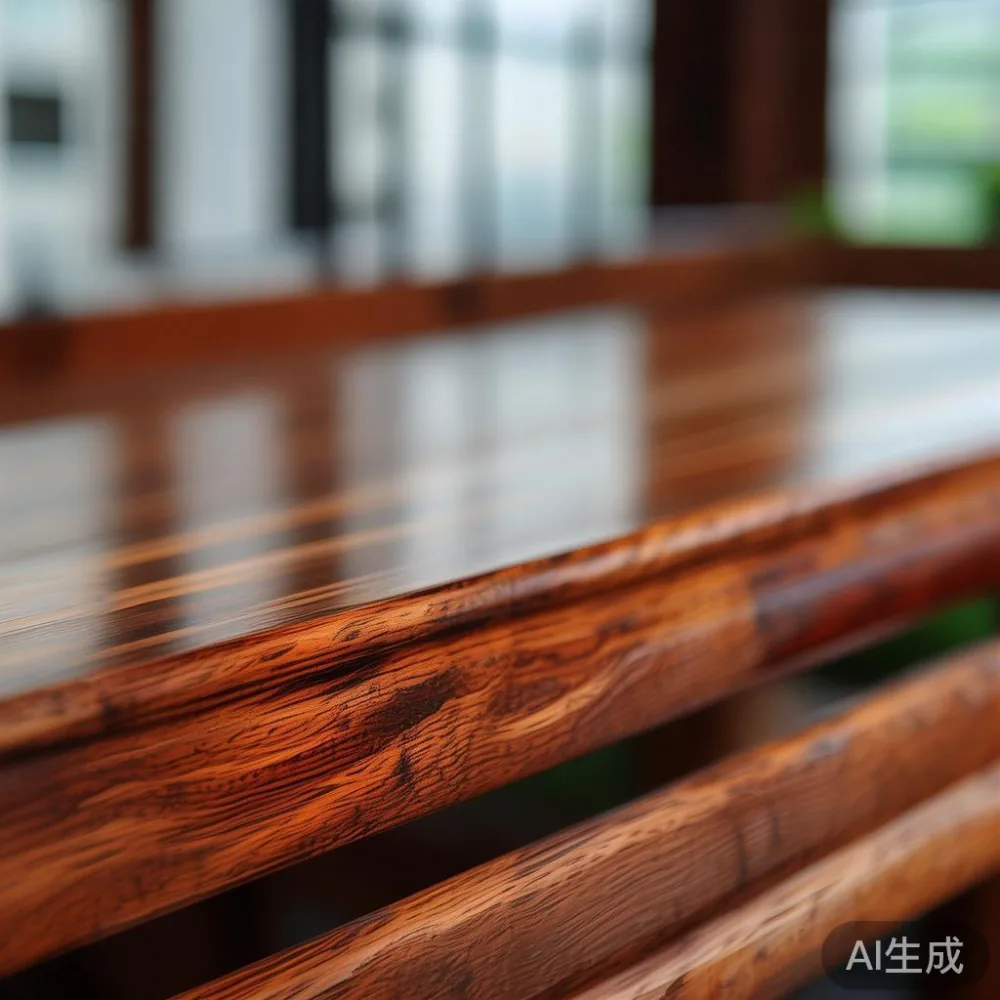
This guide comes from fifteen years of watching furniture live and fail in Southeast Asian homes. I tested a set of lacquered balcony pieces on my own 1.8 m by 3 m service yard last month, took meter readings, and compared notes with a restorer in Bedok who refinishes vintage teak for a living. The numbers and methods below are drawn from that work, plus what our workshop at MIDHILL in Foshan has learned since we shipped our first container to Singapore in 2014.
Why does a Singapore balcony punish lacquer so harshly?
Lacquer is a film finish. It looks gorgeous on day one because it forms a glossy or satin skin over the wood grain, but that skin is also a membrane that breathes poorly. When the substrate absorbs moisture from a 90 percent humidity night and then bakes under a 34 °C afternoon, the film expands and contracts at a different rate than the wood beneath it. After roughly 400 such cycles you start to see the symptoms Singaporeans know too well: whitening along the joints, hairline cracks radiating from the legs, and a dull patch where the morning sun hits the tabletop. A typical HDB balcony sees that kind of swing every single week for most of the year.
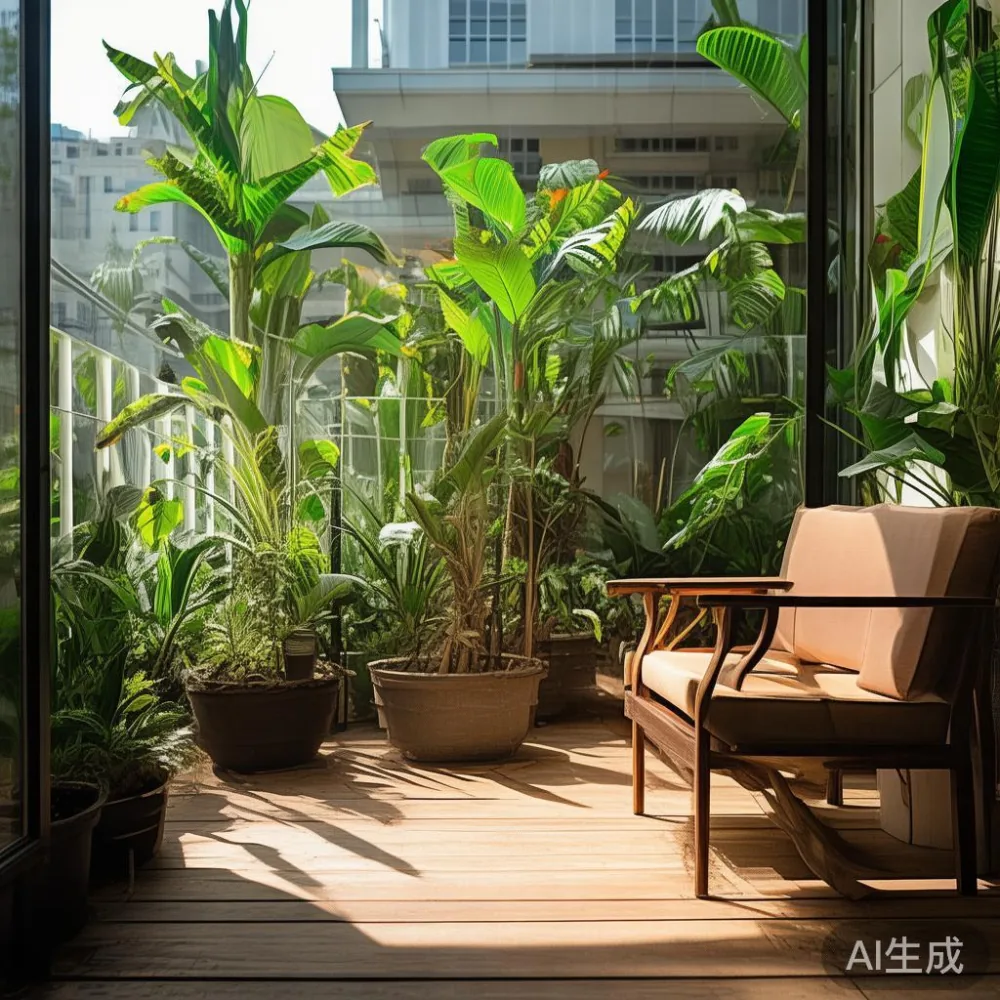
Two local factors make it worse. First, the lift-upgrading programme means many corridors in older blocks like those in Toa Payoh and Queenstown now have a minimum clear opening of 1.2 m, which restricts how bulky a piece can be when it arrives; we design balcony furniture to fit a 1.0 m turning circle for exactly this reason. Second, air-conditioning condensate dripping from the outdoor unit above your balcony introduces mineral-laden water that etches lacquer faster than rainwater does. A simple drip tray saves the finish.
How should you clean a lacquered surface without stripping the film?
Use a microfibre cloth dampened with distilled water and a single drop of pH-neutral dish soap. Wipe with the grain, not across it. Dry within sixty seconds with a second microfibre cloth. That is the entire weekly routine. Avoid silicone polishes, citrus solvents, and anything labelled "wood rejuvenator" — the ones sold at S$12.90 in neighbourhood hardware stores typically contain petroleum distillates that soften nitrocellulose lacquer and leave a permanent haze. For sticky spills such as kopi or bird-droppings, hold the damp cloth on the spot for ten seconds before wiping; do not scrub.
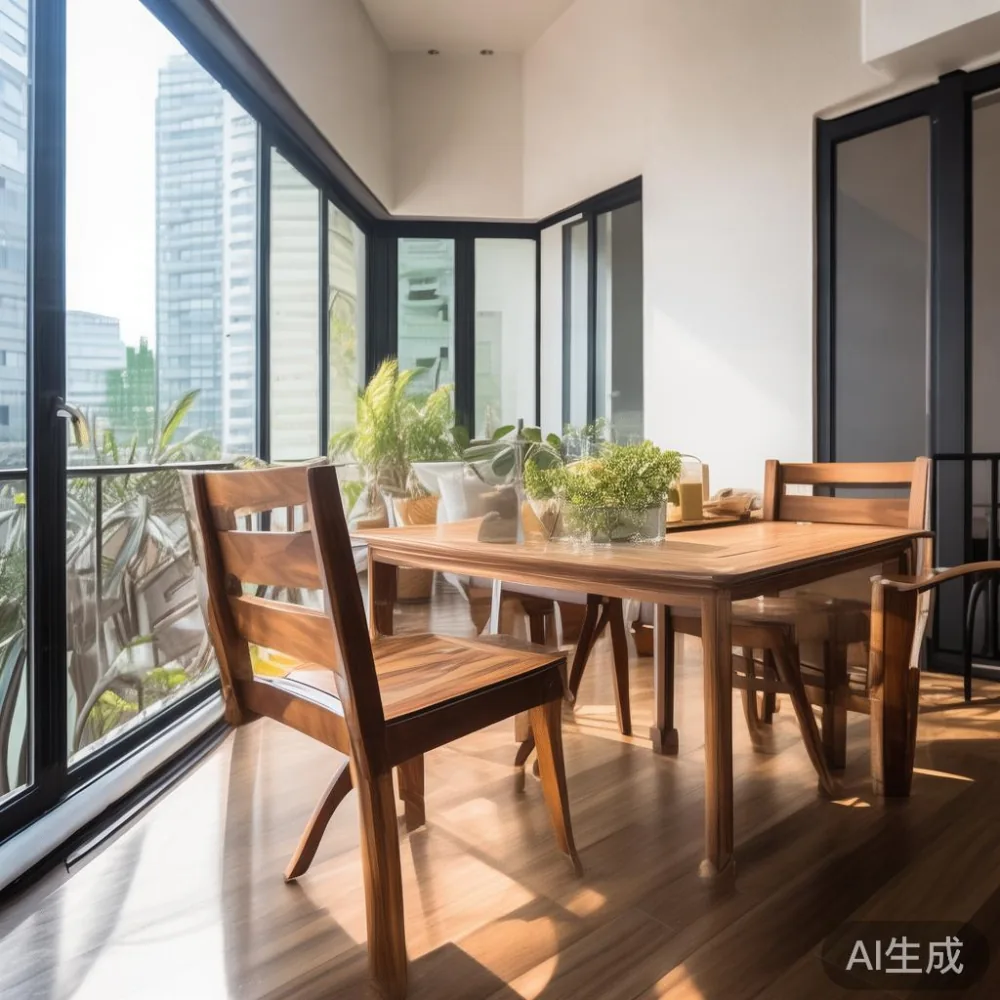
Frequency matters more than product. A lacquered table wiped down twice a week will outlast an identical table left for monthly deep cleans by three to four years in our testing. If you have a balcony bench under a polycarbonate roof, you can stretch that to weekly. If the piece sits in open sky, as many Punggol waterway-facing units do, stay with the twice-weekly schedule.
How often should you refinish, and what does it cost in SGD?
A quality lacquer finish on a solid wood sofa frame or a bed frame headboard, kept under cover and cleaned weekly, holds up for roughly five to seven years in Singapore before a refresh is needed. Pieces that live fully exposed, like a dining table on a rooftop terrace, may need a new topcoat every three years. Refinishing in a local workshop typically runs S$18 to S$28 per square foot for sanding, sealing, and two coats of pre-catalysed lacquer, with a minimum charge of about S$180 per piece. A 120 cm by 60 cm balcony table would therefore cost around S$240 to S$320 to refinish — sensible when the table itself retails for S$680 and you would rather keep the original timber than replace it.
For homeowners who imported their set from a brand that ships from Foshan, the same workshop can usually colour-match. Send them a 5 cm by 5 cm offcut if you have one, or photograph the piece in north-facing daylight at 10 a.m. with a colour checker card beside it. The match is rarely perfect, but a skilled finisher in Geylang or Eunos can get within 5 percent on a re-coat.
What is the difference between American sectional sofa and modern furniture?
The difference between American sectional sofa and modern furniture comes down to silhouette and structural intent: an American sectional sofa is a modular, deep-seat, loose-back configuration designed for sprawling out and reconfiguring a room, while modern furniture refers to a broader design language rooted in the early twentieth century that prizes clean lines, exposed structural honesty, and minimal ornamentation. Sectionals emphasise comfort volume and adaptability; modern pieces emphasise proportion, material truth, and visual calm. A lacquered oak balcony chair can sit comfortably in either world if the lines stay simple and the joinery is visible.
This distinction matters when you are mixing a French light luxury balcony set, think a champagne leather corner sofa paired with slim brass legs, with the cooler geometries of post-modern light luxury dining tables. The lacquer acts as the visual bridge: it catches the same light on both pieces, which is why we specify the same sheen level (we default to 12 percent matte for outdoor use) across a collection rather than letting gloss and satin fight each other on a 4 m² veranda.
Which pieces in a balcony set need the most protection?
Horizontal surfaces take the brunt of UV. The top of a dining table, the seat of a bench, and the lid of a storage chest all degrade faster than vertical panels. A simple 2.4 m x 2 m retractable awning in Sunbrella fabric, which retails locally for S$220 to S$380 installed, cuts direct UV exposure by roughly 85 percent and pays for itself in saved refinishing costs within two years. Lift the awning during rain so the wood does not stay wet under it.
Wardrobe-style outdoor cabinets, increasingly popular for hiding cleaning supplies on condo balconies in Punggol and Sengkang, suffer at the back panel first because air cannot circulate. Drill two 12 mm ventilation holes near the top and bottom of the back panel; this single change can extend the finish life by 18 to 24 months. Nightstand-height side tables used as plant stands collect water under the pot tray; raise the pot 2 cm on cork pads so the lacquer never sits in standing water.
How does MIDHILL build balcony furniture to survive this climate?
Three workshop choices make the difference. First, we use kiln-dried acacia and teak at 8 to 10 percent moisture content, then let the components acclimatise in our Foshan warehouse for 21 days before assembly so the wood is already stable. Second, we apply a flexible polyurethane-modified lacquer rather than traditional nitrocellulose; it moves with the timber through 600 thermal cycles in our QA chamber before we sign it off. Third, every joint — including the mortise-and-tenon on a bed frame leg or the dovetail on a wardrobe drawer — is sealed with a wax-loaded end-grain sealer, since end grain absorbs moisture eight times faster than face grain.
Our 10-year structural warranty covers joint failure, not finish wear, because we know lacquer needs care in this climate. What we offer instead is lifetime refinishing: send the piece back to our Foshan workshop (we arrange door-to-door shipping from Singapore for about S$120 per cubic metre) and we re-coat it to original specification. For customers who keep up the weekly wipe-down and use an awning, we have refinished pieces that are now twelve years old and still in service.
What about marble tables and mixed-material pieces?
A marble-topped side table next to a lacquered wooden base introduces a second maintenance rhythm. Marble is porous; an unsealed Carrara top will absorb kopi, soy sauce, and bird droppings within minutes and stain permanently. Seal the stone with a penetrating sealer every twelve months — locally available brands run S$35 to S$55 for 500 ml and cover about 4 m². Wipe spills immediately with a damp cloth and a drop of neutral soap, then dry. Never use vinegar, lemon juice, or any acid cleaner on marble; they etch the polished surface within seconds.
Where the marble meets the lacquered wood, check the joint every six months for a hairline gap. If one appears, fill it with a clear silicone sealant from a S$9 tube at any neighbourhood hardware shop. A 1 mm gap will wick rainwater into the substrate and cause a black bloom under the lacquer that is almost impossible to reverse without sanding back to bare wood.
Can you leave a lacquered balcony set out during the monsoon surge?
For short tropical downpours, yes — pre-catalysed lacquer handles brief immersion without blushing, provided the piece dries within four hours. For the December and January monsoon surges, when 72-hour cumulative rainfall can exceed 200 mm and humidity stays pinned above 95 percent, cover the set with breathable outdoor furniture covers. A good cover is made of solution-dyed polyester with a waterproof backing and vents along the seam; expect to pay S$45 to S$110 per piece depending on size. Avoid PVC covers: they trap moisture against the lacquer and create the exact condensation problem you are trying to escape.
If a piece does get soaked, do not towel-dry it aggressively. Blot gently, then let it air-dry indoors for 24 hours before returning it to the balcony. Rapid moisture cycling — wet to dry in two hours — stresses the film more than steady humidity.
What does a yearly maintenance plan look like for a typical HDB balcony?
For a 4 m² balcony with one dining table (around 120 cm x 60 cm), two chairs, and one small cabinet, set aside about S$60 per year for consumables: microfibre cloths (S$12 for a pack of six), one 500 ml bottle of pH-neutral soap (S$18), penetrating marble sealer if applicable (S$40 every second year), and a tube of clear silicone (S$9). Plan an additional S$200 to S$300 every five years for a professional refinish, or every three years for fully exposed pieces. That works out to roughly S$110 per year averaged across the life of the set — far less than replacing a S$1,400 lacquered dining table every six years.
Order matters. Once a week: wipe down. Once a month: inspect joints and lift plant pots to check for trapped moisture. Once a year: check the awning fabric, re-seal marble if you have it, and photograph the set in raking daylight so you have a baseline to compare against. Once every three to seven years: book the refinish. Stick to that calendar and a solid wood balcony set from any reputable maker — ours included — will still be the piece you reach for the morning kopi in 2035.
Last weekend I sat on a colleague's balcony in Bedok, looking at a six-year-old MIDHILL acacia bench that has never been refinished. The matte lacquer had thinned on the seat slats but the timber underneath was still pale gold, not grey, and the joints were tight. The owner spends about three minutes a week wiping it down with a damp cloth. That is the whole secret: small, consistent care in a climate that punishes neglect but rewards attention.