What Actually Drives the Price of Solid Wood Balcony Furniture
For residents of Singapore's HDB flats and condominiums, the balcony is more than just an outdoor space; it's an extension of the home, a personal sanctuary in the sky. In a city where living space is a premium, a well-designed balcony can offer a important retreat. This has led many Singaporeans to invest in quality balcony furniture, with solid wood being a highly sought-after material. However, a stroll through furniture showrooms in Tampines or Bedok reveals a wide price range for seemingly similar pieces. Why does a solid wood dining table for the balcony cost SGD 800, while another might be priced at SGD 3,500? The answer lies in a complex interplay of factors that go far beyond the material itself.
Why Isn't All Solid Wood Created Equal? The Material Matters
The most fundamental factor determining the price of solid wood balcony furniture is the type of wood used. Not all woods are equal in terms of durability, appearance, and suitability for Singapore's humid climate. The term 'solid wood' is broad, encompassing everything from a common pine to a rare teak. The price difference between these materials can be staggering, often accounting for over 60% of the total cost.
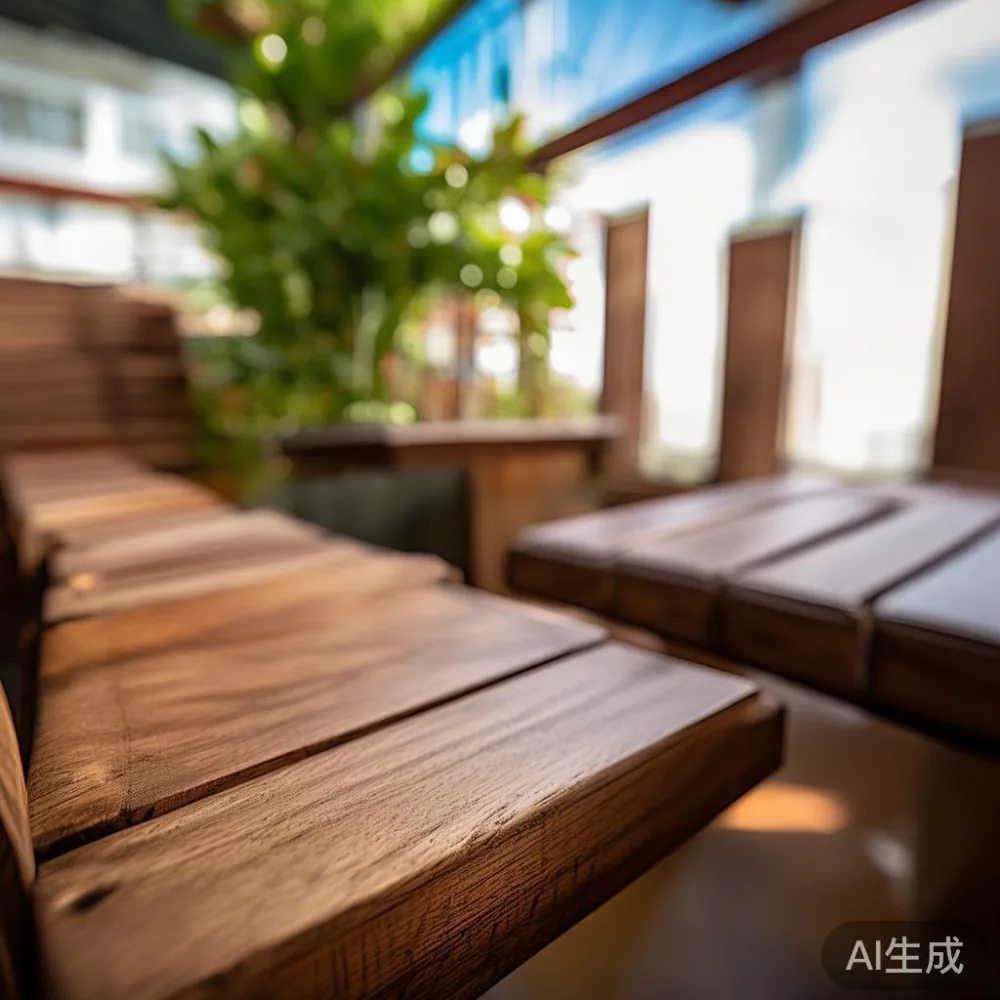
For balcony furniture, which is constantly exposed to the elements, durability is paramount. Hardwoods like teak, oak, and acacia are popular choices. Teak, for instance, is naturally rich in oils that make it highly resistant to water, rot, and insects. A single teak plank can cost SGD 80 to SGD 150 per square foot. In contrast, a softwood like pine is much more affordable, costing around SGD 15 to SGD 30 per square foot, but it requires extensive treatment and sealing to withstand Singapore's weather, adding to the long-term maintenance cost and reducing its lifespan.
The origin of the wood also plays a significant role. European oak, known for its tight grain and consistent colour, is often more expensive than North American oak. Similarly, sustainably sourced teak from certified plantations will carry a premium over wood of unknown origin. This is why you might see a 'French light luxury' style balcony set priced higher than a standard one; the materials specified for that aesthetic are often more exotic and costly. When considering a purchase, it's important to ask not just 'is it solid wood?' but 'what solid wood is it and why was it chosen for this purpose?'
From Tree to Table: The Unseen Costs of Crafting
Once the wood is selected, the real work begins. The transformation from a raw log into a finely crafted piece of balcony furniture is a labour-intensive process that significantly impacts the price. This is where the skill of the artisan and the efficiency of the factory come into play.
The first step is kiln-drying. Freshly cut wood contains a high moisture content, which causes it to shrink, warp, and crack over time, especially in Singapore's fluctuating humidity levels. To prevent this, the wood is placed in a kiln and dried to a precise moisture content of 8-10%. This process can take 7 to 21 days, depending on the wood thickness and type. A well-dried piece of wood is the foundation of a durable product, and skipping this step is a shortcut that leads to premature failure.
After drying, the wood is cut, shaped, and joined. This is where the craftsmanship is most evident. A simple, mass-produced balcony table might use basic butt joints and staples. In contrast, a high-end piece will feature traditional joinery like mortise and tenon or dovetail joints. These interlocking connections are stronger, more stable, and require a higher level of skill to execute. A skilled carpenter in Foshan can make approximately 8-10 high-quality joints per hour, whereas a machine might produce 50 simpler joints in the same time. This difference in labour hours directly translates to a difference in price.
My colleague at the Foshan factory explained that for a single solid wood dining table, the milling and shaping process alone takes a skilled technician about 6 hours to complete. This doesn't include the time for sanding, which is done through multiple stages—from coarse 80-grit paper to a smooth 220-grit—to achieve a perfect surface ready for finishing. These are the unseen details that separate a cheap, disposable piece from an investment that will last for decades.
Is a High Price Tag Just for a Pretty Finish?
The finish of the wood is not merely for aesthetics; it is a critical protective layer. For balcony furniture, the finish must shield the wood from UV rays, rain, and humidity. The quality of this finish is a major driver of the final price and a key indicator of the furniture's longevity.
There are several types of wood finishes, ranging from basic to premium. A cheap balcony set might be coated with a single layer of lacquer or a basic oil. While this may look acceptable initially, it offers little long-term protection and will need to be re-applied every 6-12 months. A more expensive piece will feature a multi-step finishing process. For example, a 'post-modern light luxury' style might involve a hand-rubbed oil finish that penetrates the wood grain, followed by several coats of a marine-grade varnish. This process can take up to 3 days per item and requires a controlled environment to prevent dust particles from settling in the finish.
Brands like MIDHILL often invest in proprietary finishing techniques. Their 10-year structural warranty and lifetime refinishing promise are only possible because of the high-quality, durable finishes they apply. This peace of mind is a significant part of the value proposition. When you pay more for a piece of balcony furniture, you are often paying for a finish that has been rigorously tested to withstand the harsh Singaporean climate, ensuring your investment remains beautiful and functional for years to come without the constant need for upkeep.
Design, Branding, and The Singapore Context
Beyond the material and craftsmanship, the design and brand identity of the furniture contribute to its price. A unique, well-thought-out design command a premium, as does the reputation of the brand behind it.
Design involves more than just how the furniture looks. It includes ergonomic considerations, the scale of the pieces to fit Singapore's living spaces, and the aesthetic. For instance, a designer might create a balcony set with a lower profile to fit under a standard HDB balcony ceiling height of 2.2 metres, or a modular sofa that can be arranged in different ways to maximise a narrow corridor space in a Bedok condo. This thoughtful design process, which can take months, adds to the cost.
Brand positioning also plays a role. A brand positioning itself in the 'American light luxury' space will use marketing, showrooms, and customer service to create an image of quality and exclusivity. This brand equity is built over years and is factored into the price. For Singaporean consumers, this also means considering local factors like GST, which is applied to the final price, and the practicalities of delivery. A large wardrobe or a marble table top must work through the narrow corridors and lifts of an HDB block. A company that offers free shipping over SGD 350 and has experience with Singapore's logistics is providing a service that has real value, even if it's not reflected in the physical product itself.
When you see a price tag, you are paying for the entire ecosystem: the design team, the marketing, the local customer support, and the logistics network that ensures your furniture arrives at your Tampines flat in perfect condition. These services are an integral part of the product and contribute to its cost.
How to Style a Japanese Wardrobe in an Apartment? Understanding Value Over Price
With all these factors in mind, the question for the consumer shifts from 'Why is it so expensive?' to 'What is the value I am getting for my money?' This is especially relevant for Singaporeans making a significant purchase. A cheap piece of balcony furniture might seem like a bargain, but if it warps after one year of exposure to the sun and rain, it becomes a costly mistake.
Value is determined by the total cost of ownership, not just the initial price. This includes durability, maintenance requirements, and warranty. A SGD 2,000 solid acacia balcony set with a 10-year warranty might be a better long-term investment than a SGD 800 set that needs to be replaced every two years. The higher initial cost is offset by the longevity and the absence of recurring expenses.
When shopping, it's helpful to look beyond the immediate style and consider the construction. Ask about the wood type, the drying process, the type of joints used, and the warranty. A reputable brand will be transparent about these details. For example, finding pieces under 2000 Italian light luxury furniture might be difficult, but you can find well-made balcony furniture that embodies a similar light, airy aesthetic at a more accessible price point. The same principle applies when searching for the best Industrial sofa for 2026 or under 2000 Industrial furniture; focus on the construction quality that defines the style, not just the look.
Ultimately, understanding what drives the price allows you to make an informed decision. You can appreciate the difference between a mass-produced item and a piece of craftsmanship. You can recognise that a higher price often reflects a higher standard of materials, a more skilled labour force, and a more durable finish—all of which contribute to a product that will not only enhance your balcony today but will continue to do so for many years to come.