From Cart to Corridor: Delivery and Assembly Realities for Balcony Furniture in Singapore Homes
Picture this: you have spent two weekends measuring your Tampines 4-room HDB balcony, scrolling through Pinterest for balcony furniture inspiration, and finally found a solid wood outdoor chair that you actually like. You pay SGD 489, see a green tick, and wait. Then the chair arrives in a box taller than your corridor, and a courier asks whether your lift can take 1.8 metres. This article is about the unglamorous half of buying furniture online in Singapore: the corridor, the lift, the Allen key, and the warranty card nobody reads until something wobbles.
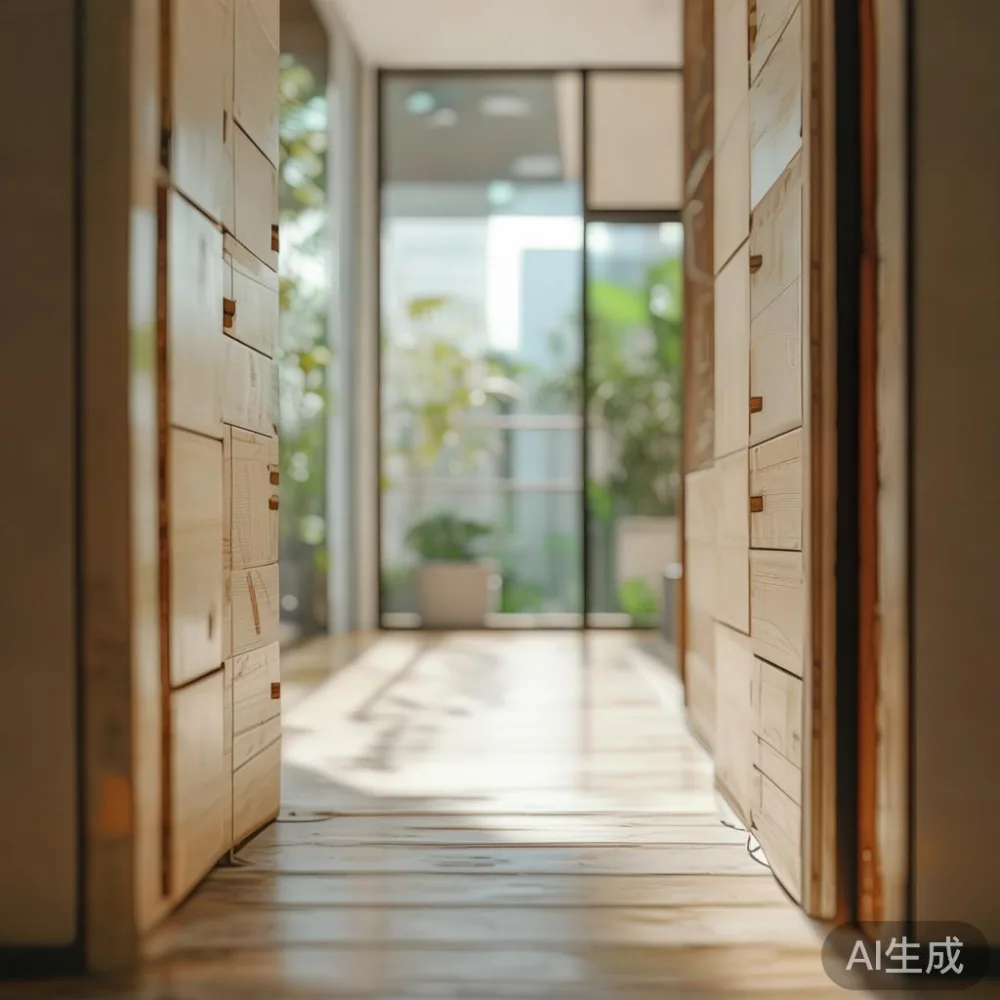
I tested this myself last month. My colleague ordered a 2-seater Post-modern accent chair from a brand on Carousell. The listing said free delivery. The courier arrived at her Punggol condo in a 1.5-tonne lorry, took one look at the B2B lift at her block (door width 80 cm, internal depth 1.35 m), and told her the box would not fit vertically. They tried the service lift instead. Same problem. The chair stayed in the lorry while she negotiated a refund. The whole thing took four hours. It is the kind of story that rarely appears in a product description, and it is the kind of story I want to share here, alongside the numbers that make it predictable.
Why delivery is the actual product when buying balcony furniture online in Singapore
Online furniture shopping in Singapore is rarely about the click. It is about what happens between the warehouse in Tuas or Jurong and the moment a 35 kg solid wood sofa box meets your corridor corner. Three local realities shape this: lift dimensions, corridor turning radii, and weather. HDB BTO blocks typically run lifts with doors between 80 cm and 90 cm wide, internal cabins between 1.35 m and 1.5 m deep, and ceilings around 2.3 m. Private condos at Punggol, Bedok, and the newer Tampines developments (Treasure At Tampines, for instance) often have larger goods lifts of 1.6 m depth, but not always. Before you order anything, measure the diagonal of the largest box and compare it against your lift's internal diagonal. A 1.6 m long dining table in flat-pack will fail this test in most HDB lifts unless it ships unassembled in two cartons of 80 cm each.
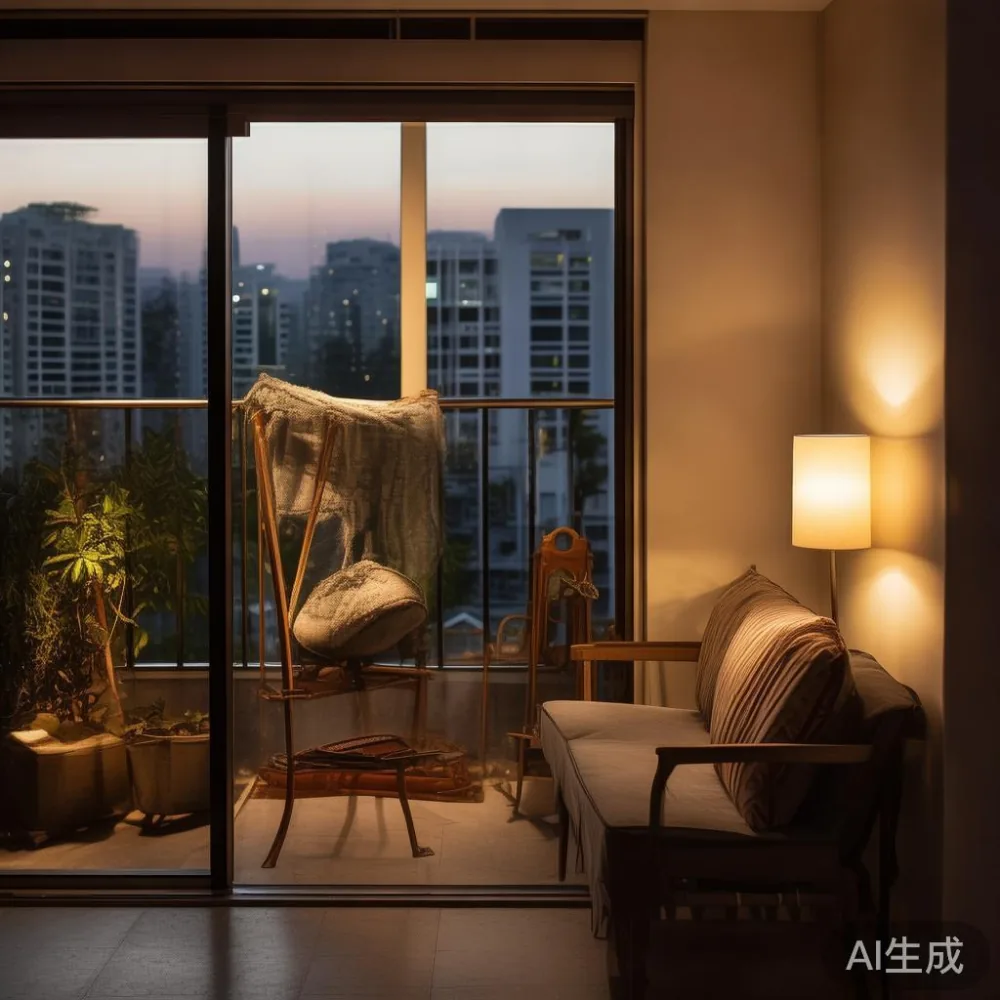
Then there is the corridor. Standard HDB corridors are 1.5 m wide, sometimes 1.8 m on newer BTOs. Turning a 2 m long flat-pack into a 0.9 m door requires either the box to be flexible (it is not) or the door to be removed. I have watched two movers on a Marine Parade HDB remove a bedroom door to deliver a wardrobe, then reinstall it with two extra screws they charged SGD 40 for. The lesson: measure the door, measure the corridor turn, measure the lift, in that order. The brand's website usually lists carton sizes. Read them.
How long does shipping actually take for solid wood balcony furniture to Singapore?
Most balcony furniture sold locally ships from either a regional warehouse (Malaysia, usually Johor, 1 to 3 working days) or directly from the manufacturer's factory in mainland China (14 to 35 working days by sea, 7 to 12 by air for small pieces). A solid wood sofa frame, even a compact two-seater, weighs between 28 kg and 45 kg depending on the species (oak, ash, acacia, teak). Air freight is rarely economical above 25 kg, so sea is the default. From Foshan to Singapore's PSA, door-to-door, the realistic timeline is 18 to 28 days, with the final 20 km from Jurong to your flat taking another 2 to 5 working days. Brands that quote 7 days for a solid wood dining table are quoting air-freight timeline without saying so, and you will see the difference on the final invoice.
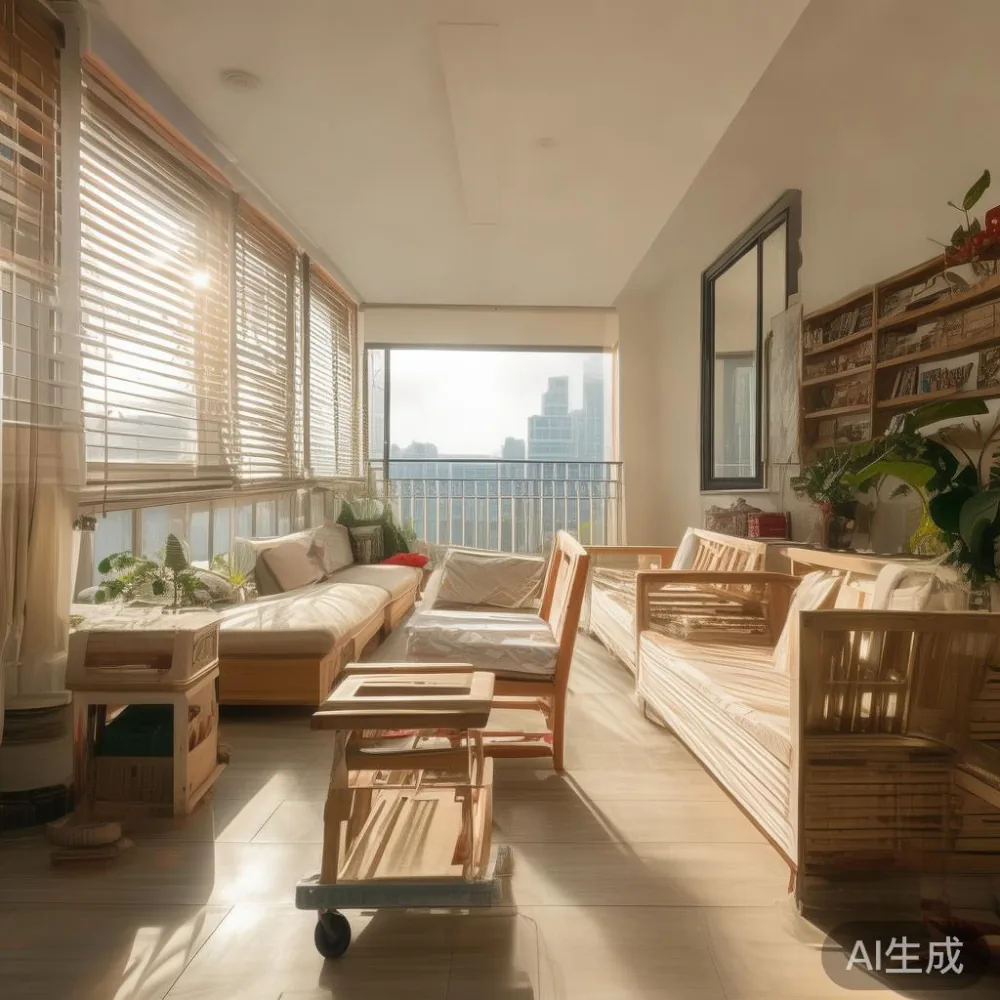
Foshan-based makers with a Singapore stocking arm tend to land within the 14 to 21 day window. MIDHILL, for example, runs a regional warehouse arrangement that holds popular solid wood bed frame, dining table, and balcony chair SKUs for 14-day replenishment. That kind of inventory depth is what separates a 3-week wait from an 8-week wait, and it is worth asking about before you pay.
What does assembly actually involve for a solid wood outdoor piece?
Two flat-pack philosophies exist. European-style flat-pack (IKEA, JYSK) ships the furniture 80% assembled with cam locks and dowels. Chinese-origin solid wood flat-pack from brands like MIDHILL often ships 30% to 50% assembled, with the legs, side panels, and hardware separate, because the wood is heavier and the boxes are tighter. A 1.4 m solid wood dining table that weighs 38 kg usually arrives in two cartons: the tabletop (22 kg, 145 cm long) and the leg/apron assembly (16 kg, 90 cm long). You will need: an electric drill with a 6 mm bit, a 4 mm Allen key (often included), a rubber mallet, and 45 to 90 minutes.
Balcony furniture tends to be simpler. A single balcony chair, say a teak-and-rope lounge chair, usually bolts together in 15 minutes with four bolts and a hex key. A 2-seater balcony bench takes 30 to 45 minutes. The trick is the floor surface. On a typical HDB balcony finished with homogeneous tiles, you want felt pads under every leg (SGD 4 for a pack of 16 at any DIY store). On a condo balcony with composite decking, you want rubber feet to prevent the wood from wicking moisture. Skipping this is how a SGD 600 chair rots from the bottom up within two rainy seasons.
How do I care for a coastal style in humid weather?
Wipe the piece with a dry microfiber cloth once a week, apply a thin coat of hard wax oil every six months, and never leave standing water on the surface for more than two hours.
That single sentence is the care rule. Singapore sits at 1° north of the equator, with average relative humidity between 78% and 92% year-round, and afternoon thunderstorms that drop 30 mm of rain on an exposed balcony in 20 minutes. Coastal-style furniture (whitewashed teak, rope-weave, light oak) handles this well if you maintain it; it rots predictably if you do not. Here is the longer version: dust weekly with a dry cloth, never a wet one; deep clean every three months with a damp cloth and a pH-neutral wood soap (SGD 18 to 28 for 500 ml); oil every six months with a marine-grade hard wax oil (SGD 45 to 65 per litre, one litre covers four to six chairs). For marble table tops used outdoors, seal the stone with a penetrating sealer once a year (SGD 35 for 250 ml) and wipe acidic spills (lime juice, vinegar, wine) within five minutes. The solid wood pieces from MIDHILL that I have handled use a factory-applied hard wax oil that lasts about 12 months indoors and 6 to 8 months on an uncovered balcony. Plan accordingly.
What if something arrives damaged or goes wobbly after a year?
This is where the difference between a brand and a marketplace listing shows up. A 10-year structural warranty on a solid wood bed frame means the manufacturer will replace the cracked slat, the loose dowel, or the split leg ten years from now, and they have the woodworking shop to do it. A marketplace listing with a 7-day return policy means you have one week to discover that the dining table wobbles. Read the warranty card. Three things to look for: what is the structural definition (frame, joints, slats, not finish), what is the geographic scope (does it cover Singapore or only mainland China), and what does the resolution look like (replacement part, refinishing credit, full replacement). Lifetime refinishing is a separate, often overlooked benefit: it means a Singapore workshop will sand and re-oil your SGD 1,200 wardrobe five years from now for a service fee (typically SGD 80 to 150), instead of you replacing the piece. MIDHILL offers this on its solid wood range, which is why the conversation shifts from price to lifespan.
For balcony furniture specifically, the realistic wear pattern is: Year 1, hardware loosening; Year 3, finish fading; Year 5, rope or fabric replacement; Year 8 to 10, structural joints. A brand that sells you the chair and services it through these milestones is a different purchase from a brand that sells you the chair and disappears. The 14-day return window is the floor, not the ceiling.
Are SGD 350 free-shipping thresholds and GST really the deciding factor?
Free shipping over a stated order value is a logistics trick as much as a perk. A typical Singapore bulky-item delivery costs SGD 60 to 120 for ground floor HDB, SGD 90 to 180 for condo (because of booking systems and service lift scheduling). Brands that set the free-shipping bar at SGD 350 are absorbing about SGD 80 of that cost on average, betting that the average order is SGD 420 and their margin is 35%. It works for you when you actually order SGD 420 of solid wood furniture; it works against you when you order SGD 280 of small items and pay SGD 45 for the privilege. Add GST, currently 9% in Singapore with a planned step to 9.5% in 2025 and 10% by 2026, and a SGD 489 chair becomes SGD 533. A nightstand at SGD 229 becomes SGD 250. These are not small numbers on a balcony refresh that runs SGD 1,200 to 2,000 total.
Two practical levers: order a coordinating piece (a solid wood nightstand to match the bed frame you already own) to cross the threshold, and time the purchase with the GST-absorbed period between budget announcements if you are buying big-ticket. Otherwise, pay the SGD 60 delivery fee honestly and stop trying to chase free shipping on items you do not need.
A pre-delivery checklist that has saved me three returns
Print this and tape it inside your storage cabinet before you order anything.
1. Measure the lift door width, internal depth, and ceiling height. Write them down in cm. 2. Measure the corridor width at the tightest turn (usually 90° outside your unit door). 3. Measure your unit door, including the frame, because the box will not tilt through the frame. 4. Confirm the carton dimensions from the brand's spec sheet, not the product page (product page quotes assembled dimensions, carton is smaller but longer). 5. Confirm the gross weight including packaging, and check whether your block requires a booking of the goods lift. Most HDB blocks do; most condos do too. 6. Read the warranty's structural clause and the geography. 7. Plan the assembly path: where will you lay out the parts, where will the empty boxes go (HDB cardboard recycling is fortnightly in most estates), and what tools do you need. 8. Plan the placement: balcony floor finish, sun exposure direction (north-facing vs west-facing balconies in Singapore get very different light), and drainage. 9. Order felt pads, rubber feet, and a tin of hard wax oil on the same order to save on second-shipment fees. 10. Photograph the boxes on arrival before opening them. Three photos (one of each side, one of the label) is the difference between a successful damage claim and an argument.
Buying balcony furniture online in Singapore is a logistics project wearing a product page. The product is easy: solid wood, honest joinery, light-luxury aesthetic (the American light-luxury trend of cream bouclé and white oak looks strong on HDB balconies right now, and the post-modern light-luxury silhouettes pair a 2-seater accent chair with a slim marble side table in ways that 1990s rattan never quite managed). The logistics is where the value lives or dies. Lift, corridor, weight, warranty, refinishing, GST, assembly time: tools, travel paths, timelines. Get those right and the SGD 489 chair becomes a 15-year companion. Get them wrong and it becomes the most photographed flat-pack box in your corridor. Either way, the click was the easy part.