Solid Wood or Veneer? A 5-Year Cost Comparison for Singapore Balcony Furniture
Balcony furniture in Singapore is often bought on a simple visual brief: make a 90 cm HDB corridor feel lighter, give a Tampines condo balcony more warmth, or create a compact dining spot in Bedok. Yet the decision between veneer and solid wood should be based on more than the showroom photograph. Over 5 years, purchase price is only one line in the cost of ownership. Cleaning, sun exposure, humidity, repairs, replacement parts and disposal can change the final figure by hundreds of dollars.
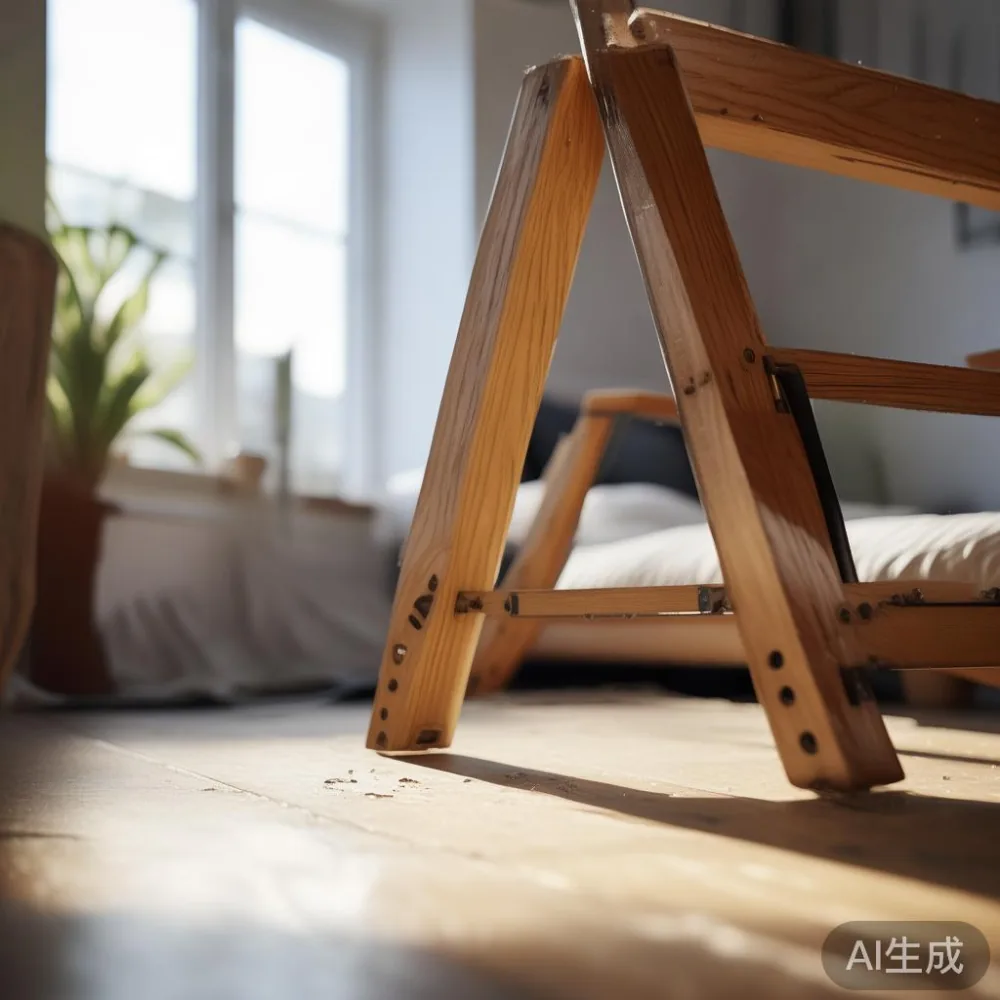
This comparison uses realistic Singapore assumptions: an HDB flat in Tampines with a 120 cm balcony, a Bedok condo with a 180 cm balcony, and a Punggol home where a lift lobby and narrow corridor affect delivery handling. Prices are shown in SGD and include the 9% GST where applicable. A typical balcony chair occupies about 55 cm by 58 cm, while a compact dining table measures 100 cm by 60 cm. Furniture weights are rounded estimates for planning delivery and lifting.
The figures are indicative rather than quotations. Material grades, finishes and exact dimensions can move a project price by 10% to 20%. For a fixed quote, contact MIDHILL at midhillco@gmail.com with your balcony dimensions, preferred wood species and lift access details.
What is the real 5-year cost of veneer and solid wood balcony furniture?
The honest answer depends on the exposure and the use of the space. A solid wood dining table in a sheltered Bedok balcony may remain in very good condition after 5 years. A veneer dining table placed under direct afternoon sun can show colour fading, edge wear and swollen particle-board joints within 2 to 3 years if the finish is not maintained.
For this comparison, assume 1 solid wood dining table at SGD 1,280, 4 veneer dining chairs at SGD 118 each, and 1 solid wood balcony chair at SGD 360. The alternative set uses 1 veneer dining table at SGD 680, 4 solid wood dining chairs at SGD 178 each, and 1 veneer balcony chair at SGD 220. Add SGD 60 delivery per order, or SGD 35 if the order exceeds the US$350 free-shipping threshold after currency conversion.
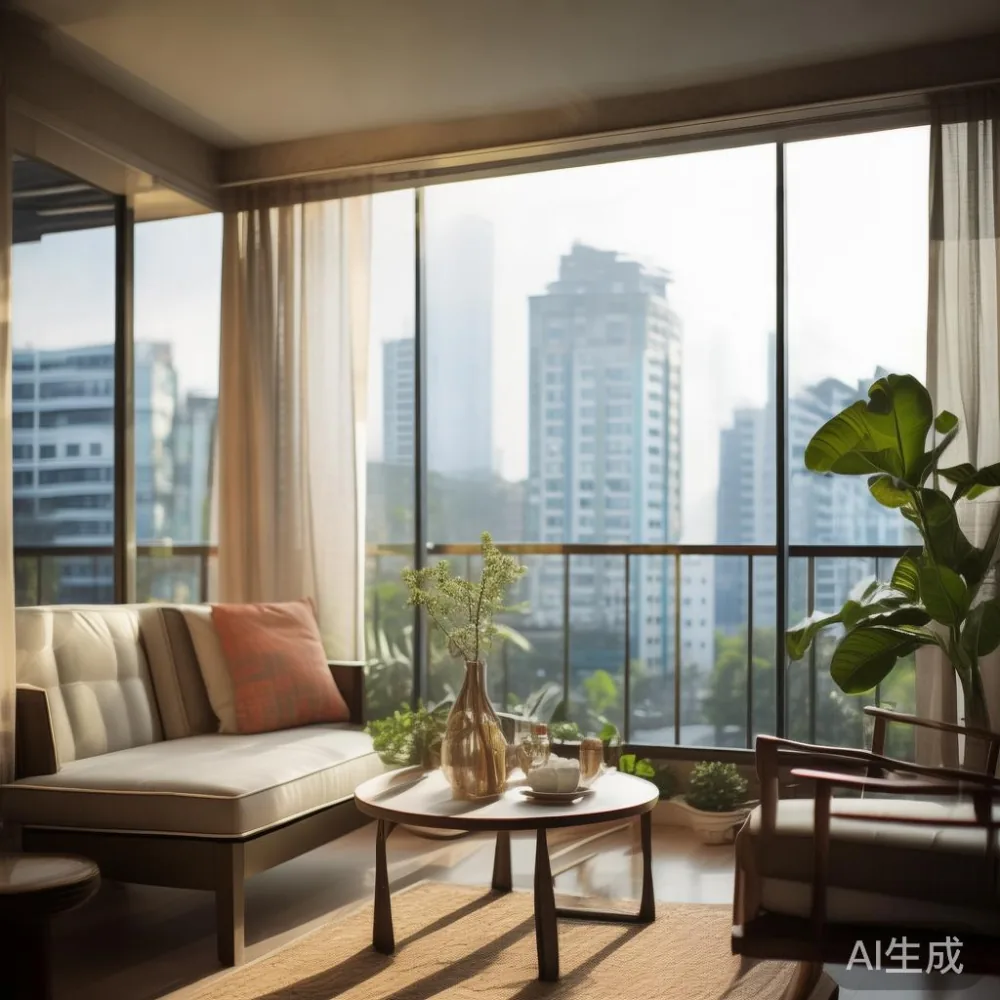
Across 5 years, allow SGD 35 per year for veneer care and SGD 12 per year for solid wood care. These budgets cover a pH-neutral cleaner, a soft cloth and one application of suitable protective finish. Allow SGD 120 for one veneer repair and SGD 40 for one solid wood repair. For an exposed balcony, reserve SGD 180 over 5 years for replacing a faded or damaged veneer table top; solid wood may need only refinishing at SGD 160.
Under those assumptions, veneer finishes at about SGD 1,492, while solid wood finishes at about SGD 1,596. The difference is only SGD 104, or SGD 20.80 per year. The more important result is maintenance behaviour: solid wood can usually be sanded and refinished locally, whereas a veneered panel may need a complete top replacement once the substrate is affected.
How do material prices compare for balcony furniture?
Material choice has a large effect on the initial ticket, but the discount varies by product design. Veneer is efficient because a 0.6 mm to 1.2 mm slice is applied to a stable engineered panel. It can reproduce a consistent walnut or oak appearance at a lower material cost. Solid oak, ash, beech and teak use more timber and require controlled drying, but they offer repairability that veneer cannot match at every joint.
Here are realistic Singapore retail ranges for balcony-sized pieces:
Balcony dining table: veneer from SGD 520 to SGD 880 for a 100 cm by 60 cm model; solid wood from SGD 980 to SGD 1,580. A teak version may reach SGD 1,850. Weights are approximately 18 kg for a medium-density veneer table and 34 kg for solid wood.
Dining chair: veneer from SGD 88 to SGD 160 per chair, with a typical weight of 5 kg; solid wood from SGD 145 to SGD 285, with a typical weight of 7 kg. Seats are about 45 cm wide and 82 cm high, allowing 60 cm of table space per diner.
Compact balcony chair: veneer from SGD 180 to SGD 300 and solid wood from SGD 290 to SGD 480. A well-made solid wood chair weighs 9 kg to 13 kg. This matters when the route involves a HDB stair, a 90 cm doorway or a lift with a 1.1 m internal depth.
Small side or marble table: a veneer side table may cost SGD 220 and weigh 8 kg; a solid wood version may cost SGD 360 and weigh 13 kg. A marble table is outside the two material categories, but it is useful as a comparison point: a 60 cm marble-look top with a metal base may cost SGD 420 and weigh 22 kg. It has a different maintenance profile because the surface is less vulnerable to scratches but the joints and base still require attention.
These ranges fit the market better than one universal price. A flat-pack veneer chair may use a thinner frame and cost less, while a mortise-and-tenon solid wood chair uses more material and labour. Post-modern light luxury often appears through sculptural curves, mixed materials and restrained profiles, so visual complexity can raise price even when veneer is used.
What happens to each material in Singapore humidity and sunlight?
Singapore’s outdoor conditions create a demanding test. Relative humidity can move from about 62% at night to 84% during wet periods, and balcony surfaces can exceed 40°C when exposed to afternoon sun. A west-facing Tampines balcony needs a UV-resistant finish and should not have solid wood furniture pressed directly against a tiled wall, where trapped moisture can prolong wetness.
Solid wood reacts more visibly to humidity because timber expands across its grain. Quality suppliers control moisture content and use joinery that permits small dimensional movement. A finished solid wood balcony chair may gain or lose 1 mm to 3 mm across a joint over seasonal changes. That movement is not automatically a defect; splitting along the grain or a loose joint is.
Veneer is less prone to large movement because the substrate is engineered, although the veneer face itself still responds to moisture and sunlight. The vulnerable areas are edges, corners, seams and screw holes. A failed seal can let water enter the particle board, causing swelling that cannot be repaired by applying a new coat of lacquer.
One practical rule is to use solid wood for pieces with touch surfaces and visible edges, such as a balcony chair armrest, and high-grade veneer for broad, sheltered panels where consistent colour matters. The French light luxury approach often favours pale oak, cream upholstery and slim frames; American light luxury may use darker walnut tones and thicker profiles. Both styles still depend on finish quality and placement.
For direct sun, specify a water-based coating with UV resistance, inspect it every 6 months and clean with a damp cloth rather than a high-pressure hose. Keep at least 5 cm of clearance from the wall and 10 cm from a parapet edge where wind-driven rain is likely.
How much do delivery, lifts and narrow corridors affect the final cost?
Delivery is where solid wood becomes operationally heavier. A 34 kg solid wood dining table needs two people on the day of delivery, while an 18 kg veneer table can be moved by one person with a trolley. A common Singapore delivery band for a 1-person drop-off is SGD 35 to SGD 50, rising to SGD 70 to SGD 110 for two people or a timed lift booking.
Some HDB blocks have a lift car measuring about 110 cm by 140 cm and an internal door width near 90 cm. A 160 cm solid wood table cannot turn through that opening unless it is disassembled. In contrast, a 120 cm folding veneer table can pass through more easily, though its folded thickness and handle position still need checking. In Punggol estates with newer lifts, a 180 cm table may enter diagonally, but corridor corners can remain the limiting factor.
Here is a 5-year delivery scenario for one dining table and 4 chairs:
Veneer option: SGD 60 standard delivery, no assembly charge, and an estimated 5 to 8 delivery days after order confirmation. A second-person lift carry would add about SGD 45.
Solid wood option: SGD 110 two-person delivery, with an estimated 7 to 12 delivery days because the item is made or finished to order. Assembly is included in many project quotations, but moving the table to a balcony after delivery may add SGD 60 to SGD 120.
That makes the 5-year difference about SGD 1,142 in favour of veneer for the assumed order: SGD 1,492 against SGD 1,596. If the table can be delivered as flat components and assembled inside the flat, solid wood becomes more competitive. If the unit must be carried up 4 flights because the lift is out of service, the economics can shift sharply. A 45 kg solid wood table also presents a greater injury risk than a 20 kg veneer table.
Can solid wood be repaired after 5 years of balcony use?
Yes, provided the timber has not been destroyed by moisture or neglect. A 5-year-old solid wood dining table can often be sanded with 120, 180 and 220 grit paper, spot-filled and recoated. A full refinishing job may cost SGD 220 to SGD 420 for a dining table and SGD 70 to SGD 120 for a chair. The result depends on the original finish and how deeply the colour has penetrated.
Last month I visited a friend’s sheltered HDB balcony in Tampines and tested the finish on a solid wood side table that had been exposed to side light for 3 years. A small 10 cm by 4 cm area had dulled and picked up a grey surface film. After light sanding and one coat of water-based finish, the patch was much less noticeable, although the tonal change remained visible. The same test on a veneered box with a chipped corner exposed swollen brown substrate, which required a separate patch and filler rather than simple refinishing.
This does not mean veneer furniture should be discarded after 5 years. It means the repair pathway changes. Veneer can be valuable in sheltered settings, such as a bedroom wardrobe or a dining room sideboard, if moisture is controlled. Solid wood is generally easier to restore when scratches, fading or joint wear occur.
For buyers searching for the best Rustic wardrobe for 2026, the material decision depends on whether the piece stays indoors. For balcony projects, exposure should outweigh a small visual preference. The exact search phrase best Rustic wardrobe for 2026 may also be used in retailer listings, but product photographs should be checked against actual wood thickness, drawer construction and finish options.
Which option offers better value for different Singapore homes?
For a small HDB balcony in Bedok or Punggol, a hybrid arrangement often gives the most practical result. Use a stable veneer top for a 100 cm dining table if the balcony is sheltered and the budget is SGD 700 or less. Add solid wood chairs at about SGD 178 each because seat edges and armrests receive frequent contact. This mixed set costs roughly SGD 1,512 before delivery and can remain attractive for 5 years with annual care.
For a west-facing Tampines balcony, solid wood is the safer long-term material. Expect a budget of SGD 1,200 to SGD 1,600 for a 100 cm table, SGD 145 to SGD 285 per chair and SGD 60 to SGD 110 for delivery. Include a finish inspection every 6 months and a partial refinishing reserve of about SGD 180 across 5 years.
For a larger Bedok condo balcony with a 180 cm covered dining area, solid wood can justify its additional weight. It suits a solid wood sofa, a solid wood bed frame used in an adjoining room, and a marble table used as a sheltered drinks station. A solid wood wardrobe and nightstand are less exposed and can provide good value where their doors and drawers need frequent repair.
Style should follow the home’s proportions, not a generic label. For those considering is Mid-century modern bed worth it, the answer for a compact bedroom depends on dimensions and storage needs. A 160 cm by 200 cm bed frame may weigh 45 kg in solid wood, and its 35 cm high headboard can visually reduce the wall space. The best Japanese bed for 2026 and Japandi for small living room searches often lead to light timber and low profiles, but balcony furniture still needs UV-resistant finishes and proper clearances.
A separate buying route is for shoppers looking for for sale French furniture or Vintage for dining room pieces. These searches may produce decorative imports with unfamiliar joinery. Check whether the “solid” label refers to the frame, the top, the legs or only a thin facing, and request the actual material and finish specification before paying.
What should you budget for care and replacement over 5 years?
For veneer, annual cleaning materials may cost SGD 25 to SGD 45, plus SGD 10 to SGD 20 for a protective finish if the piece is exposed. Over 5 years, this creates a care allowance of SGD 175 to SGD 325. A 60 cm to 120 cm veneer dining table may also need edge repair once, at SGD 80 to SGD 180.
For solid wood, annual care is usually SGD 8 to SGD 18, with a refinishing reserve of SGD 120 to SGD 280 for a small table or chair and SGD 220 to SGD 420 for a dining table. A wax or oil finish may need refreshing every 12 months, while a harder lacquer can last longer but may show scratches more clearly.
Consider the resale factor carefully. After 5 years, a well-maintained solid wood dining table might retain 40% to 60% of its original retail value if it is portable, documented and in good condition. A shaded veneer table may retain 25% to 45%. These are planning ranges, not guarantees, and HDB balcony furniture may have limited resale demand because space is scarce.
The final choice is not simply “solid wood wins.” Veneer can cost less and suit a sheltered balcony, a tight corridor and a budget below SGD 1,000 for the complete set. Solid wood costs more to carry and maintain, but it handles edge wear, colour variation and local refinishing with greater control. For a lightly exposed balcony, budget about SGD 1,596 for the sample solid wood set; for a sheltered hybrid set, plan around SGD 1,512. Both totals are more informative when divided into annual cost and repair options rather than judged by the first invoice.
Before ordering, measure the balcony, lift door, corridor turns and final route, then request a written breakdown of material, dimensions, weight, finish, delivery timing and warranty. MIDHILL offers a 10-year structural warranty, lifetime refinishing and a 14-day return window, which makes the long-term proposition easier to compare with cheaper but less repairable alternatives.