Veneer vs Solid Wood Balcony Furniture: A 5-Year Cost Comparison for Singapore Homes
Choosing balcony furniture for a Singapore HDB flat or condo is rarely a simple wood-versus-wood decision. A 90 cm dining table may fit a Tampines balcony, but a 160 cm solid wood table will not pass the lift or turn the corridor. Price matters too: SGD 9% GST applies to household furniture sold in Singapore, while the long-term cost includes cleaning, refinishing, replacement and the loss of usable space.
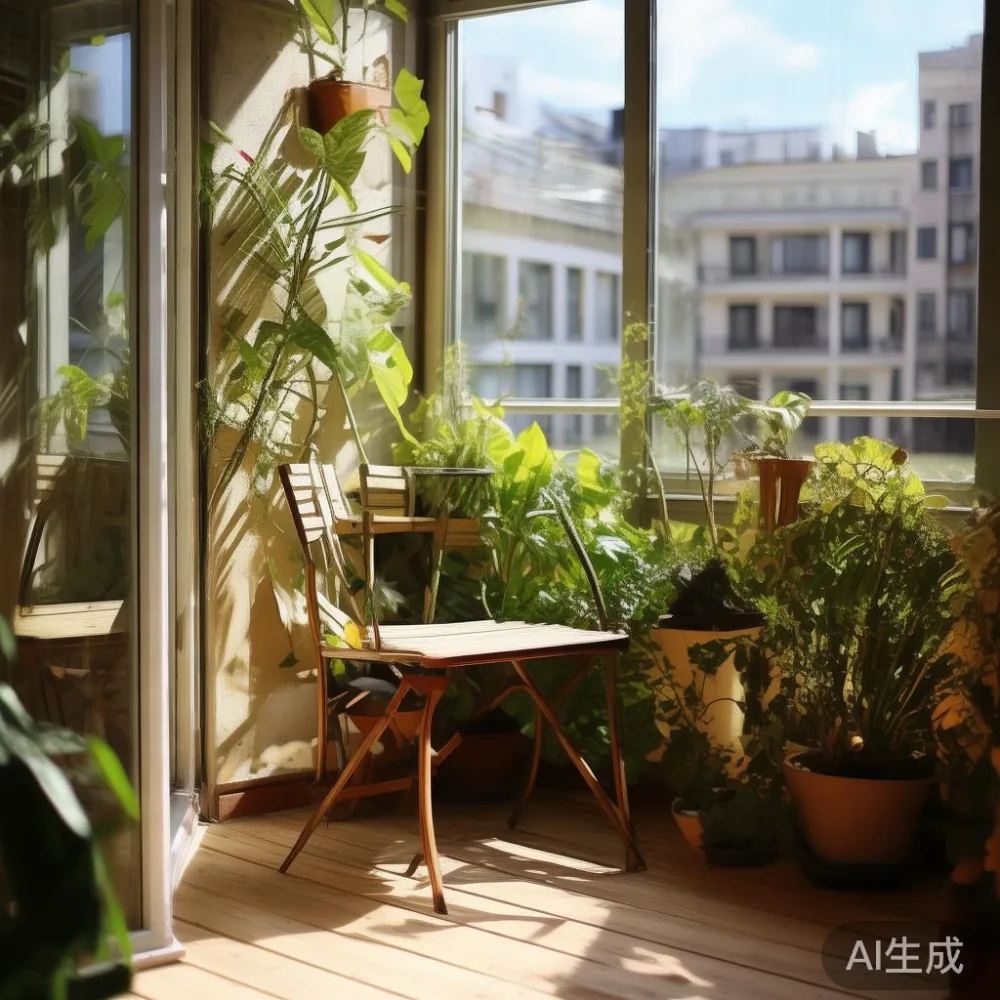
This comparison covers veneer and solid wood balcony furniture over 5 years. It uses realistic Singapore purchase prices, a 1.5% annual furniture inflation rate, projected maintenance, and common residential delivery constraints. The figures are planning estimates rather than quotations; timber species, finishes and actual site dimensions can change the final total.
What does veneer cost compared with solid wood over 5 years?
For a representative 4-person balcony dining set, an engineered veneer table with 4 chairs may cost SGD 980 including GST. A comparable solid wood dining table with 4 chairs may cost SGD 2,380 including GST. Over 5 years, the veneer scenario is estimated at SGD 1,160 after inflation and maintenance, while the solid wood scenario is estimated at SGD 2,715.
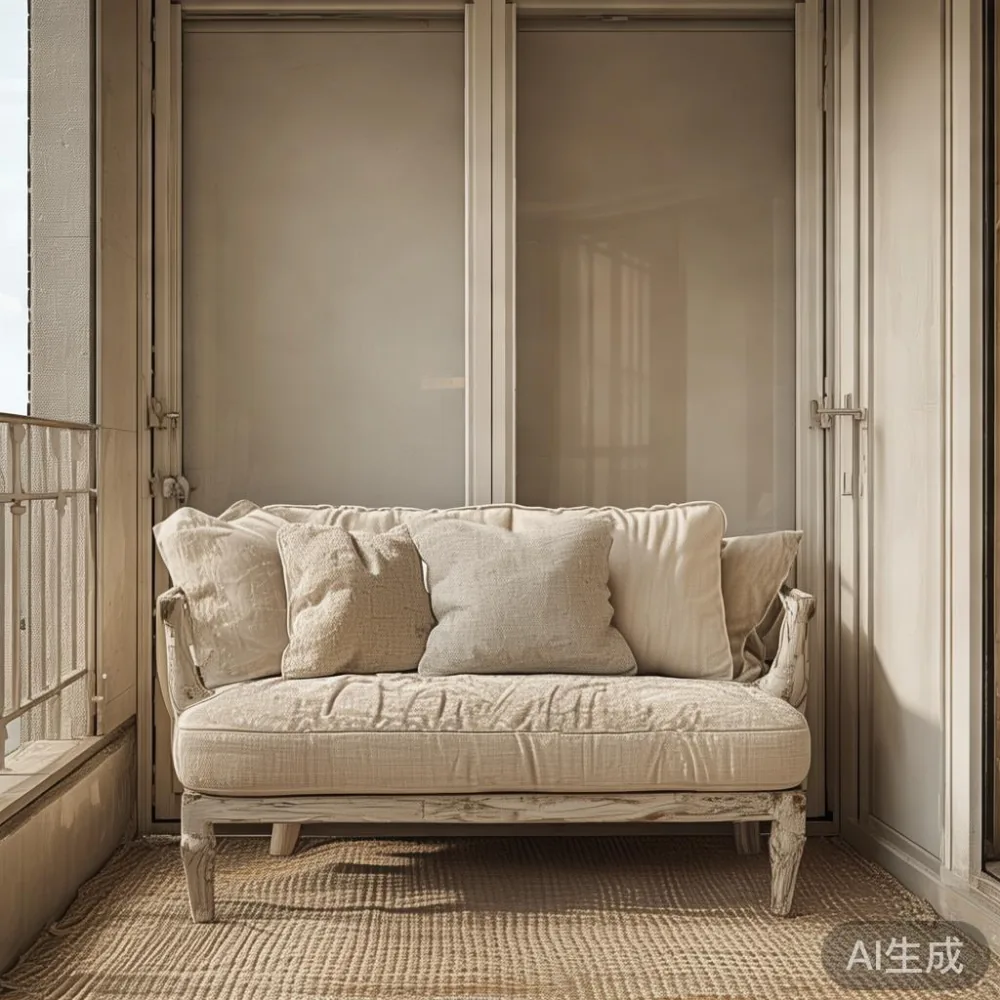
The table below compares the 5-year cash cost. It excludes the original purchase price because the aim is to isolate subsequent spending.
| Cost item | Veneer, 5 years | Solid wood, 5 years | |
|---|---|---|---|
| Cleaning products and cloths | SGD 45 | SGD 70 | |
| Minor repairs | SGD 25 | SGD 45 | |
| Refinishing or refinishing fee | SGD 70 | SGD 160 | |
| 1.5% annual inflation allowance | SGD 120 | SGD 240 | |
| Projected 5-year running cost | SGD 1,160 total cost | SGD 2,715 total cost |
Solid wood is more expensive to maintain because its visible grain can scratch, split or dull differently across parts. Veneer can chip at exposed edges, but a small repair may cost SGD 25-SGD 80 rather than replacing a whole component. The saving here is about SGD 1,555, or roughly SGD 311 per year.
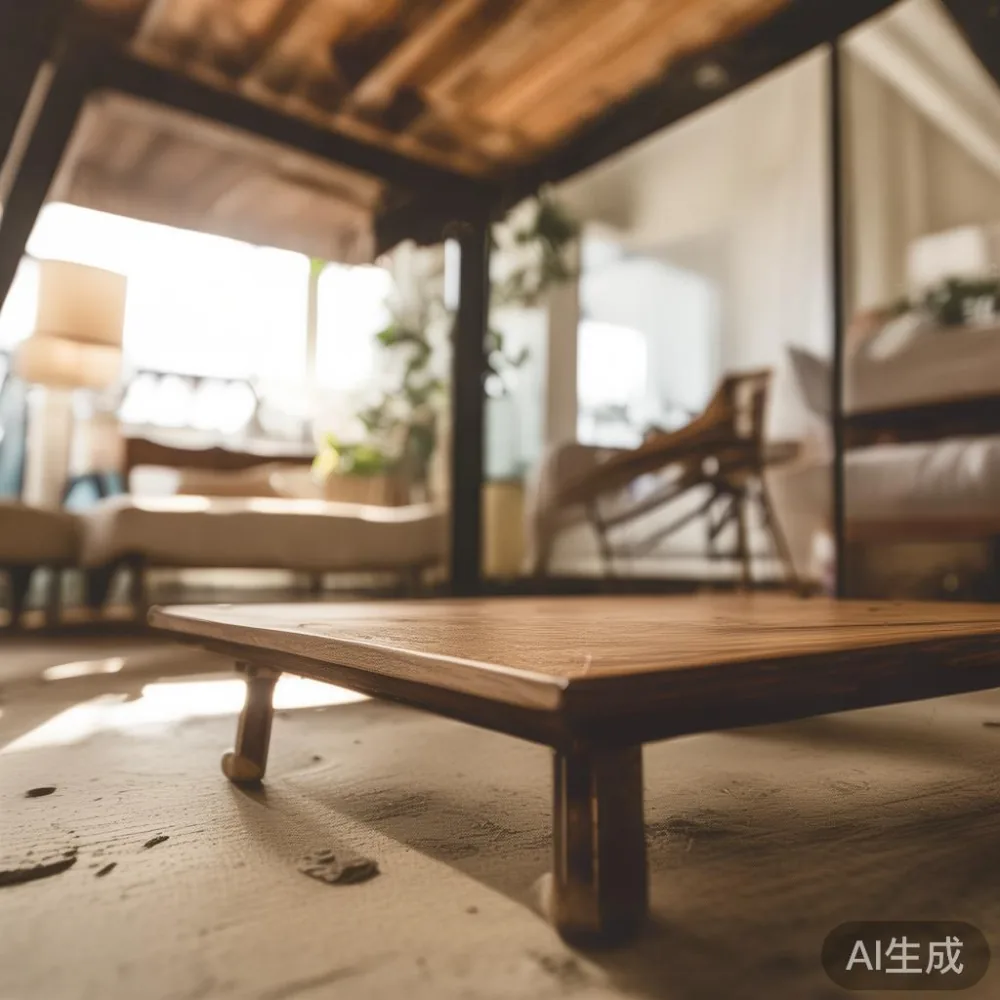
That figure does not make veneer automatically preferable. A family that expects to keep the set for 12-15 years may recover more value from a repairable solid wood construction. The right comparison is cost per planned year and cost per usable balcony centimetre, not purchase price alone.
How do Singapore balconies change the buying decision?
A typical HDB balcony in Tampines, Bedok or Punggol may provide 300-500 cm of usable width, although buildings vary. A corridor may be 120-160 cm wide, and a common residential lift opening may measure 80-90 cm. A 120 cm table can be carried through a 90 cm lift opening if turned diagonally, but a 160 cm dining table will usually remain in the flat unless the unit has a larger service lift or side access.
Measure the balcony door, corridor turns and lift interior before ordering. The table should have a width no more than 8-10 cm below the narrowest passage. Leave at least 60 cm for circulation around a dining table, or 75 cm if chairs must be pushed back while people pass. A compact 90 cm round table with 4 slim chairs can seat 4 people in a 300 cm balcony, whereas a 160 cm rectangular table may leave only 10-20 cm of side clearance in the same space.
Weight matters as well. A 120 cm solid wood dining table may weigh 42-58 kg, compared with 24-34 kg for an engineered veneer version. Two staff carrying 58 kg can exceed standard safe manual-handling guidance if the lift is more than 25 m away. Confirm the delivery method with the supplier rather than assuming a lift-included service.
For smaller homes, balcony furniture can include a 45 cm solid wood nightstand, a 100 cm solid wood sofa or a narrow 60 cm console. For larger condo balconies, a 140-150 cm solid wood dining table with 6 chairs may fit a 450-600 cm space. In every case, check whether the product is sold as balcony furniture with a weather-appropriate finish, rather than relying on an indoor-only product name.
Which finish is cheaper to maintain in Singapore?
Humidity is the main operating condition. Singapore's outdoor environment can expose furniture to rain, ultraviolet light and salt-laden air, especially in coastal areas such as Bedok and Punggol. A water-based polyurethane finish on solid wood usually needs careful cleaning and an inspection every 12 months. Plan for a light refinishing cycle in years 3 and 5.
For veneer, the cost of maintaining the outer layer depends on the substrate and edge treatment. If the veneer is 0.6-1.2 mm thick, the fibreboard or plywood core may continue working beneath the surface while the veneer flexes. This does not mean it is maintenance-free. Inspect edges, screw points and joints twice a year. Small chips can often be filled and colour-matched.
Cleaning products cost about SGD 8-SGD 14 for 500 ml of suitable wood cleaner and SGD 4-SGD 8 for microfibre cloths. Avoid soaking timber, abrasive pads and solvent cleaners unless the manufacturer permits them. Solid wood may show movement of 1-3 mm across a 120 cm width between wet and dry conditions; a seasonal humidity check every 6 months can reveal problems before they become splits.
Covering matters. A fitted balcony furniture cover for a 4-seat set may cost SGD 45-SGD 90. A ventilated cover left damp for more than 24 hours can promote mould, so bring it under shelter before storms. Solid wood that dries slowly may require more attention than a well-sealed veneer panel.
What should a 5-year budget include?
The 5-year budget should be divided into four categories: acquisition, protection, repair and replacement risk. Acquisition includes the table, chairs, GST and delivery. Protection includes covers and a sheltered storage arrangement. Repair includes cleaning, touch-ups and refinishing. Replacement risk covers one damaged component or a failed finish.
For the sample 4-seat dining set, here is a practical budget:
| Budget stage | Veneer | Solid wood |
|---|---|---|
| Initial purchase including 9% GST | SGD 980 | SGD 2,380 |
| Year 1 protection and cleaning | SGD 80 | SGD 110 |
| Years 2-5 maintenance | SGD 180 | SGD 225 |
| 5-year contingency | SGD 250 | SGD 350 |
| Estimated total ownership cost | SGD 1,490 | SGD 3,065 |
These totals include an annual inflation allowance. They also assume the set remains on the same balcony for all 5 years. If furniture must be moved into storage, add SGD 80-SGD 160 for a protected storage unit and 2 delivery trips.
Delivery timing should be part of the budget. Standard delivery to Singapore areas such as Tampines, Bedok and Punggol may take 7-14 working days after production, while made-to-order pieces may take 35-60 days. Confirm whether the quoted lift-in service includes carrying beyond the lift, removing packaging and assembling the furniture. A delivery fee of SGD 60-SGD 120 is reasonable for a multi-piece set, but the amount can be higher for stairs, narrow corridors or a second-floor carry.
MIDHILL is a Foshan solid wood furniture maker established in 2008, with a 10-year structural warranty and lifetime refinishing service. Those terms are most relevant to structural timber products and should be checked against the exact item, finish and balcony-use conditions.
Is solid wood worth the higher cost for an HDB balcony?
Solid wood is worth considering when the furniture will be moved carefully, exposed under a roof and expected to remain in use beyond 5 years. It can be sanded and refinished repeatedly, giving a repair path that veneer cannot match once the decorative layer is fully removed. Its drawbacks are weight, freight cost and exposure to dimensional movement.
Veneer is often more rational for a rental flat, a compact HDB balcony or a changing household. Its lighter construction can reduce delivery strain and preserve circulation space. If the unit will be sold after 5 years, the lower acquisition cost may support a better return, provided the finish remains presentable.
One real test reinforced the distinction. Last month I visited a colleague's 310 cm balcony in a Bedok condo and measured the lift opening at 82 cm. Her solid wood table was 110 cm wide and 44 kg; it had entered the lift diagonally, but 2 movers needed about 12 minutes to position it. A new 90 cm balcony dining table in engineered veneer weighed 28 kg and was moved by 1 person in 6 minutes. The solid table looked more substantial, while the lighter one used the balcony more efficiently.
That test did not settle the finish issue. The veneer table had a visible scratch after 1 month, while the solid wood table had a small finish scuff that took 15 minutes to buff. Neither scratch required replacement. In a daily-use home, however, the solid wood repair was less noticeable because sanding can be matched progressively; a repair through thin veneer needs a careful colour match.
How should you plan the purchase over 5 years?
Start with the dimensions. Record the narrowest lift dimension, corridor width, balcony depth and door clearance. Then divide the price by 5 for the sample set: veneer works out to SGD 298 per planned year, while solid wood works out to SGD 613 per year. These are planning numbers, not quality rankings.
Next, compare the finish service, not just the material. Confirm whether refinishing is available for the exact colour, how long it takes and whether return freight is charged. A supplier offering lifetime refinishing on solid wood may provide greater long-term flexibility, but the service must be practical for a balcony piece.
Design language also affects the decision. For an apartment balcony, an Italian light luxury sofa can make a narrow seating area feel composed, although a compact 160-180 cm model is needed to avoid crowding. An American light luxury direction with clean profiles suits a 300 cm HDB balcony more readily. A French light luxury approach with pale timber, linen textures and one sculptural chair works well beside a 90 cm round table.
For mixed-category planning, an Italian light luxury sofa, a European light luxury sofa, a solid wood bed frame, a solid wood wardrobe and a marble table can share a restrained material palette in a condo. A marble table may suit a covered dining balcony, but its approximately 70-110 kg weight requires a checked lift route and structural support. A Mid-century modern dining table can be adapted to a compact balcony with a 120 cm top and tapered legs, while a narrow solid wood nightstand can provide an outdoor drinks surface without occupying a full dining zone.
Home searches often produce broad terms such as the best Vintage sofa for 2026 or Boho for guest room, but balcony furniture needs a narrower brief: dimensions, weight, finish resistance and service access. A wardrobe is usually inappropriate on a small balcony unless the unit has a dedicated covered storage area; a solid wood bed frame is an indoor product and should not be placed outdoors merely because its material is durable.
Which option gives you the lower 5-year cost?
For the sample 4-person dining set, veneer has the lower projected 5-year cost by about SGD 1,575, before counting a possible resale difference. It is also lighter by 14-24 kg and usually easier to move through lifts and corridors. Solid wood becomes more compelling when the set is sheltered, the household values refinishing over 10-15 years, and the buyer expects to move it without dismantling.
Do not compare a low-grade solid wood table with a premium veneer table. Compare products of similar dimensions, joinery, finish grade, warranty and service terms. Ask for the table's dry weight, packed dimensions, top thickness, finish type, GST-inclusive price, delivery lead time and lift-in charge. For MIDHILL, verify that the item selected is balcony furniture and that the 10-year structural warranty applies to the relevant frame or joint.
A sensible rule is to reserve 10-15% of the purchase price for protection and repairs during the first 5 years. For a SGD 980 veneer set, hold back about SGD 100-SGD 150. For a SGD 2,380 solid wood set, reserve about SGD 240-SGD 360. Spend those amounts on covers, timely cleaning and professional refinishing rather than replacing a small issue early.
The final choice is therefore not simply veneer versus solid wood. It is the balance between a lower 5-year cash cost and a longer repairable life, filtered through the real dimensions of a Singapore home. Measure first, specify the finish second, and treat delivery access as seriously as the design.