Warm Minimal Interior Styling: How to Match Solid Wood Furniture in a Singapore Home
I spent a Saturday morning last month at a friend's new 4-room HDB flat in Punggol, and what struck me wasn't the renovation. It was how her father — visiting from Ipoh — quietly rearranged three pieces of furniture and the whole living room exhaled. The sofa stopped floating. The dining table stopped feeling borrowed. The balcony furniture, which had looked like an afterthought all week, finally looked like part of the home. That afternoon is the seed of this guide, because warm minimalism in Singapore is not a Pinterest board. It is a corridor-width problem, a lift-cage problem, a humidity problem, and a 9% GST problem. And it is solvable with the right pieces.
What "warm minimal" actually means in a HDB or condo
Warm minimalism is the middle path between Scandinavian cool and American light luxury. The bones are quiet: a four-colour palette, exposed solid wood grain, soft linen, and one or two marble accents. The warmth comes from texture, not from clutter. In a typical 90 sqm Tampines or Bedok resale flat, the palette tends to land on warm white (around the off-white Farrow & Ball shade "Ammonite" or a cheaper Dulux equivalent at about SGD 18 per litre), sand, walnut, and a single darker accent such as olive or rust.
The mistake I see on home tours is treating "minimal" as "empty". A 4-room flat at 1,090 sq ft has roughly 28-32 sqm of living and dining space. You still need a solid wood sofa seating at least three people, a dining table that seats four without elbows touching, a bed frame that doesn't dominate the master bedroom, and balcony furniture that earns its footprint. Warm minimal is about editing ruthlessly, then buying pieces that carry visual weight on their own — usually through grain, joinery, or material contrast.
The furniture list: every piece, with the numbers that matter
Here is what I would actually spec into a 4-room HDB or a 900 sqft condo in Singapore, working room by room.
Living room. A three-seater solid wood sofa in ash or white oak, around 210-220 cm wide, 90 cm deep, 85 cm tall, with a seat height of 45 cm. Good weight is 65-80 kg; below that and the frame is hollow. Budget roughly SGD 2,400-3,600 for a genuine solid-wood frame with linen-blend upholstery. One marble side table, 50 cm diameter, 55 cm tall, around SGD 480-720 — marble is the easiest way to add the French light luxury note without going full gilt. One TV console, 180 cm, with two drawers and one open shelf for cable management, around SGD 980-1,400. A floor rug 200x300 cm is a non-negotiable anchor; budget SGD 280-520.
Dining area. A four-seater dining table at 140x80 cm is the minimum that allows four adults to sit comfortably; 160x80 cm is friendlier. Height 75 cm. Solid wood (oak, ash, or walnut) runs SGD 1,400-2,600. If you entertain, a 180 cm extendable to 220 cm — the kind MIDHILL ships in flat-pack with the extension leaf stored inside — runs SGD 2,200-3,400. Chairs: four, with seat height 45-46 cm to match the table, around SGD 180-320 each.
Master bedroom. A king bed frame at 180x200 cm with a solid wood slatted base (no need for a box spring in Singapore's climate) runs SGD 1,800-3,200. A king mattress at 25-30 cm depth sits cleanly inside the frame. Two nightstands at 45x40x55 cm each, SGD 380-560 each. A wardrobe at 200x60x220 cm, three doors, with internal drawers and a soft-close system, runs SGD 2,400-3,800.
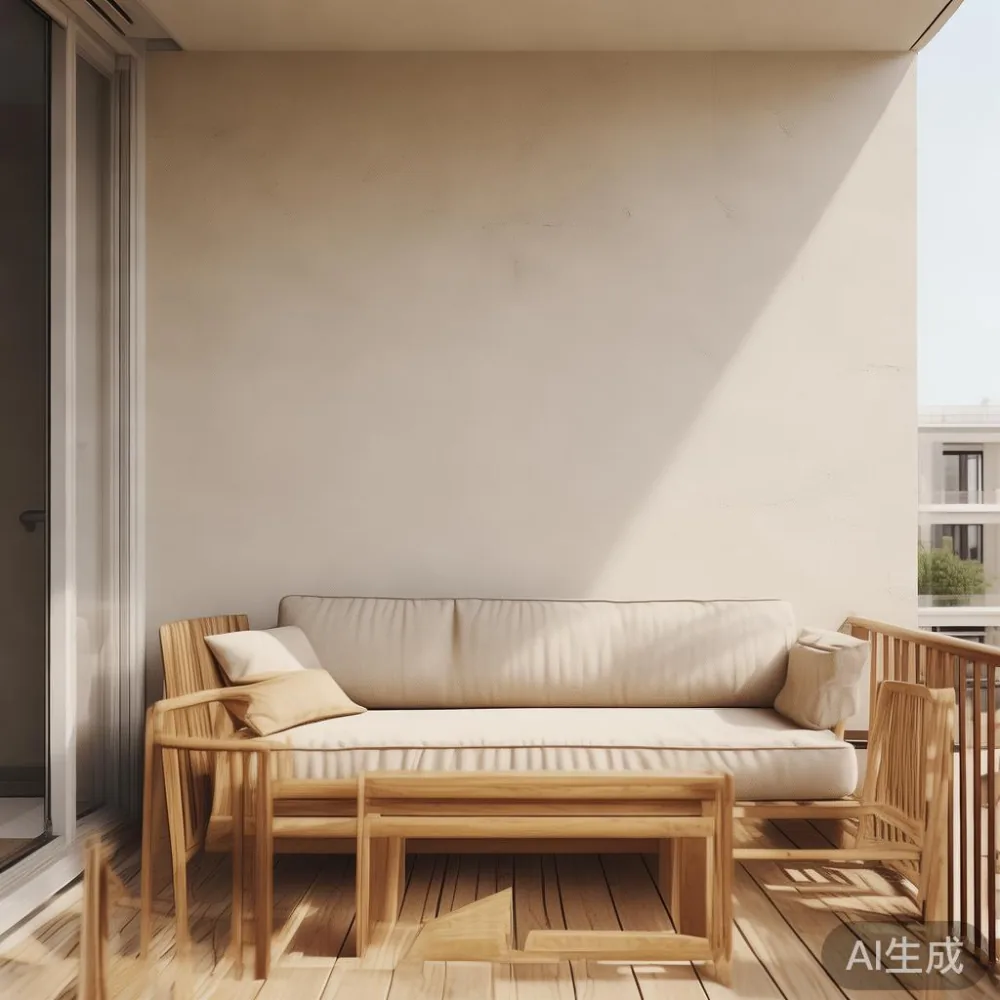
Balcony. A compact bistro set (one 70 cm round table, two chairs) at SGD 480-720, or a two-seater balcony sofa with a small coffee table at SGD 1,200-1,800. The balcony furniture category is where most Singaporean buyers get this wrong — they buy a full outdoor set and turn a 6 sqm service balcony into a furniture showroom. Edit hard.
Entryway. A slim shoe cabinet, 80x35x120 cm, around SGD 680-980, with a cushioned bench on top or beside it.
How to match wood tones without everything looking the same
The number one question I get from clients is some version of: do all my wood pieces have to match? No. In fact, matching exactly is the fastest way to make a flat look like a showhouse. The rule is: two warm wood tones, one cool contrast, one metal accent.
Concretely, pair a light oak dining table with a walnut TV console. Add a blackened steel floor lamp. Add a brass marble side table. Done. The eye reads variety but the temperature (warm) is consistent. A pine or ash solid wood sofa frame next to a darker walnut dining table also works because both are warm, just at different values.
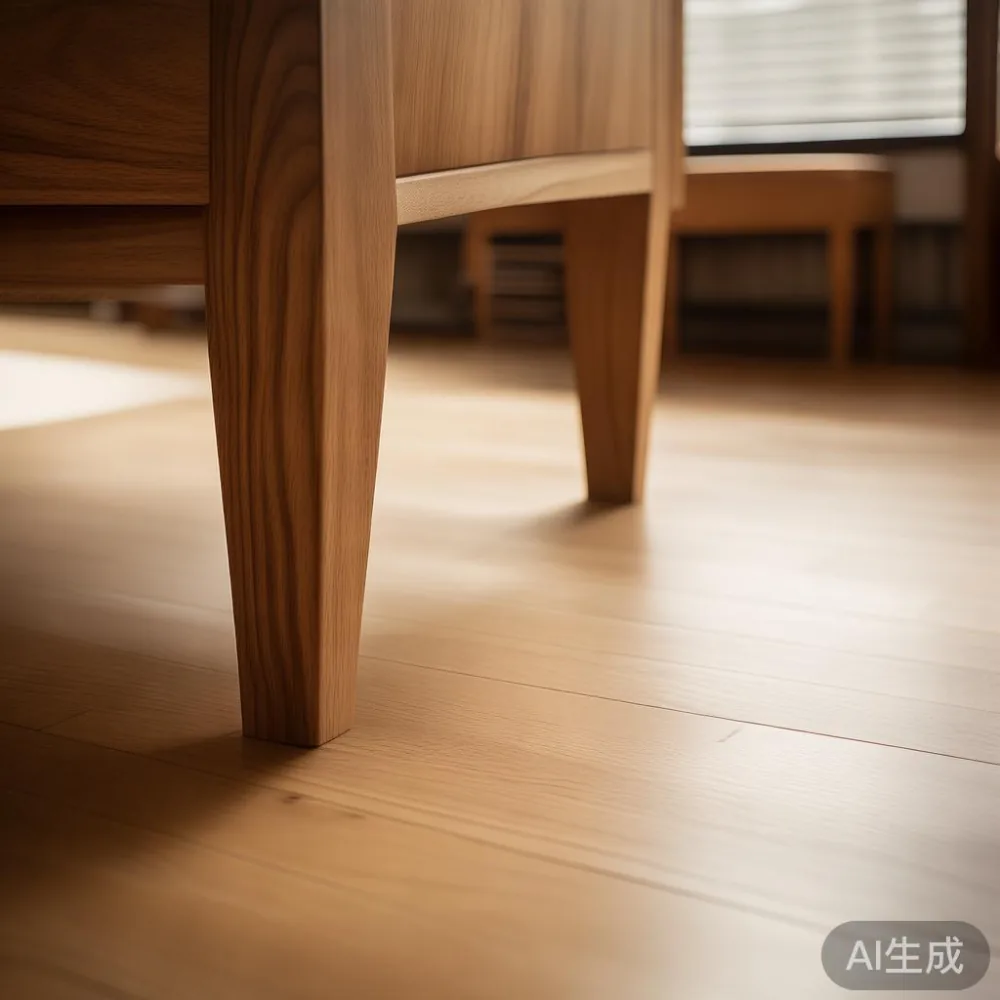
On the topic of modern Mid-century modern furniture, the splayed-leg walnut look is a strong fit for warm minimal because the legs visually lift the piece and let light pass underneath — important in a 1,090 sqft flat where every centimetre of perceived floor space matters. One walnut piece, one oak piece, and the room is balanced.
How do I actually style a French sofa in a HDB bedroom without it looking like a furniture catalogue?
That question came from a reader in Bedok last week, and it is a fair one. A French light luxury sofa — low back, rolled arms, linen-blend upholstery in oatmeal or sage — usually sits in a living room, but in a 4-room HDB master bedroom of about 14 sqm, it can earn its place at the foot of the bed as a reading perch. The trick is scale: a sofa at 180-200 cm wide fits across a king bed frame without crowding the wardrobe opposite. Keep the styling intentional: one linen throw, one cushion in a contrasting weave, no more. The bed frame behind it should be the simplest solid wood piece you can find — no headboard tufting, no carvings. The French silhouette does the talking.
If you are weighing a European sofa vs Mid-century modern sofa for the same position, the difference comes down to formality. A European sofa, with its tighter back and slightly firmer seat, reads more adult, more hotel-suite, and pairs with marble and brass. A Mid-century sofa, with a lower profile and tapered legs, reads more casual and pairs with rattan and warm wood. Both work in warm minimal. Pick by the room's hardware — if your wardrobe handles are brass, go European. If they are black, go Mid-century.
Wardrobes, dining rooms, and the Japandi question
Choosing a wardrobe is the single biggest furniture decision in a Singapore home because it is the tallest piece in the bedroom and dictates the room's vertical lines. When researching the best Japandi wardrobe for 2026, three numbers matter: depth (55-60 cm is the practical minimum for hanging shirts without crushing the door), height (220 cm to use the ceiling, or 200 cm if you keep the top open for baskets), and internal layout (a 3-door wardrobe should give you roughly 60 cm per compartment, with at least one long-hang zone of 150+ cm).
For a guide on how to choose European light luxury wardrobe pieces specifically, the markers are restrained: shaker or flat-panel doors, no ornate mouldings, handles in brushed brass or matte black, and a wood tone inside the warm spectrum — never grey-washed oak, which reads cool and breaks the warm minimal palette. A MIDHILL wardrobe in the European light luxury line, for instance, uses flat-panel ash doors with a 2 cm reveal and brass cup pulls, which keeps the silhouette quiet and lets the grain speak. Internal fittings should include two soft-close drawers, three shelves, and one full-length mirror on the inside of one door — adding the mirror does not cost much but saves you a SGD 250-450 standing mirror in the bedroom.
On dining rooms and the phrase Japanese for dining room — meaning the clean, low, joinery-forward approach — the formula is the same as the wardrobe. A 160x80 cm ash dining table at 73 cm height, paired with four chairs that have a 42-44 cm seat height, an off-white linen runner, and a single ceramic vase. No centrepiece pile-up. No placemat-and-coaster layering. The warmth comes from the wood and the linen, not from accessories. If you want a statement, hang a 60x80 cm framed botanical print on the wall behind, not on the table.
Balcony furniture: the warm minimal extension of the living room
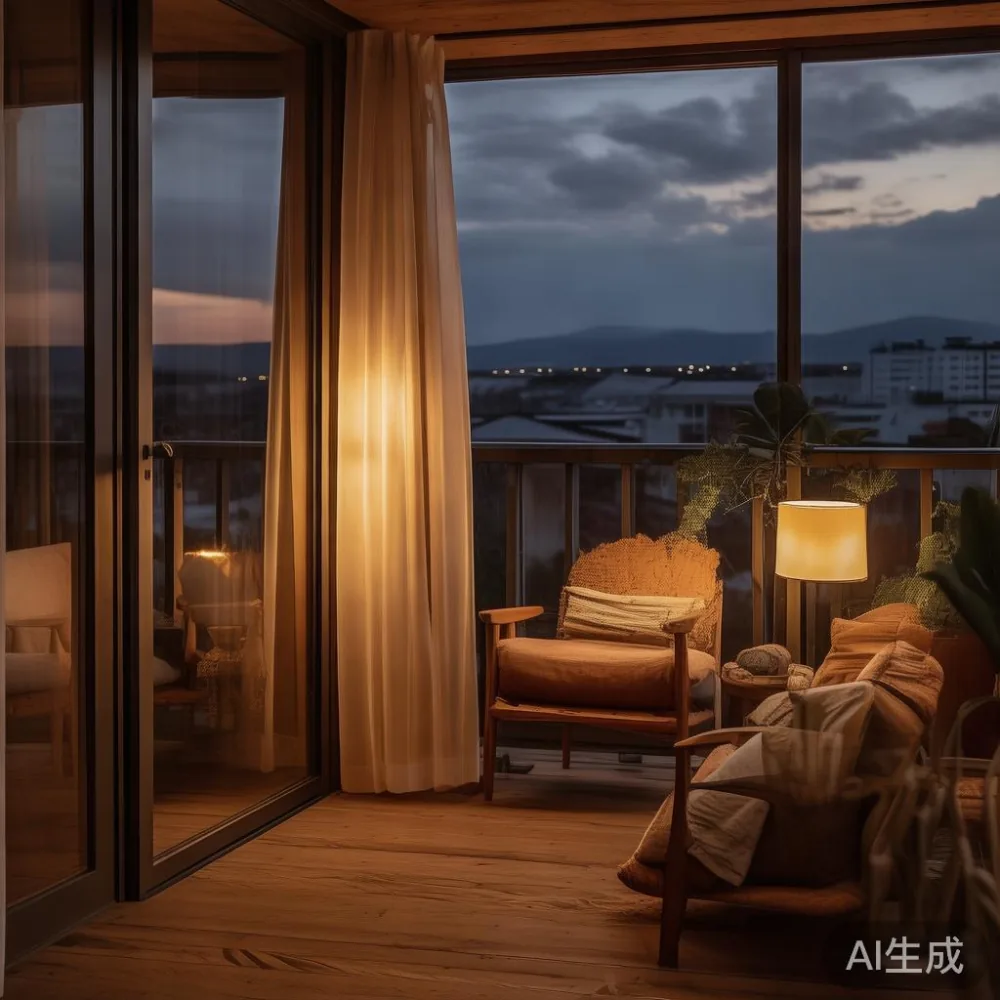
Because this site is built around the theme, let me give the balcony its own treatment. Balcony furniture in a HDB flat usually sits on a 4-7 sqm service balcony or a 10-15 sqm balcony in a newer condo. In both cases, the rule is: treat the balcony as a small outdoor room, not a storage zone.
For a 5 sqm balcony, one 70 cm round marble-look table (solid surface, not real marble, at SGD 280-420) and two folding teak chairs at SGD 180-260 each. The teak weathers to a soft silver-grey, which is acceptable in warm minimal because it reads as natural patina, not neglect. Add a 150x200 cm outdoor rug in beige or terracotta, around SGD 120-180, and one planter at 35 cm diameter for a small fishtail palm or a bird-of-paradise.
For a 12 sqm condo balcony, you can run a two-seater balcony sofa at 160 cm wide, a 90x50 cm coffee table, and a single armchair. Keep the colour palette inside the same four you used inside — warm white, sand, walnut, rust — so the balcony reads as a continuation of the living room, not a separate decision.
One practical note for Singapore: balcony furniture must clear the drain at 1-2 cm above the floor, or you get rust blooms on metal legs within the first monsoon season. Lift the legs on plastic or rubber feet, and re-tighten screws every six months. A solid teak or solid acacia set will outlast any metal frame in our humidity, even with the 2,400 mm average annual rainfall.
Logistics, warranties, and the boring-but-important numbers
Buying solid wood furniture in Singapore comes with three logistics realities. First, lift access: most HDB lifts allow a piece up to 200x80x80 cm when stood on end. A flat-pack dining table at 165x85x18 cm in its box fits comfortably; an assembled king bed frame at 215x190x12 cm does not. MIDHILL and most serious suppliers ship flat-pack for this reason, and assembly at your door takes 30-60 minutes with two people. Second, corridor widths in HDB blocks are 1.2-1.5 m, and turning into the lift lobby requires the longest box to be under 200 cm. Third, deliveries above SGD 350 are usually free in Singapore, and you can expect 14-21 working days from order to doorstep, with a 10-year structural warranty on solid wood frames and lifetime refinishing on most walnut and oak pieces.
Returns are 14 days for unused pieces in original packaging, which means you should open and inspect the piece on day one but keep all foam and cardboard in case you need to send it back. After 14 days, only manufacturing defects are covered, so photograph any issues immediately.
On the question of price, here is a realistic total for a furnished 4-room HDB at warm-minimal spec: sofa SGD 2,800, marble side table SGD 580, TV console SGD 1,150, dining table SGD 1,950, four chairs SGD 880, king bed frame SGD 2,400, two nightstands SGD 860, wardrobe SGD 2,950, entryway cabinet SGD 780, and balcony furniture SGD 1,150. That lands at SGD 15,500-16,500 before GST. Add 9% GST and the figure becomes SGD 16,895-17,985. This is roughly the middle of the Singapore market — not the cheapest option, but well below the SGD 28,000-40,000 a designer-led fit-out would cost for the same pieces.
Two anchor pieces, then everything else
If the budget is tight, do this: buy the solid wood sofa and the dining table first, both in the same wood species, both within 10% of each other in tone. Live with them for three months. You will learn how the wood ages in your specific light (north-facing Punggol flats show cooler light; west-facing Bedok flats show warmer afternoon light), how the grain looks at 8 pm, and whether the height is right. Then buy the bedroom pieces, then the balcony furniture.
Two anchor pieces first also gives you a reference point: any new piece either matches the warm tone or provides a deliberate contrast. If you cannot tell whether a new piece matches, take a phone photo of it next to the anchor piece. If your eye reads the photo as calm, it works. If it reads as busy, walk away.
Warm minimalism is a slow game, not a quick renovation. Buy less, buy solid, and let the wood do the work. A flat furnished this way ages well, photographs honestly, and feels like a home rather than a show suite — which, for most Singaporean buyers, is the whole point.