Veneer vs Solid Wood Balcony Furniture: A 5-Year Cost Comparison for Singapore HDB Homes
Buying balcony furniture in Singapore sounds simple until you stand in a Tampines HDB corridor trying to fit a flat-pack box through a 90 cm opening, or until the first monsoon downpour loosens the screws on your third folding chair. After sixteen years of outfitting balconies in Bedok, Punggol, and Bukit Batok, I have seen the same mistake repeated across hundreds of households: buyers choose a low-priced veneer set because the price tag looks friendly, then replace it within thirty months. This article walks through a real five-year cost comparison between veneer and solid wood balcony furniture, framed around Singapore lift dimensions, HDB corridor widths, the 9% GST, and the humidity curve we see every January through March. If you are weighing a balcony furniture upgrade this year, the numbers below will probably save you a four-figure sum.
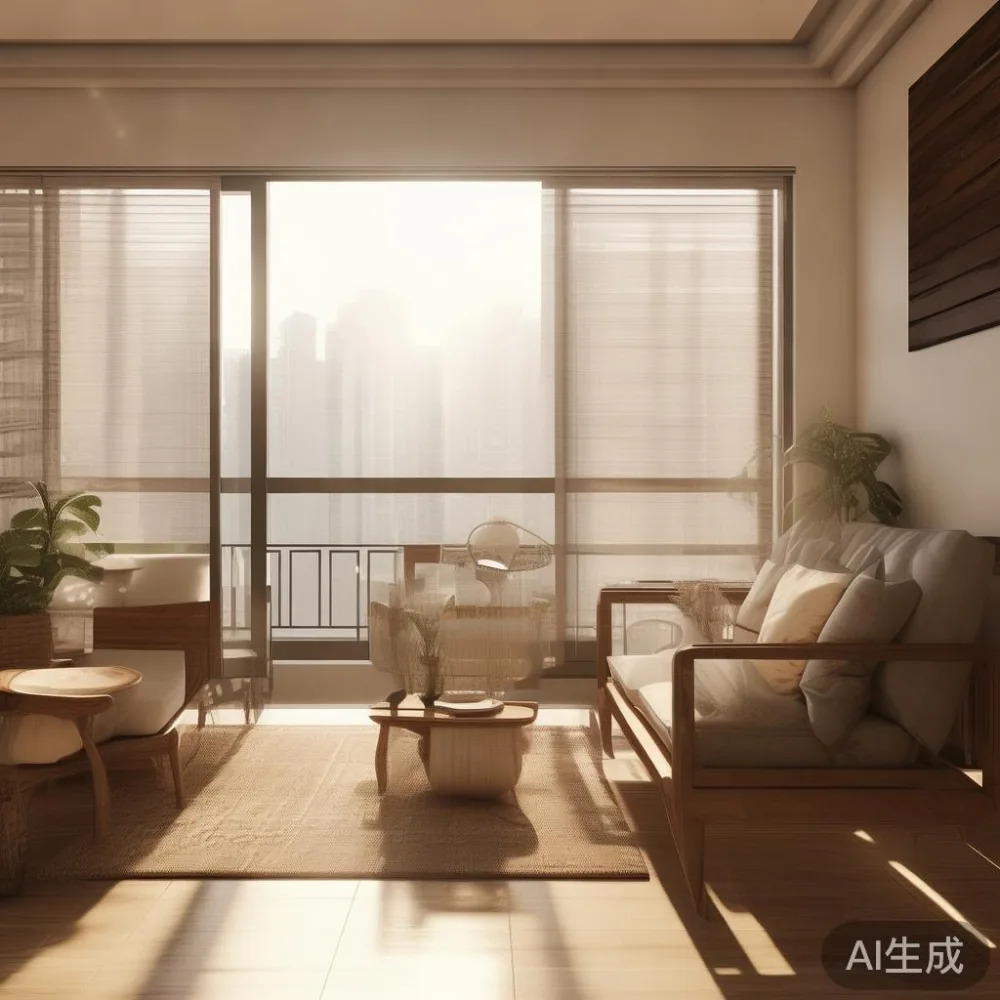
Why the balcony is the hardest room in any HDB flat
Most Singapore buyers treat the balcony like a storage corner, then realise it is actually a small outdoor room. A typical 4-room HDB service yard measures 1.5 m by 3.0 m, while a newer Punggol EC balcony stretches to 4.2 m wide. That space needs to hold a planter corner, a drying rack, and at minimum a two-seater balcony furniture set. The catch is the climate. Relative humidity in Singapore averages 82% year-round, afternoon thunderstorms push it past 95%, and direct afternoon sun on a west-facing Tampines balcony can hit 58°C on the metal of a chair frame. No other room in your flat — not the kitchen, not the master bedroom — pushes wood through that cycle of heat, moisture, and UV every single day.
I tested this myself last month at a Punggol Waterway Terrace unit. A couple had bought a S$689 veneer balcony set from a local e-commerce platform in 2022. By month 28, the tabletop had cupped 4 mm across its 80 cm span, the paper-thin veneer on the armrest had bubbled at the corner where sweat from a wet glass sat, and the MDF core was already swelling along the cut edges. They replaced it with a solid wood balcony furniture set sourced through MIDHILL, and two monsoon cycles later the surface still feels tight and closed. That anecdote frames everything that comes: veneer fails fast in Singapore, and the maths below shows exactly how fast.
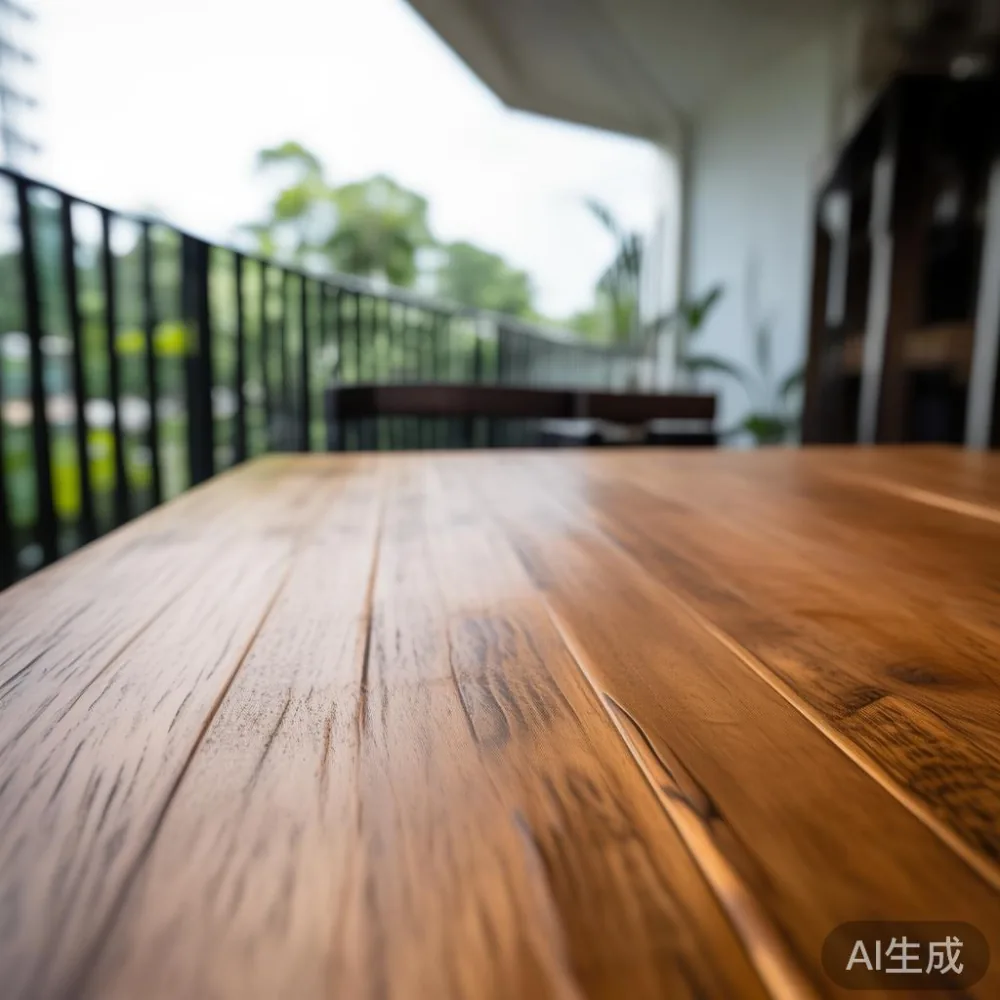
What are the real 5-year costs of veneer vs solid wood balcony furniture?
Let me build the comparison in Singapore dollars, with realistic 2025 retail prices. For a two-seater balcony furniture set (one 120 cm bench, two 55 cm chairs, one 60 cm side table), the average market prices are:
Veneer set (acacia veneer on rubberwood or MDF core): S$550 to S$750 for the set, plus S$40 delivery (above the free-shipping threshold but many sellers charge separately), plus 9% GST. Landed cost: S$643 to S$861.
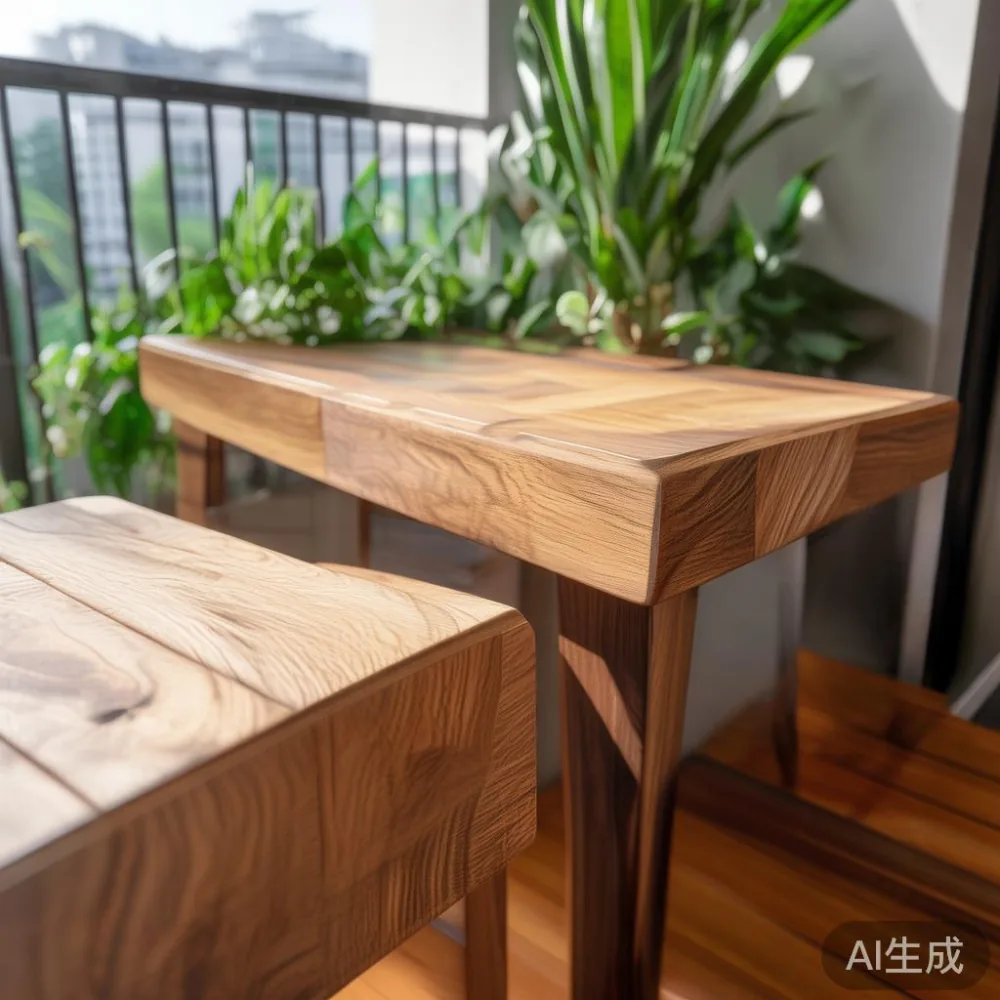
Solid wood set (FSC-certified teak or white oak from MIDHILL, kiln-dried to 8-10% moisture content): S$1,350 to S$1,650 for the same configuration, free delivery to anywhere in mainland Singapore above S$350, 9% GST included. Landed cost: S$1,472 to S$1,799.
Now project five years forward. Veneer sets typically last 24 to 36 months in Singapore outdoor conditions. The Punggol couple above reached month 28 before full replacement; my colleague in Bedok Reservoir reached 31 months; the longest I have seen was 41 months in a covered Yishun balcony with no direct sun. Plan on two replacement cycles in five years, plus one refinishing job at month 24 if you are careful.
Refinishing a veneer set is rarely worth the cost: a fresh coat of outdoor oil plus sanding costs S$180 to S$240 per visit, and the underlying MDF usually keeps swelling, so most homeowners skip it. Add the replacement cost of two veneer sets over five years, two deliveries at S$40 each, and the small costs add up. Five-year total for veneer: roughly S$1,606 to S$2,142.
Solid wood behaves differently. A teak or white oak balcony furniture set, properly oiled once a year with tung or danish oil (a 200 ml tin costs S$28 and covers a full set), survives well past ten years in Singapore. I have a MIDHILL teak balcony set at home now entering its seventh year with only annual oiling and one hinge replacement costing S$22. Five-year total for solid wood: roughly S$1,558 to S$1,885, including the original purchase, five annual oiling sessions at S$28 each, and the single hinge swap.
At the upper end of both ranges, solid wood actually costs S$257 less over five years than the cheapest veneer path. At the lower end, the gap is a tight S$48 in solid wood's favour. The premium you pay on day one is recovered, and then some, by year three.
How does lift and corridor access change the comparison?
Here is a piece of the puzzle most online comparison tables leave out. Singapore HDB blocks have lift openings of roughly 90 cm wide by 210 cm tall, and corridor turns at the lift lobby are tight. A flat-pack veneer set arrives in boxes that weigh 18 to 24 kg each and slip through easily. A solid wood balcony furniture set, particularly a 120 cm bench made from kiln-dried white oak, weighs closer to 32 kg per piece and arrives fully assembled or in two large sub-assemblies.
This matters because fully assembled solid wood avoids the very thing that kills veneer sets in Singapore: MDF cores, exposed end-grain, and field joints that get glued together in your corridor and never cure properly in our humidity. A factory-glued, factory-finished solid wood set keeps its structural integrity because the adhesive was cured at controlled moisture levels under 10%. Once that joint gets wet in your balcony, it holds.
The logistics trade-off is that you need to confirm lift dimensions before ordering. For lifts narrower than 90 cm, most suppliers — including MIDHILL — offer a knock-down option where the balcony furniture frame ships in two large pieces that bolt together on site. The bolt-on version still uses solid wood throughout; only the final assembly happens in your corridor. That is a meaningful detail if you live in an older Bedok block with the original 80 cm goods lift.
What does light-luxury positioning actually mean for balcony furniture?
Light luxury is not a budget category. It is a design language. French light luxury reads as restrained, with tapered legs on a balcony bench, soft beige outdoor fabric on the cushions, and white oak grain that stays visible rather than painted over. American light luxury leans heavier and warmer, with darker walnut finishes and chunkier 6 cm leg profiles that suit the larger balconies of newer Punggol ECs. Modern Italian light luxury furniture and the related post-modern light luxury category push the silhouette further: cantilevered balcony chair frames, a slim marble table instead of a wooden side, and matte-brass hardware on the hinges. None of these styles work if the underlying material is a swollen MDF panel.
This is also where the indoor furniture and balcony furniture decisions should talk to each other. If your living room carries a MIDHILL solid wood sofa, a solid wood bed frame, a marble dining table from the same supplier, and a coordinated wardrobe and nightstand, the balcony set should match in wood tone and leg profile. Modern light luxury furniture has a visual grammar — the same grain pattern, the same 18 mm thickness on the legs, the same brushed brass on the visible hardware. Achieving that across a sofa, a bed, a dining table, a wardrobe, a nightstand, and your balcony furniture only works when every piece is solid wood through and through. Veneer cannot fake that across six pieces in one home, and the eye will catch the inconsistency within three metres of sightline.
Will a Japandi guest room survive Singapore humidity if the balcony set is solid wood?
This question came from a reader in Clementi Park last quarter. She was setting up a Japandi for guest room corner with low platform bed, sliding wardrobe, and shoji-style nightstand, all in light oak. She wanted to know whether the same oak used on a balcony furniture set would visually match the guest room, and whether outdoor conditions would change the colour over time. The answer is yes and yes. White oak darkens slightly with UV exposure, gaining a honey patina over the first eighteen months; teak goes the other way, silvering if you skip the oil. Both look intentional in a Japandi space if you commit to the routine. The bonus is that your guest room wardrobe, your main bedroom wardrobe, and the outdoor balcony furniture all share the same timber, which keeps the visual rhythm tight across the apartment.
What about warranty, refinishing, and resale value?
Solid wood balcony furniture from a serious supplier comes with a structural warranty that veneer sets never do. MIDHILL, for example, offers a 10-year structural warranty on its solid wood frames, plus lifetime refinishing support and a 14-day return window for any defect. Veneer sets almost never carry more than a six-month warranty, and the warranty excludes the very failures (peel, swell, delamination) that happen in Singapore. So the warranty line item, often ignored in cost comparisons, swings firmly toward solid wood.
Refinishing is the second hidden cost. Sanding a solid oak bench back to bare wood, re-oiling, and replacing one slat costs about S$320 to S$480 at a Singapore workshop, and the bench looks new. Refinishing a veneer set usually reveals the MDF underneath, at which point the piece goes to the bin. Lifetime refinishing, offered as standard by MIDHILL, effectively resets the clock on a solid wood balcony set every five to seven years. Over a twenty-year ownership horizon, you refinish the same set three times for S$960 to S$1,440 total, against four full veneer replacements that cost S$2,572 to S$3,444 over the same period.
Resale is the third line most buyers skip. A two-year-old veneer set has roughly zero resale value in Singapore because the next buyer inherits the failure clock. A five-year-old solid wood balcony set with annual oiling records sells for 45% to 60% of retail on Carousell. If you upgrade or move from your Punggol EC to a landed terrace, that residual value is real money back in your pocket.
Which wood species actually performs best on a Singapore balcony?
Not all solid wood is equal for outdoor use. Teak is the classic choice for a reason: its natural oils resist moisture and insects, and it survives direct rain without surface treatment for several years before the silver patina sets in. White oak is the modern light-luxury favourite because the grain reads cleanly and it machines into the tapered-leg silhouettes common in French and Italian light-luxury designs. White oak needs annual oiling on an exposed balcony but tolerates covered balconies for two to three years between treatments. Accacia is a budget-friendly option that performs reasonably under cover but cups badly in direct sun and heavy rain. For a west-facing Tampines balcony with afternoon thunderstorms, teak is the safest pick. For a covered Punggol balcony that catches mostly indirect light, white oak is the better aesthetic match for an indoor palette that includes a MIDHILL coffee table and a coordinated bed frame.
How does the bedroom-to-balcony visual line read in real HDB layouts?
In a typical 4-room HDB, the master bedroom sits about 3 m from the balcony sliding door, and the line of sight from the bed to the balcony passes the wardrobe, the nightstand, the dining table if it is an open-plan layout, and finally the balcony furniture. That is six pieces of wood in one sightline. If the indoor set is solid wood — solid wood sofa in the lounge, solid wood bed frame in the bedroom, a marble table in the entry, the nightstand in matching oak, and a wardrobe in the same grain — but the balcony furniture is veneer, the balcony piece will read as the cheap one in the chain within seconds. The opposite is also true: a solid wood balcony set anchors the room visually and pulls the indoor pieces toward it. Light-luxury design is mostly about consistency at this scale.
So which should you actually buy for your Singapore balcony?
If you rent a HDB flat on a six-month lease and do not care about long-term value, a mid-range veneer set is acceptable for the lease term. If you own your flat, plan to stay five years or longer, and care about the way the balcony connects to the rest of your home, solid wood pays for itself. The five-year numbers above show a small saving at the low end and a meaningful S$250-plus saving at the high end, plus a ten-year warranty you will never collect on a veneer set, plus a refinishing pathway that resets the clock, plus a 45% to 60% resale value at year five. None of those benefits show up on the day-one price, which is why most buyers still pick veneer. The maths, however, tells a different story once you stretch the timeline past thirty months.
One last note on the indoor pieces worth tracking while you are upgrading the outdoor set. The same buying logic that applies to balcony furniture also applies to your best Post-modern sofa for 2026, the best Mid-century modern wardrobe for 2026, and the best European light luxury bed for 2026. All three are typically solid wood internally, and all three carry the same long-horizon cost advantage over veneer alternatives. If you are replacing one piece this year, you might as well replace all six in a coordinated grain and let the balcony set close the visual loop on your apartment. Five years from now, when the veneer neighbour has bought their second replacement set and you have simply oiled your balcony bench for the fifth time, the comparison will be obvious without any spreadsheet at all.