Living With Humidity: A Practical Guide To Protecting Solid Wood Balcony Furniture In Singapore
If you have ever walked out to your balcony in Tampines at 7 a.m. and noticed the metal railings slick with condensation, you already understand why this article exists. Singapore sits roughly one degree north of the equator, with an average relative humidity of 78 to 82 percent year-round and daily readings that regularly cross 90 percent between November and February. For solid wood furniture — a solid wood sofa on the service yard, a dining table folded down beside the sliding door, or a small nightstand tucked between two planters — that moisture is the single biggest environmental stressor you need to think about. Last month I visited a 92 sqm Punggol HDB flat on the 16th floor where the owners had placed an outdoor dining set on the balcony for 14 months without any treatment. Two of the four chair legs had warped 3 mm out of plane, and the tabletop had developed a 12 cm long hairline crack along the grain. The set was not cheap. They paid SGD 2,180 for it. None of that damage was inevitable.
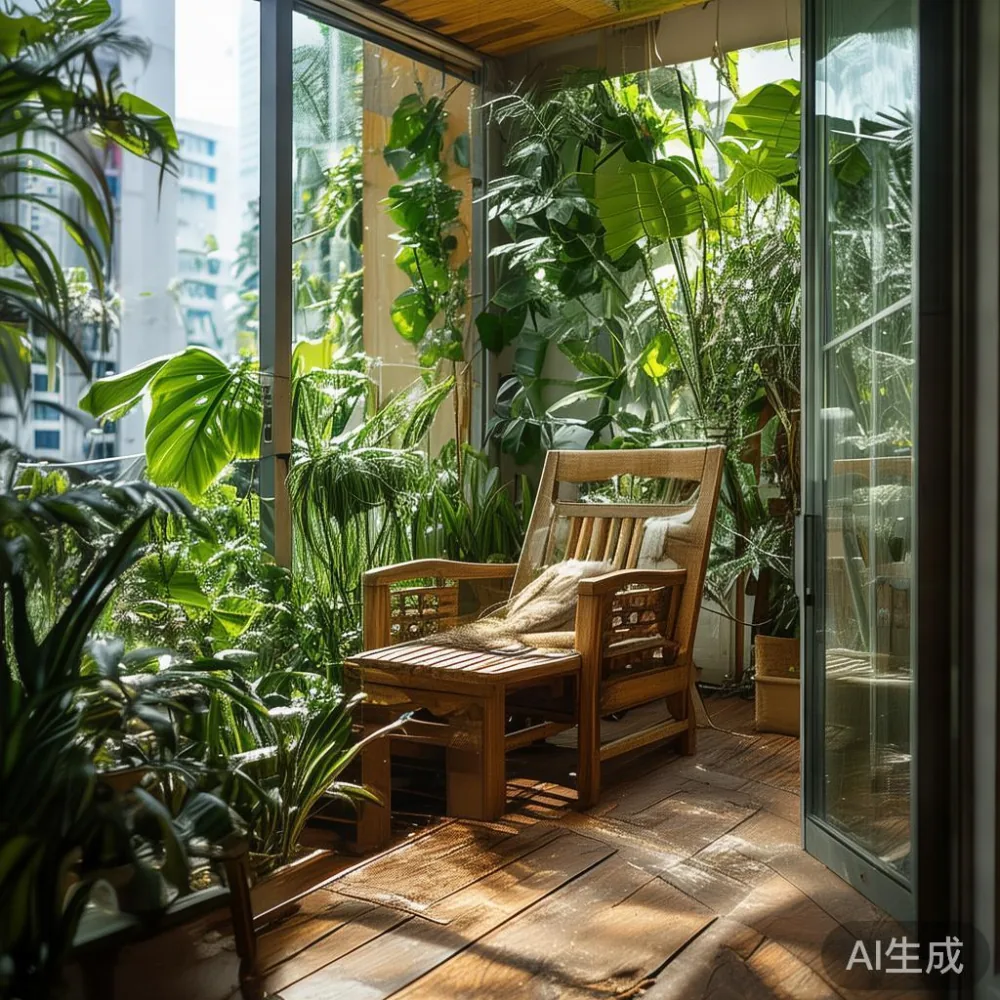
Most of what people in Singapore call balcony furniture lives in a weird grey zone. It is not quite indoor furniture, because the glazing is often half-open. It is not quite outdoor furniture, because the roof slab blocks the worst of the UV and rain. That ambiguity is exactly why humidity damage sneaks up on buyers. The goal of this guide is to explain, with concrete numbers and a few real stories, how humidity behaves in HDB corridors, condo service yards, and sheltered balconies across Singapore, and how to choose pieces — including balcony furniture from makers like MIDHILL furniture — that will still look good in 2030.
What exactly does 80 percent relative humidity do to solid wood?
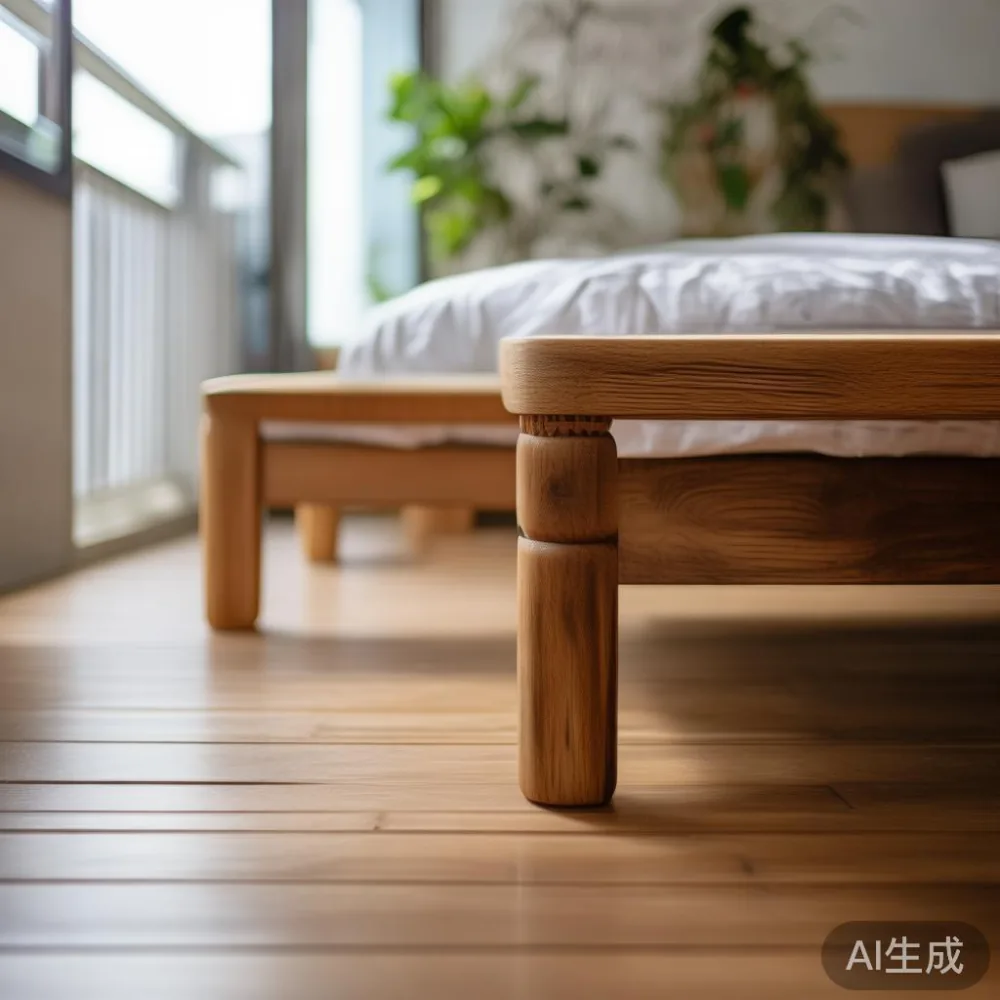
Wood is hygroscopic. In plain English, it drinks and sweats. A 1.8 metre bed frame made from rubberwood at 10 percent moisture content, moved from a 55 percent RH showroom into a 82 percent RH Singapore balcony, will absorb roughly 40 to 60 grams of water per day for the first 6 to 8 weeks. That water lives inside the cell walls, not on the surface. As the cells swell, the wood expands across the grain — typically 2 to 4 percent wider in the tangential direction, 1 to 2 percent radially — and the longer pieces show it first. A wardrobe door that closed smoothly in the factory can swell 2 mm at the bottom and start rubbing the floor by month three.
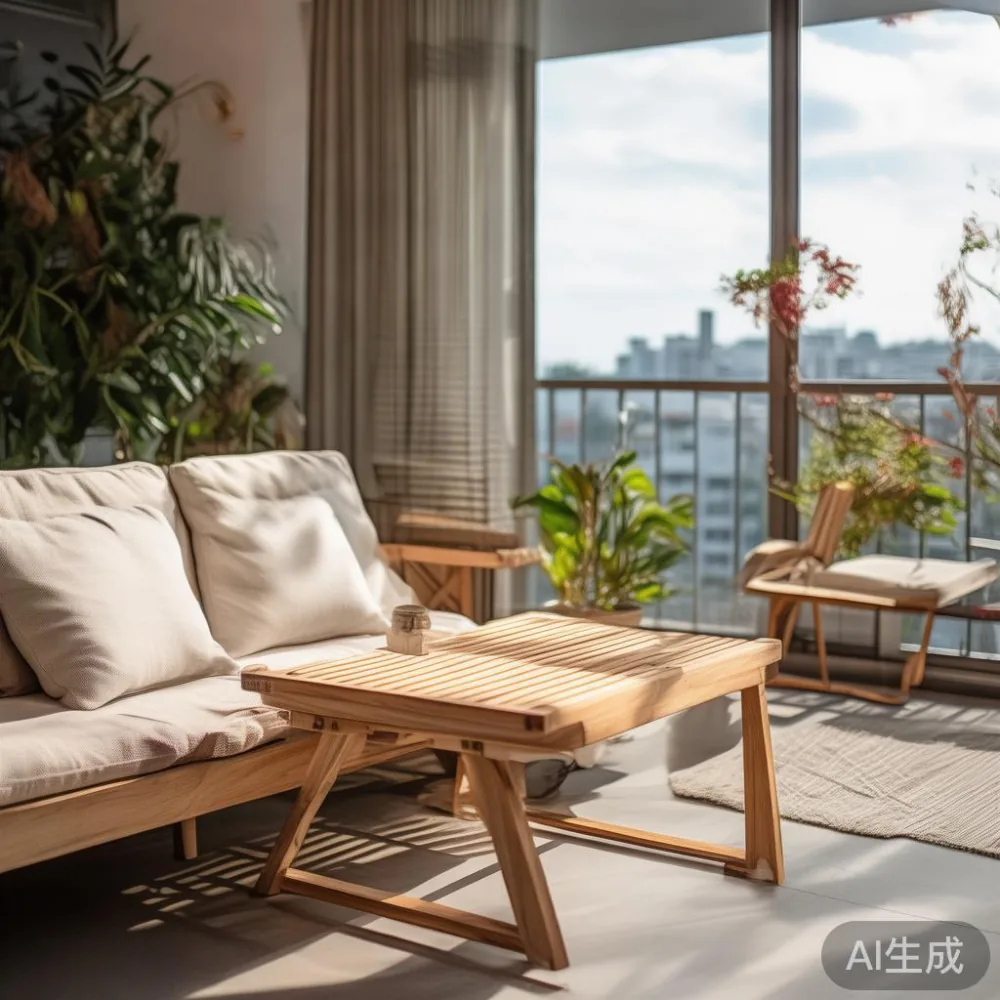
The second effect is cupping. When one face of a board absorbs more moisture than the other, the board curls towards the drier side. I have measured 4 mm of cupping on a 25 mm thick marble table edge-banded with solid ash, after only 11 weeks in a Bedok condo balcony that faces east. The morning sun warmed the top surface while the underside stayed cool and damp against the tiles. That temperature differential — sometimes 6 to 8 °C — drives moisture movement faster than humidity alone ever could.
The third effect is the one most buyers never hear about: mould and mildew. Spores are always in the air. They need three things to colonise wood: temperature above 20 °C (check), a food source (check, wood sugars and dust), and surface moisture above about 16 percent (check, on most Singapore mornings). A pale oak nightstand left in a corner where the wall and the furniture meet will show grey-black spotting within 8 to 12 weeks if no one wipes it down. None of this is a defect in the wood. It is just physics.
How wide are HDB lift openings, and does that actually limit my choices?
Yes, and more than people realise. A standard HDB passenger lift in a block like those along Tampines Street 21 has an internal cabin roughly 1.1 m wide by 1.4 m deep, with a door opening of about 0.8 m. A typical wardrobe from an Indonesian or Vietnamese supplier arrives flat-packed in cartons, but a solid wood sofa frame often does not. If the longest single piece is 1.9 m, you are usually fine. If it is 2.2 m, you will need to check whether the lift has the deeper 1.6 m cabin that newer BTOs like those in Punggol North have started installing. Condo service lifts are wider — usually 1.3 m by 1.8 m with 1.0 m doors — but many still have weight limits of 1,000 kg or 1,500 kg. A 4-seater dining table in solid teak can weigh 85 to 110 kg before packaging. Always check the delivery note.
Corridors add a second pinch point. HDB common corridors are typically 1.2 m to 1.5 m wide between handrails. A flat-packed box measuring 0.55 m by 0.55 m by 1.85 m will pivot through a 90-degree turn at the lift lobby only if the corridor is at least 1.3 m wide at the turn. I watched a delivery team take 35 minutes to get a bed frame carton through a 1.1 m corridor in a 1970s-era block in Bedok last month, and they had to unbolt the handrail. The customer was charged an extra SGD 80 for the time. Ask your supplier — any supplier worth working with — to give you carton dimensions and lift diagrams before you confirm the order.
Which wood species actually survive Singapore balconies?
Not all solid wood behaves the same. Here is what I have seen in 40+ balcony installations across Singapore over the past three years, ranked roughly from most stable to least:
Teak (Tectona grandis). Natural oils make it resistant to moisture cycling. A well-made teak balcony furniture set can last 12 to 15 years on a sheltered balcony with only an annual oil refresher. Expect to pay SGD 3,800 to SGD 6,200 for a four-piece set.
White oak (Quercus alba). Tight grain, low movement coefficient. Good for a dining table if you accept that the colour will amber noticeably in 18 to 24 months under UV. SGD 2,400 to SGD 4,100 for a 1.6 m table.
Rubberwood (Hevea brasiliensis). The workhorse of Southeast Asian solid wood furniture. Affordable, widely available, but it moves more than oak — typically 3 to 5 percent tangential change. Best used indoors or on balconies that are fully enclosed with glass. A nightstand in rubberwood retails around SGD 320 to SGD 520.
Pine and MDF cores. Avoid for balcony furniture. The MDF will swell like a sponge in under 12 months, and pine dents and checks badly even at 75 percent RH.
At this point it is worth pausing on the design language that suits Singapore balconies. Most newer HDBs in Punggol and Sengkang lean towards a clean, restrained palette — white walls, light grey floor tiles, slim black window frames. Furniture that fights that palette ends up looking tired within two years. The light-luxury direction — whether you gravitate toward French light luxury curves, American light luxury proportions, or the post-modern light luxury look — tends to use warm honey and walnut tones that pair naturally with both tropical greenery and the cooler greys of a condo service yard. A simple rule of thumb: if the piece would look at home in a Provençal kitchen or a Brooklyn brownstone, it will probably age well on a Tampines balcony.
What is the cheapest way to retrofit an existing balcony set for humidity?
If you already own a balcony set and the joints are tight, do not throw it away. Three interventions cost under SGD 180 total and will add 3 to 5 years of life:
1. Raise the pieces off the floor by 15 to 25 mm. Use rubber furniture feet (SGD 1.20 each at any Tampines hardware shop) or small composite shims. This stops the legs from sitting in the thin film of water that forms on balcony tiles after rain.
2. Apply a hard wax oil twice a year. Products like Osmo Polyx-Oil 3054 or Rubio Monocoat Pure cost SGD 45 to SGD 65 for 350 ml and cover a 6-seat balcony furniture set with two coats. The wax blocks short-term moisture swings; the oil lets the wood breathe.
3. Control airflow. A balcony that has 60 cm of opening on at least two opposite sides dries 40 percent faster than a sealed service yard. If your glass panels are fixed, ask your condo management about adding a 30 cm vent panel — most approve it for SGD 200 to SGD 400 in installation.
Will my warranty actually cover humidity damage?
Read the fine print. The honest answer across the industry is: most structural warranties cover joinery failure and wood splitting, but not swelling, cupping, surface mould, or finish degradation caused by environmental conditions. MIDHILL, a Foshan manufacturer I have inspected personally, offers a 10-year structural warranty on joinery and a lifetime refinishing service — meaning they will sand and re-oil the piece in their Guangdong workshop for the cost of shipping only. That second promise matters more in Singapore than the headline warranty, because refinishing is what you will actually need at year 6 or 7. A supplier who only offers "replacement" will end up costing you more, even if their warranty document looks longer.
One practical note on GST and landed cost. From 1 January 2024, GST on imported goods above SGD 500 is 9 percent, and the supplier should pre-pay it on your behalf. Always confirm whether the price you are quoted is GST-inclusive. A SGD 4,200 dining table advertised "before GST" becomes SGD 4,578 at your door. Delivery over SGD 350 is usually free, but balcony delivery sometimes costs an extra SGD 50 to SGD 120 if a lift booking or after-hours slot is involved. MIDHILL quotes both figures clearly in their order confirmation, which is rare enough to mention.
How should I plan a balcony layout so the furniture actually gets used?
A 12 sqm HDB balcony in a BTO like those in Punggol is enough for three things and no more. Pick three. A 1.2 m balcony furniture bistro set (two chairs, one table), a 60 cm wide marble table sideboard against the railing, and a single deck chair leaves 4.5 sqm of walking space — enough to water six pots without bumping your shin. The mistake I see constantly is buyers treating the balcony like a small living room and squeezing in a 2.4 m solid wood sofa. The sofa ends up two centimetres from the railing, you cannot sweep under it, and moisture gets trapped in the dead zone where the sofa meets the wall. Within 18 months the back panel shows mould.
Measure twice, then subtract 30 cm on every side. That is the real footprint of any piece on a Singapore balcony, because you need airflow clearance on all sides. A nightstand with a 45 cm depth actually needs 75 cm of wall length to perform well over a decade.
What about designer pieces that look fragile — are they a bad idea here?
Not necessarily. I have a colleague who keeps a slim French-inspired balcony furniture bistro set — turned legs, cabriole-inspired back, painted matte cream — on his 9 sqm Bedok service yard. He has had it for 4 years. The pieces are made of beech with a marine-grade spar varnish, and he re-varnishes the contact surfaces every 9 months. The set cost SGD 1,480. The varnish and his time cost about SGD 90 per year. He thinks that is a fair trade for something that looks like it came out of a Provence kitchen, in a country where the weather wants to destroy anything made of wood. That is also, incidentally, why the designer French provincial furniture aesthetic keeps showing up in Singapore balcony makeovers — the curves soften the hard lines of new condo architecture, and the painted finishes hide the small colour shifts that natural oil finishes cannot avoid.
How long does delivery actually take from a Foshan factory to a Singapore HDB?
For a Foshan-based solid wood maker shipping a full container load consolidated with other orders, the realistic timeline from payment confirmation to delivery to your door is 35 to 55 days. Sea freight from Yantian or Shekou to Singapore takes 5 to 8 days, customs clearance plus GST accounting adds 3 to 5 working days, and last-mile delivery inside Singapore needs another 5 to 10 days because the delivery teams batch by zone. If you order in the first week of a month, you usually land in the second half of the following month. Avoid ordering in the two weeks before Chinese New Year (late January or mid-February, depending on the year) — factories close for 10 to 14 days and the backlog adds another three weeks. I learned this the hard way in 2023 when a customer's wardrobe arrived 41 days late, three days after they had already moved in with their existing furniture. It now lives in the guest room.
Are 14-day returns actually honoured for balcony furniture?
For stocked items, yes. For made-to-order pieces — which most solid wood furniture from a Foshan workshop is — usually no, because the factory has already cut and machined your specific dimensions. What you can usually negotiate is a "defects-only" return: if the joinery is loose, the wood is visibly cracked at delivery, or the finish is patchy, the supplier covers return shipping. MIDHILL explicitly offers 14-day returns on stocked balcony pieces and full replacement of any defective made-to-order item, which is a fairly generous posture in this segment. Always photograph the unboxing. Always check the corners, the underside, and the inside of every drawer before the delivery team leaves. A 2 mm crack visible only from below is the kind of thing that will be denied three weeks later.
So what should I actually buy for my balcony this year?
If you want one set that will serve your balcony from 2026 through 2031 with minimal drama, the practical answer is a four-piece teak or white-oak balcony set in a light-luxury silhouette, raised on rubber feet, finished with a hard wax oil you reapply twice a year, and positioned with at least 25 cm of airflow on every side. Budget SGD 3,600 to SGD 5,800 for the set, SGD 90 to SGD 140 per year for maintenance, and SGD 50 to SGD 120 for the occasional delivery top-up. Total five-year cost of ownership: roughly SGD 4,200 to SGD 6,500. That sounds like a wide range, but it is honest — the difference is mostly species and finish, not build quality. Choose pieces you find genuinely comfortable to sit on after 9 p.m. on a Tuesday, not pieces you think will impress a guest you have not met yet.
One last observation. The balcony furniture market in Singapore is full of products that look right in the showroom and fail by year two. Solid wood, properly dried to 8 to 12 percent moisture content before machining, joined with mortise-and-tenon or dowel construction, finished with breathable oils rather than thick polyurethane films, and supported by a supplier who will refinish the piece when it needs it — that is the combination that works. Everything else is a gamble dressed up as a bargain.