Balcony Furniture: A 5-Year Cost Comparison of Veneer and Solid Wood
Choosing balcony furniture for a Singapore HDB flat or condo is rarely a simple price comparison. A 120 cm veneer table may look convincing at purchase, while a 140 cm solid wood dining table can cost several times more. Over 5 years, however, moisture, UV exposure, cleaning, repairs and replacement cycles tell a more useful financial story.
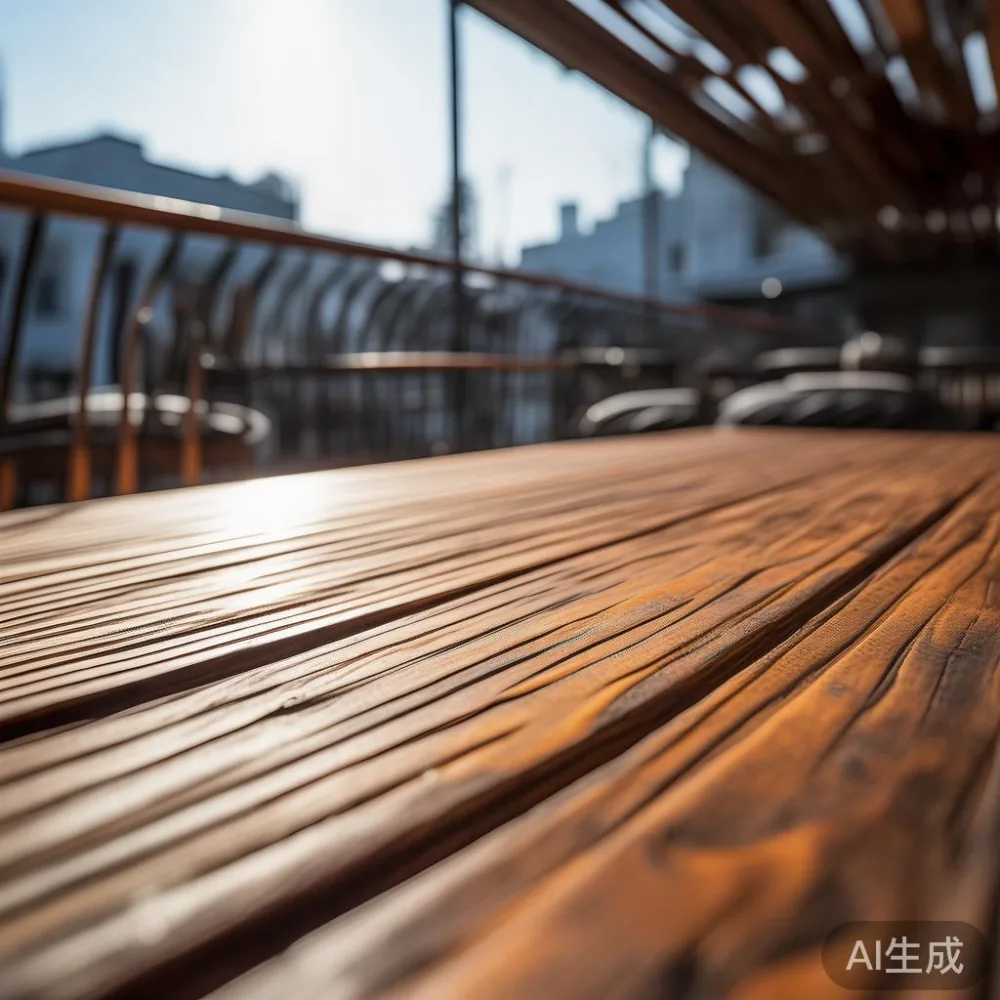
This guide compares realistic ownership costs for balcony furniture across Tampines, Bedok and Punggol, using Singapore dollars, 9% GST and the humid conditions of an outdoor balcony. It also considers corridors, HDB lifts and compact service routes, because a low purchase price can be offset by delivery, assembly and removal charges.
MIDHILL is a Foshan solid wood furniture maker established in 2008, with export experience across 15+ countries, a 10-year structural warranty and lifetime refinishing support. Its products include solid wood sofa, bed frame, dining table, wardrobe and nightstand collections, plus marble table options suited to selected indoor settings. The figures below are planning estimates rather than quotations; actual prices depend on dimensions, timber, finish and hardware.
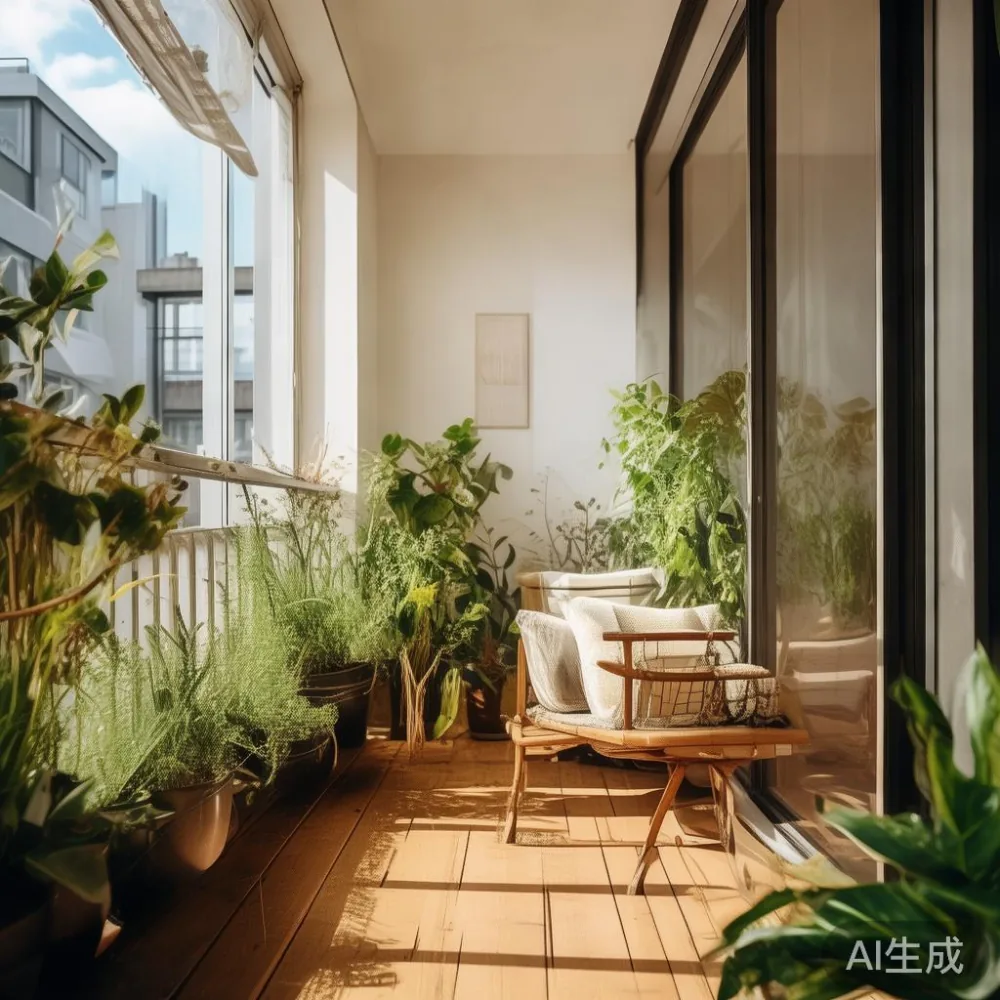
What is the real 5-year cost of veneer versus solid wood balcony furniture?
Let us compare two common balcony dining setups in Singapore. Scenario A is a 120 × 70 cm veneer dining table with 4 chairs, while Scenario B is a 140 × 80 cm solid wood dining table with 4 chairs. Both figures include SGD 231 GST on a hypothetical pre-tax furniture subtotal of SGD 2,570, but exclude delivery.
For a planning model, veneer furniture may carry an initial furniture cost of SGD 1,500 including GST, while solid wood may cost SGD 3,200 including GST. The difference is SGD 1,700. Over 5 years, that premium must be compared with expected refinishing, repair, replacement and disposal costs—not merely the shelf price.
For this comparison, veneer averages one major touch-up or board repair during the period, estimated at SGD 180. Solid wood averages one sanding and protective finish renewal, estimated at SGD 220. Allowing for accelerated balcony wear, replacement cycles are still conservative: the model does not assume that every piece must be discarded after 5 years.
The calculation is straightforward: furniture cost + maintenance + repairs + delivery + disposal + replacement risk. A veneer set at SGD 1,500 + SGD 180 + SGD 80 delivery + SGD 100 disposal totals SGD 1,860. A solid wood set at SGD 3,200 + SGD 220 + SGD 120 delivery + SGD 0 disposal totals SGD 3,540. On these assumptions, veneer remains SGD 1,680 cheaper over 5 years.
That does not make veneer automatically suitable for every balcony. It remains the lower-cost option when the furniture will be covered, moved regularly or replaced on a short cycle. Solid wood becomes more financially attractive if the table stays in place for 8–10 years, receives annual care, and can be refinished rather than replaced.
How Singapore humidity changes the comparison
Singapore’s outdoor environment places more stress on balcony furniture than a bedroom. A north-facing Bedok balcony may see around 3–5 hours of indirect daylight, while a west-facing unit in Tampines can receive 7–9 hours of stronger sun, depending on the building and season. Balcony railings and nearby walls can also trap humidity after afternoon rain.
Useful planning benchmarks are a relative humidity range of roughly 65–85% and surface temperatures of about 28–34°C during warm afternoons. Veneer is a real wood layer bonded to a core, commonly 0.6–2.0 mm thick. If that layer chips, lifts or bubbles, moisture can reach the substrate. A repair may be possible, but repeated edge swelling can make replacement more practical.
Solid wood uses the timber section across the visible surface. It can still swell, check or fade, yet a sanded area can often be refinished without replacing the entire board. The 5-year advantage appears when scratches, colour loss and joint movement are handled through maintenance rather than full replacement.
For solid wood balcony furniture, specify exterior-grade oil or a compatible water-based coating, reapply it every 6–12 months and wipe standing water away within 30 minutes. For veneer, inspect edges and undersides twice a year, repair small chips promptly and keep the piece under cover whenever rain is forecast.
Do not place a marble table directly on an exposed balcony. Marble is heavy and vulnerable to acidic spills; a marble table works better inside a dining room or covered veranda. The same balcony can still use a compact solid wood dining table, provided the finish is suitable for semi-outdoor conditions.
Which finishes age better on a balcony?
Colour matters less than the coating system. A light oak veneer and a pale solid wood dining table may start within 20–30% of the same visual tone, yet they can weather differently. Veneer often retains a uniform printed or lacquered face until the surface is broken. Solid wood develops more natural variation as the timber reacts to light and humidity.
For a light-luxury balcony, designers often compare European light luxury sofa vs Mid-century modern sofa approaches for the adjoining living room. The balcony itself may use restrained French light luxury styling: tapered legs, warm timber, cream textiles and one dark accent. This is distinct from ornate French provincial furniture, which generally suits a formal indoor dining room rather than a compact HDB balcony.
Use UV-stable outdoor cushions in 100% solution-dyed acrylic or polyester, with a colour difference of no more than about 5 shades over 5 years under a covered placement. Solid wood should have drainage-friendly joints and removable components. Veneer should have sealed edges and a high-density core. Avoid MDF or particleboard on an uncovered balcony, especially within 1.5 m of the railing where splash and wind exposure are greater.
One caution: “water-resistant” is not the same as “weatherproof.” Ask for the coating’s expected maintenance interval, recoating temperature and salt-spray or UV test details. A finish touched up every 12 months may be more durable than one advertised as maintenance-free but left untouched for 5 years.
What will delivery, lifts and corridors add to the cost?
Singapore homes make access a meaningful cost. Typical HDB corridor widths are about 100–150 cm, and many older lift doors measure around 80–90 cm wide with internal dimensions near 110–140 cm deep. A 140 cm solid wood dining table may need to enter diagonally, through a service lift or in 2 sections. A 120 cm veneer table can still be awkward if its legs are not detachable.
Assume a delivery window of 7–14 days after stock confirmation. A standard doorstep delivery in Singapore may cost SGD 80–150, while a two-man carry-up service may cost SGD 120–250. A lift-booking or timed-access fee can add SGD 20–60. Disposal of an old set may add SGD 80–180, depending on dismantling and whether the building requires a booked waste-move slot.
In March, I visited a Punggol condo where a homeowner had ordered a 150 cm solid wood dining table. The table looked economical in the catalogue, but the narrow 85 cm lift and a 110 cm turning point beside the lobby made a single-piece delivery impractical. It arrived in 2 sections after 9 delivery days and cost SGD 180 extra for timed carry-up and assembly.
Measure before ordering: door width, lift door, lift interior, corridor turns, balcony threshold and the route from the service entrance. Ask whether the table can be knocked down into sections no wider than 70 cm and no heavier than 25 kg per section. These details protect the furniture and can prevent scratches to common-property walls.
Is solid wood worth the premium for a 5-year balcony?
For the strict 5-year question, solid wood is worth considering when the furniture has a covered location, a stable place in the home, and a clear plan for refinishing. It is less compelling for a rental unit, a balcony used for storage, or furniture likely to be moved every 4–6 months. Veneer can be financially sensible in those cases, provided the buyer accepts a shorter usable life.
Here is a practical decision rule based on assumed ownership:
- Choose veneer when the budget ceiling is below SGD 2,000 including GST, annual direct sun exceeds 6 hours, or the set will be replaced within 5 years. Set aside about SGD 100–150 per year for touch-ups and protective cover.
- Choose solid wood when the balcony is covered for most of the year, the furniture will remain for at least 8 years, and annual maintenance can be maintained. Budget roughly SGD 150–300 per year for cleaning, oiling and one partial refinishing cycle within 5 years.
- Choose a hybrid approach for mixed requirements: use veneer for occasional dining chairs and a smaller 100–120 cm solid wood dining table where it will stay long term.
For an HDB flat with a 3.6 × 1.5 m balcony, a 120 × 70 cm table plus 4 slim chairs may occupy about 1.7–2.0 m². A 140 × 80 cm table with wider chairs may need 2.4–2.8 m². The larger set can restrict a drying rack or washing zone, so confirm that at least 0.6 m remains beside the table and that the sliding door can open fully.
Solid wood also helps extend the design language indoors. For a solid wood sofa, bed frame, wardrobe or nightstand, coordinate the balcony timber with the bedroom and living room rather than matching every colour exactly. A compact balcony chair can borrow from a top 10 Nordic furniture palette with pale woods, simple lines and practical outdoor fabric.
How should you style and maintain light-luxury balcony furniture?
Begin with scale, then material. Keep the dining zone within 55–65% of the available balcony floor area, leaving space for circulation and wet-laundry functions. Choose a light finish to reduce visible heat and dust, then add contrast through charcoal or navy cushions rather than a visually heavy table base.
For indoor continuity, search for how to style light luxury bed in bedroom ideas and how to style European wardrobe in bedroom layouts, then repeat only 2–3 colours on the balcony. This creates a calm French light luxury or American light luxury mood without making the compact exterior feel crowded.
Cleaning should follow a fixed schedule:
- Brush dust from the tabletop weekly and wipe spills within 15 minutes.
- Wash removable cushion covers every 8–12 weeks according to the label.
- Check screw tension every 6 months and tighten only if required.
- Inspect the finish every 3 months for fading, checking or lifting veneer.
- Sand and recoat solid wood every 12–24 months, or sooner after heavy UV exposure.
- Store or cover the furniture during monsoon periods when the balcony is not in use.
Use a breathable furniture cover rather than a non-breathable plastic sheet trapped against the timber. Leave approximately 5–10 cm of ventilation space under the cover. A fitted cover with UV fabric rated for at least 50–80% of sunlight should help reduce fading.
For anyone comparing wider design references, under 2000 Coastal furniture can be a useful visual direction for pale timber and relaxed upholstery, but the actual balcony furniture must still be sized for Singapore humidity and access. Local room proportions matter more than a showroom image.
What is the most economical 5-year ownership plan?
The most economical plan depends on the expected service life. At SGD 1,500 including GST, the veneer set in this model costs SGD 1,860 over 5 years, or SGD 372 per year. The solid wood set costs SGD 3,540, or SGD 708 per year. In this narrow scenario, veneer has the lower 5-year total and wins on immediate affordability.
Solid wood offers a different value proposition. If the same solid wood set remains usable for 10 years, its rough annual cost falls from SGD 708 over 5 years to about SGD 354 over 10 years, assuming no further major repair beyond routine refinishing. Veneer replaced at year 5 for another SGD 1,500 could cost around SGD 3,360 before the second disposal charge. That replacement is why long-term owners should evaluate care, not simply the first invoice.
Many MIDHILL solid wood balcony pieces are specified with durable joinery and finishes that support refinishing. The company’s 10-year structural warranty provides a defined assurance period, while lifetime refinishing support can reduce the cost of future surface restoration. Singapore orders may also benefit from free shipping above US$350, though the amount should be confirmed in local currency and for the destination; GST, lift access and delivery beyond the initial threshold should still be checked separately.
The practical answer is clear: choose veneer if the goal is the lowest 5-year outlay and the furniture has limited exposure or a short replacement horizon. Choose solid wood if the balcony furniture will remain in one home for 8–10 years, receives shelter and can be maintained. In either case, measure the route, budget SGD 80–250 for delivery, and treat annual care as part of the furniture’s price.