Balcony Furniture in Singapore: What Actually Lasts Out There?
A Singapore buyer's guide to balcony furniture that survives humidity, HDB rules, and tight spaces, with sizes, prices, and what I would buy.
- What counts as balcony furniture in a Singapore HDB or condo?
- Does humidity ruin solid wood furniture on a Singapore balcony?
- How much space do you really have on a HDB service yard balcony?
- What materials actually survive Singapore sun and rain?
- How much should you actually spend on balcony furniture in Singapore?
- What do delivery and assembly actually look like for balcony furniture in Singapore?
- Which balcony furniture mistakes do Singapore buyers regret most?
What counts as balcony furniture in a Singapore HDB or condo?
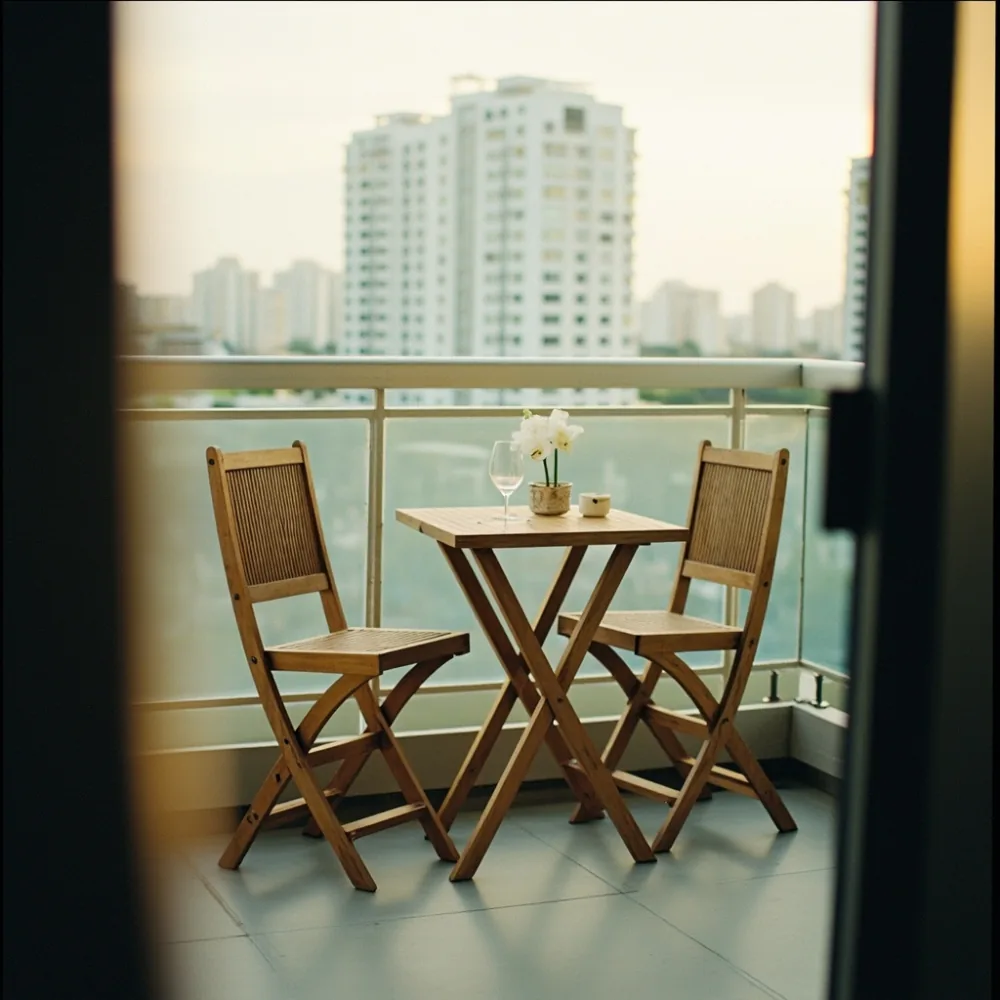
What usually fits on a Singapore balcony
Why balcony furniture is not just outdoor furniture
When I think about balcony furniture, I don't picture a Bali daybed or a rattan lounger. In Singapore, most of us are dealing with a service yard, a 4 m² HDB balcony, or a slim 1.2 m deep strip off a condo living room. That changes the brief completely. You're really shopping for furniture that has to do three jobs at once: sit outside, survive equatorial weather, and still look tidy when seen from your living room through the sliding door.
The pieces that work in this context are compact bistro sets (a 60-70 cm table with two chairs), slim balcony benches, narrow shelving, fold-down wall tables, and the occasional single lounger. Anything deeper than 70 cm tends to eat the walkway. Anything taller than the railing looks awkward and may even breach HDB guidelines on visible items.
- Typical HDB service yard: roughly 1.8-2.4 m wide by 1.0-1.5 m deep
- Typical condo balcony: 2.4-3.6 m wide by 1.2-1.5 m deep
- Common ceiling height: 2.6-3.0 m, which matters if you're stacking planters
The other thing buyers forget is that balcony furniture lives closer to dust, morning sun that hits 90° angles, and monsoon-driven sideways rain. So your usual indoor pieces, even good solid wood furniture, won't survive without thought.
Does humidity ruin solid wood furniture on a Singapore balcony?
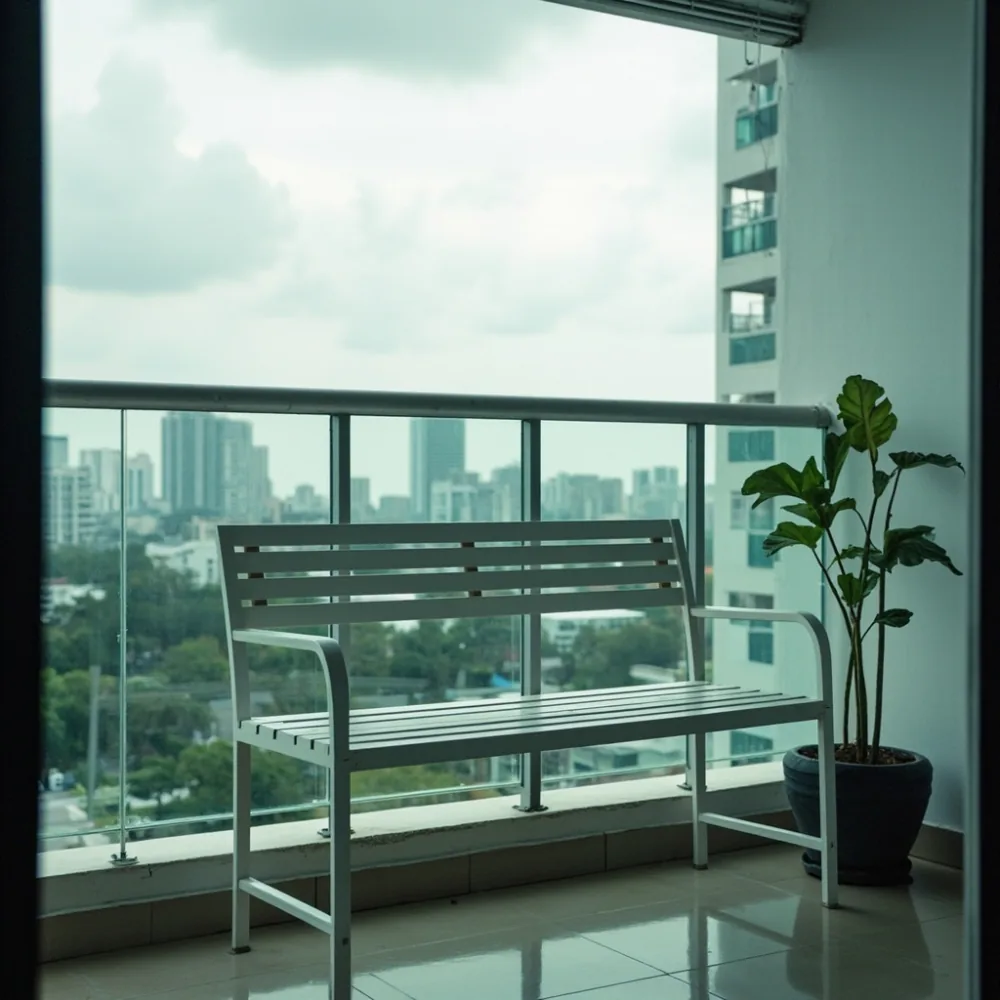
Which woods actually cope with outdoor humidity
Why finishing matters more than species
Short answer: yes, untreated solid wood furniture will warp, crack, and grow surface mould within a season if it sits uncovered on a balcony. I've seen teak benches go grey and furry in under nine months in District 15, where the sea breeze carries salt. The good news is that the right species with the right finish can last years.
The woods I trust outdoors are teak (premium but worth it), eucalyptus, and shorea. Engineered hardwoods like acacia are fine if the manufacturer has kiln-dried them properly. Anything labelled MDF or particleboard should stay inside, period.
Finishing matters more than the species. Look for pieces that come pre-oiled with tung oil or a marine-grade teak oil, not just a polyurethane spray. You'll still want to re-oil every 6-9 months, which is a 20 minute job on a 2-seater bench.
- Teak: 25-40 years outdoor life expectancy, SGD 1,200-3,500 for a balcony bench
- Shorea: 15-20 years, SGD 600-1,400
- Eucalyptus: 8-12 years, SGD 350-900
- Re-oil frequency: every 6-9 months in Singapore
How much space do you really have on a HDB service yard balcony?
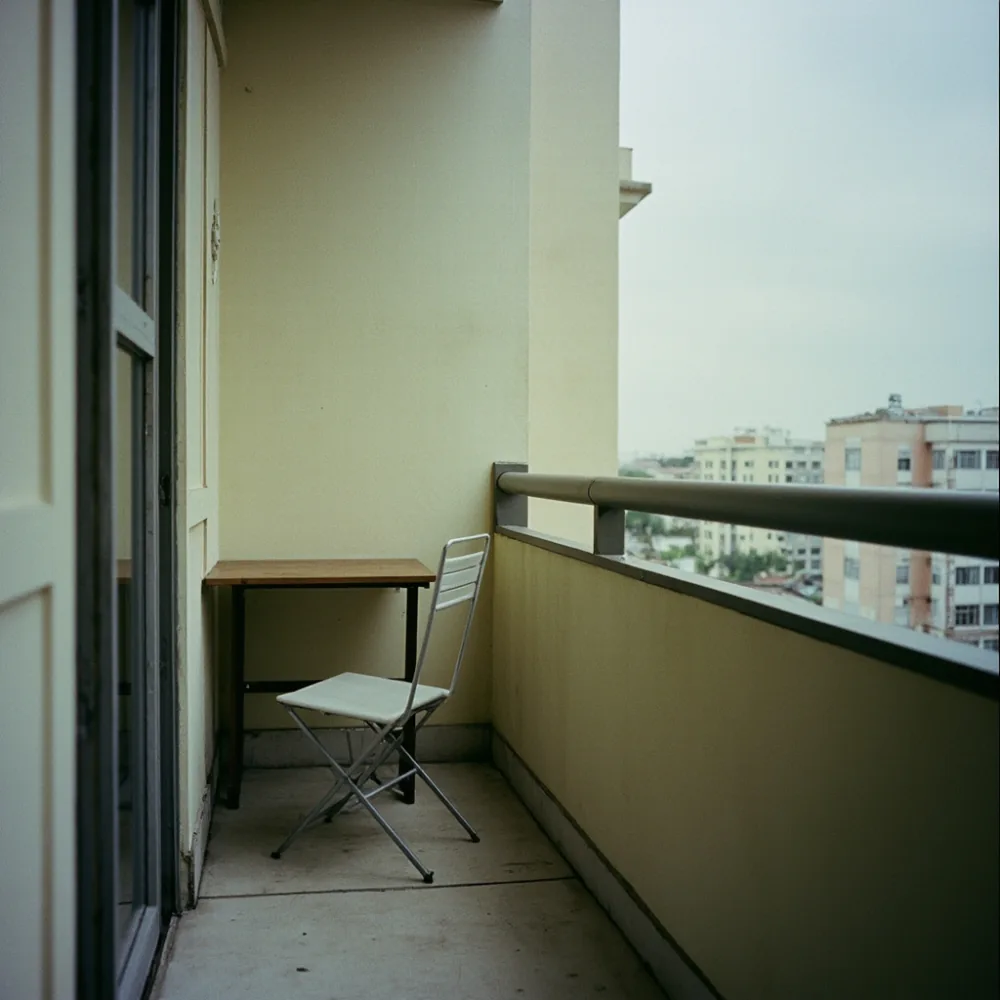
Measure like a buyer, not like an architect
The 70 cm walkway rule
I always tell people to grab a tape measure before browsing. Listings love saying "spacious balcony" but a 1.5 x 2.4 m floor plate shrinks fast once you subtract the air-con condenser, the clothes rack, and the 30 cm of swing space needed for the sliding door.
A workable rule of thumb: keep at least 70 cm of clear walking path across the balcony. Below that and you'll be side-shuffling past the chair every time you hang laundry. Above 90 cm and you start feeling like you've wasted square footage you paid BTO prices for.
Also think about vertical space. A tall, narrow shelving unit (180 cm H x 40 cm W x 30 cm D) eats less usable area than a chunky 60 cm deep planter box, even though both have the same footprint.
- Minimum walkway: 70 cm
- Comfortable walkway: 85-90 cm
- Max table depth for a 1.2 m balcony: 50 cm, otherwise the chairs stick out into the walkway
What materials actually survive Singapore sun and rain?
Metal frames
Plastics and resins
Fabrics
Singapore's UV index sits at 11+ for most of the year. Combined with afternoon thunderstorms, balcony furniture takes more punishment in a month than a London patio piece takes in a year. So the material choice is non-negotiable.
Here's the comparison I wish someone had given me before I bought my first set:
| Material | Sun resistance | Rain resistance | Salt-air resistance | Typical lifespan in SG | Price (2-seater set, SGD) |
|---|---|---|---|---|---|
| Teak (oiled) | Excellent | Excellent | Excellent | 15-25 years | 1,800-3,500 |
| Powder-coated aluminium | Good (fades 5-7 yrs) | Excellent | Good | 8-12 years | 600-1,200 |
| Synthetic rattan (PE) | Good (cracks 5 yrs) | Good | Fair | 5-8 years | 400-900 |
| Polypropylene (PP) plastic | Fair (brittle 4 yrs) | Excellent | Good | 4-6 years | 150-400 |
| Untreated pine / softwood | Poor | Poor | Poor | 1-2 years | 200-500 |
For fabrics, anything left outside should be solution-dyed acrylic (think Sunbrella) or olefin. Cotton and standard polyester cushions will mould in two weeks.
How much should you actually spend on balcony furniture in Singapore?
The three realistic price brackets
Where I would save and where I would splurge
Balcony furniture is one of those categories where overspending feels worse because the piece is small. But underspending means replacing it every other year. Here's how I'd frame the budget.
Budget bracket (SGD 200-600 total): A 2-seater PP plastic or steel-framed mesh set. Good if you're renting a HDB in Bukit Batok and don't want to commit, or if the balcony is essentially a drying area.
Mid bracket (SGD 800-1,800 total): Powder-coated aluminium with a small solid wood side table, plus a foldable teak stool. This is the sweet spot for most condo owners in Districts 9, 15, or 19 who entertain occasionally.
Premium bracket (SGD 2,500-5,000 total): A full teak or shorea bistro set, custom cushions, plus a slim bench with hidden storage. Worth it if you use the balcony daily and the view justifies it.
Where I'd splurge: the chairs. Where I'd save: the table. A heavy tabletop looks great in a showroom but you'll be dragging it every time you mop.
What do delivery and assembly actually look like for balcony furniture in Singapore?
Lift access
HOI / condo rules
Typical lead times
This is the bit no one talks about. A 1.8 m teak bench doesn't fit in a service lift if your block's lift car is 1.4 m deep. I've watched two buyers in Punggol have to dissemble a brand-new bench in the corridor because the lift opening was narrower than the carton.
Things to check before clicking buy:
- Carton dimensions: should be at least 5 cm smaller than your lift opening on every side
- Carton weight: anything over 35 kg is a 2-man carry; budget SGD 30-80 for delivery above the standard fee
- Condo loading bay access: many condos in District 9 require booking 24-48 hours in advance
- Sunday delivery: limited, usually +SGD 50-100
For custom furniture from overseas makers like Foshan-based manufacturers (MIDHILL is one I have been looking at, founded in 2008 and apparently offering a 10-year structural warranty), lead times typically run 30-45 days from order, plus another 14-21 days for sea freight and customs clearance into Singapore. Plan around that, not around your next long weekend.
Assembly for most bistro sets is under 30 minutes with an Allen key. Teak benches sometimes arrive fully assembled; that's the day you really feel the weight, around 28-42 kg for a 1.5 m bench.
Which balcony furniture mistakes do Singapore buyers regret most?
Buying "outdoor" sets that aren't
Ignoring HDB / MCST rules
Underestimating weight
I've made at least two of these mistakes myself, so I'll be blunt.
Mistake 1: Buying something labelled "outdoor" from a general furniture store. A lot of those are indoor-grade wood with a thin weather coat. Six months in, you'll see black mildew creeping out of the joints. Stick to specialist outdoor ranges or established solid wood furniture makers who specify outdoor use.
Mistake 2: Forgetting the rules. HDB restricts items hanging over railings and certain large planters in some estates. Most condos have MCST rules on visual harmony, especially in District 9 and 10, where the management may ask you to remove bright red chairs. Quick check with your MCST saves an awkward email later.
Mistake 3: Heavy furniture on a slab you're not sure about. A filled 60 cm ceramic planter weighs 40-60 kg. Six of them in one corner of an old HDB service yard can stress the cantilever slab. Older BTOs in estates like Woodlands and Yishun are fine; some pre-2000 walk-ups I'd be cautious with.
Mistake 4: Skipping the storage plan. Cushions left out in monsoon season are sponges for mould. Budget a SGD 80-200 weatherproof storage box, or accept that you'll haul cushions inside every time heavy rain is forecast.
Frequently asked questions
Is teak balcony furniture worth the extra cost in Singapore?
Yes, if you plan to keep it for more than five years. Oiled teak handles Singapore's UV and humidity well, looks better as it ages, and can last 15-25 years outdoors. For short-term rentals, powder-coated aluminium or polypropylene sets at SGD 200-600 are a more sensible buy.
Can I leave balcony furniture outside during the monsoon season?
Frames can stay outside, but cushions, fabric seat pads, and any paper-based items must come indoors. Even solution-dyed acrylic cushions will grow surface mildew if waterlogged for days. A SGD 80-200 deck box makes this daily routine much easier.
Do I need HDB or MCST approval to put furniture on my balcony?
HDB does not require approval for standard balcony furniture like a small table and chairs. You do need to avoid hanging items over the railing or blocking common corridors. Condo MCSTs vary; check your house rules before buying anything bright red or unusually shaped.
How long does custom balcony furniture take to arrive from China?
For a custom order from a Foshan-based manufacturer, expect 30-45 days for production, 14-21 days for sea freight and Singapore customs, and another 3-7 days for last-mile delivery and assembly. Plan for roughly 8-10 weeks from order to balcony.
What is the smallest practical balcony furniture set for a 1.2 m deep HDB service yard?
A 60 cm diameter round folding bistro table with two stackable chairs. Total footprint when in use is about 1.2 m wide by 0.6 m deep, leaving 60 cm of walkway. Sets like this run SGD 180-450 in polypropylene or aluminium.
Questions about sizing, fabric or delivery?
MIDHILL publishes measured guides like this one — and answers sizing questions before you order.
See the collection